SPACES | COVERED WALKWAYS
Covered walkways are one of the simplest ways to connect people and places across a site. They link buildings, define the main circulation routes, and keep people protected from sun and rain. With continuous shelter running between key areas, the site becomes easier to move through and more comfortable to use across the whole year.
A site without covered connections is one where people pile up at doorways waiting for rain to ease, or move quickly between buildings in the middle of summer. Neither is necessary. A walkway system covers the routes people already take, keeps movement flowing, and removes weather from the equation entirely. The investment is modest relative to what it fixes.
People move between buildings without interruption, whatever the season throws at them.
A covered spine naturally organises foot traffic, reducing bottlenecks at entries and making the site easier to move through.
Wet days, hot days, and everything in between stop being a problem for movement across the site.
A walkway finished in matching colours and clean detailing does a lot for how a site looks and feels as a whole.
Steel-roofed walkways are built to last and easy to match to surrounding buildings. They suit the busiest routes where durability counts, and a soffit or clean underside finish gives them an architectural quality that holds up over time.
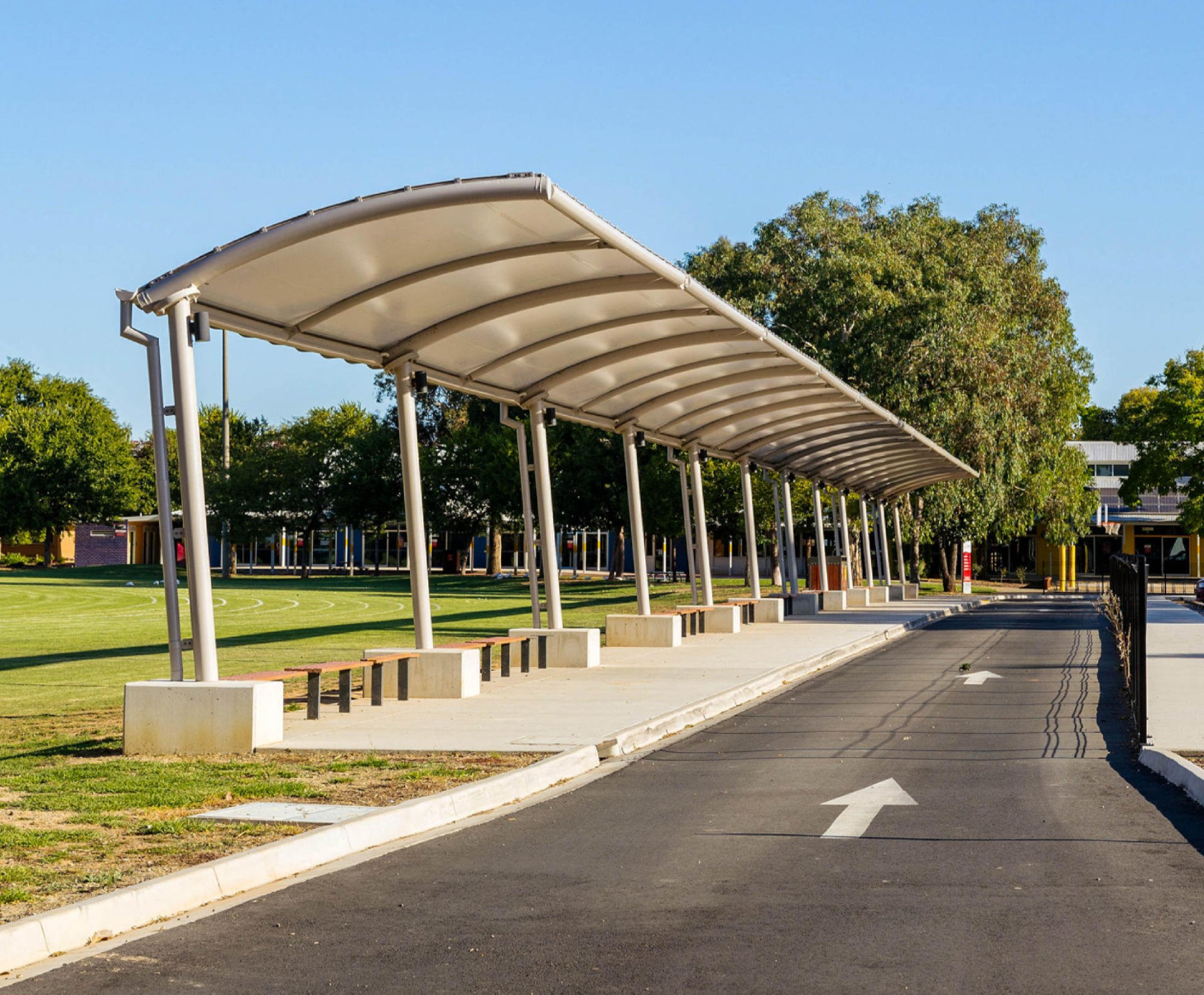
Tensioned PVC membrane walkways admit soft natural light and can follow curves and undulations that track the shape of the site.
They're lighter in appearance, and where the walkway needs to read as part of the landscape rather than an addition to it, fabric is usually the stronger design choice. Both options accommodate integrated gutters and lighting within the structure.
Cover the spines, not the side paths. The routes that connect your main buildings, entry points, and high-traffic areas are where a walkway earns its keep. Long, continuous runs work significantly better than short disconnected sections.
Metal and fabric perform differently in terms of durability, light, and appearance. The right call depends on the site and the surrounding architecture. Our team works through all covered walkway design ideas available during the consult phase.
We match colour schedules, correct headroom, and alignment with existing buildings. That's what separates a walkway that looks planned from one that looks tacked-on.
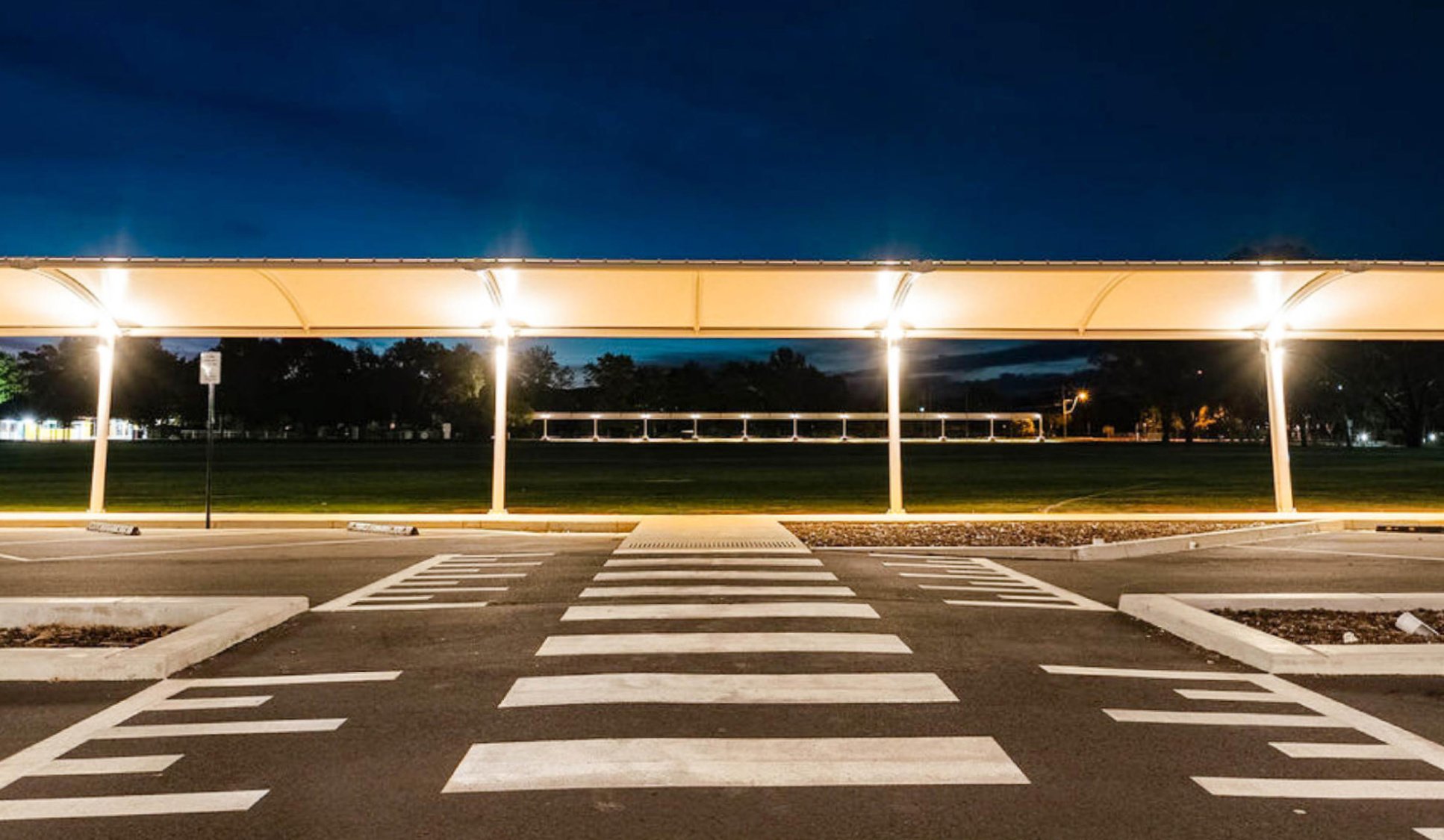
Lighting soffits for after-hours movement and signage mounts can be incorporated from the start, so nothing has to be retrofitted later. These integrations are particularly helpful when it comes to installing covered walkways for schools.
Our Consult. Design. Construct. methodology means cost, timing, and scope are locked in before anyone picks up a tool. One team runs the project from first conversation to final inspection, which keeps things efficient and keeps disruption to the site low. The outcome is a space that moves better, looks more considered, and handles whatever the weather brings.