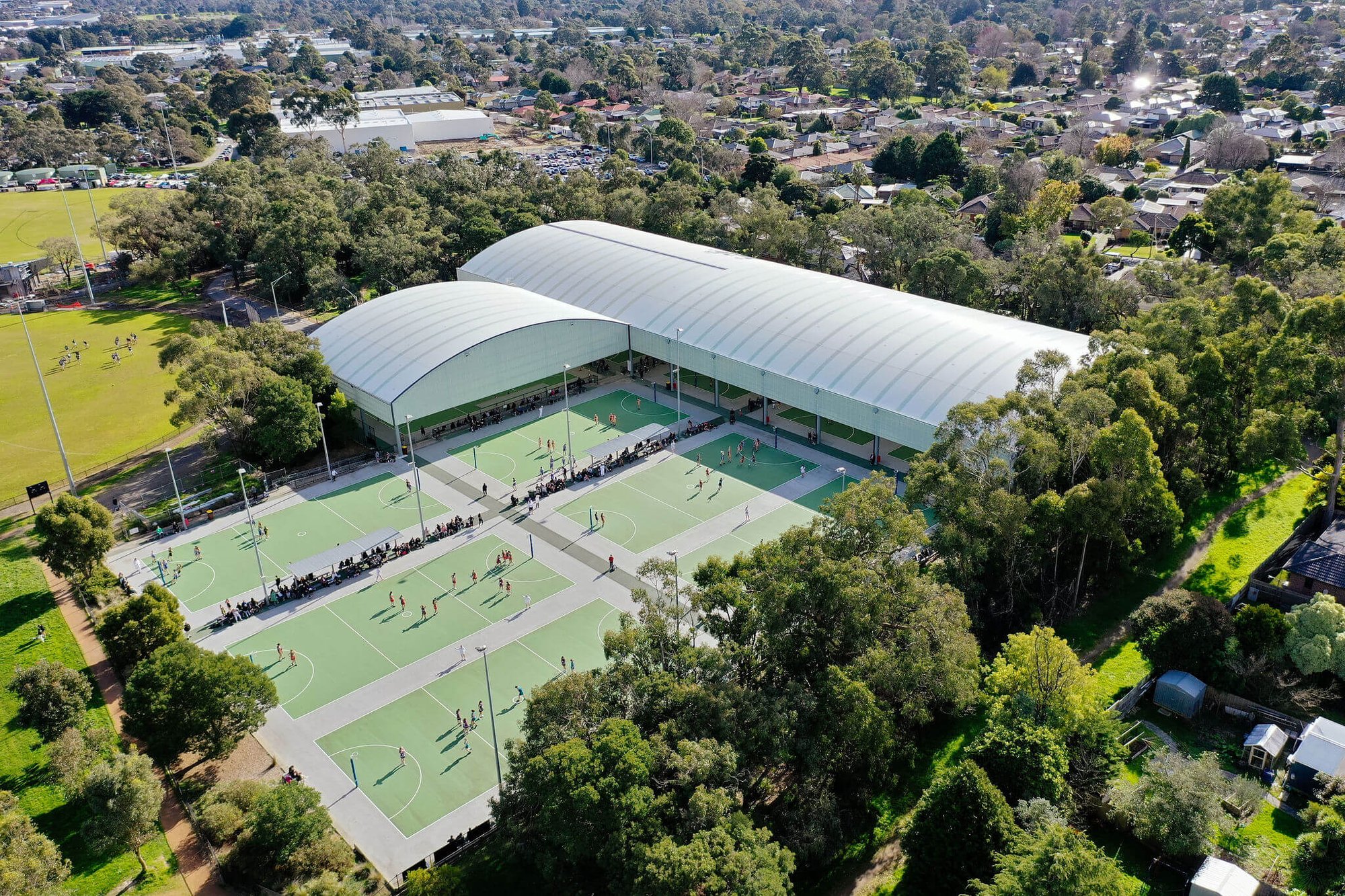

Steel-framed shade systems provide dependable overhead cover in outdoor and circulation areas exposed to sun and rainfall.
Form, fixing strategy, and drainage are engineered to shed water and resist wind loads without having to rely on walls or complete enclosure.

Our rigid structures use hot-dip galvanised steel columns and beams to protect against corrosion and extend service life in exposed settings.
The base protection is reinforced with 2-step or 3-step powder coating systems, improving durability further while allowing colour & finish to suit the site.

Steel canopies balance upfront build cost with long service life, reducing overall spend across demanding commercial sites.
Durable finishes, simple maintenance regimes, and long replacement cycles keep operating costs predictable over time.

Steel enables a wide range of forms, from curved profiles to cantilevered spans, without constraining structural performance.
Skylights and acoustic treatments can be integrated within the frame, allowing each structure to be tailored to site and use.

Steel is fully recyclable and can be recovered at end of life, reducing material waste in large structural applications.
Its durability and reuse potential support responsible construction by limiting replacement cycles and resource demand over time.

We deliver projects on time, within budget, and to the highest quality standards.
Selecting a steel roof comes down to how the space will be used, the loads it needs to carry, and the form you are trying to achieve. Span requirements, integration of services, and the degree of enclosure all influence the right structural approach. Each roof type brings different trade-offs in terms of structural behaviour, buildability, cost, and visual outcome. The following options outline the most common configurations used across commercial and public settings, and where each tends to perform best.
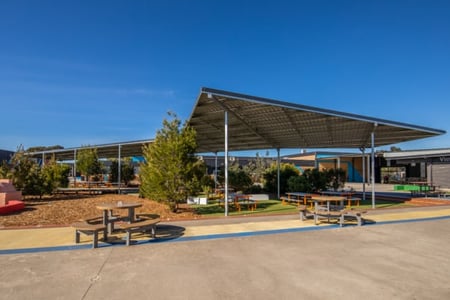
Skillion roofs utilise a single, sloping surface to create a sleek and minimalist profile, perfect for modern commercial environments.
This angled geometry ensures efficient drainage of water and debris. It combines aesthetic appeal with essential functional performance.
These structures are ideal for projects that demand a sharp look. They provide a practical, high-impact solution for any premium site.
.jpg?width=450&height=300&name=School-COLA-design-5-1-1024x682%20(1).jpg)
Gable roofs are one of the most recognisable and traditional roof styles, characterised by their triangular shape.
This design is highly versatile and offers excellent water runoff, making it ideal for regions with heavy rainfall.
Gable roof structures are known for their strength and stability, providing a classic look that suits a wide range of commercial applications.
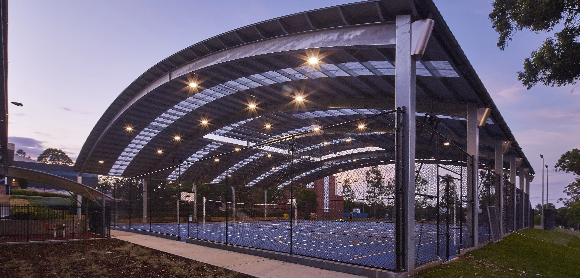
Curved steel roofs introduce a distinct architectural form while distributing loads efficiently across the structural frame.
The geometry allows larger clear spans with fewer columns, improving flexibility for circulation, courts, or open-use areas.
This form suits projects seeking a contemporary profile without sacrificing structural performance or buildability.
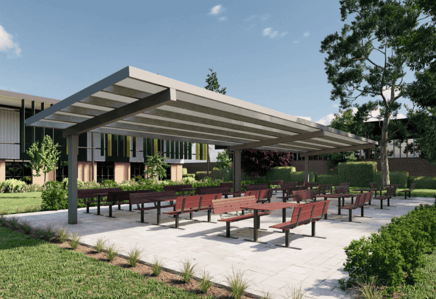
Cantilevered structures are designed to provide unobstructed space beneath the roof, with the support beams extending only from one side.
This design is particularly useful in areas where space is premium, such as narrow walkways, entrances, or parking lots.
Cantilever structures offer both functional and aesthetic advantages, as they provide shade and protection without the need for intrusive support columns.
Since 1997, we’ve translated ambitious architectural concepts into high-performance infrastructure. Our end-to-end delivery model keeps design intent aligned with engineering and construction, so what’s approved is what gets built.
If you’re planning a project any time soon, early specialist input may be in order as it helps test feasibility, resolve constraints, and set the project up for success. Trust in the strength of steel and the expertise of Greenline to deliver shade infrastructure that meets and exceeds your expectations.