GRANTS
Shade infrastructure isn't always a top priority in capital works planning. Classrooms, building upgrades, and safety compliance naturally come first.
As a result, outdoor spaces like playgrounds, walkways, and assembly areas are often pushed down the list, even though they're used every day by students and staff. Government education grants can help bridge that gap.
From a funding perspective, shade structures are a practical investment. They cost less than major building projects, can be installed relatively quickly, and provide immediate benefits for the school community.
That makes them a strong fit for grant funding, especially for education providers looking to deliver visible improvements while making the most of a limited budget.
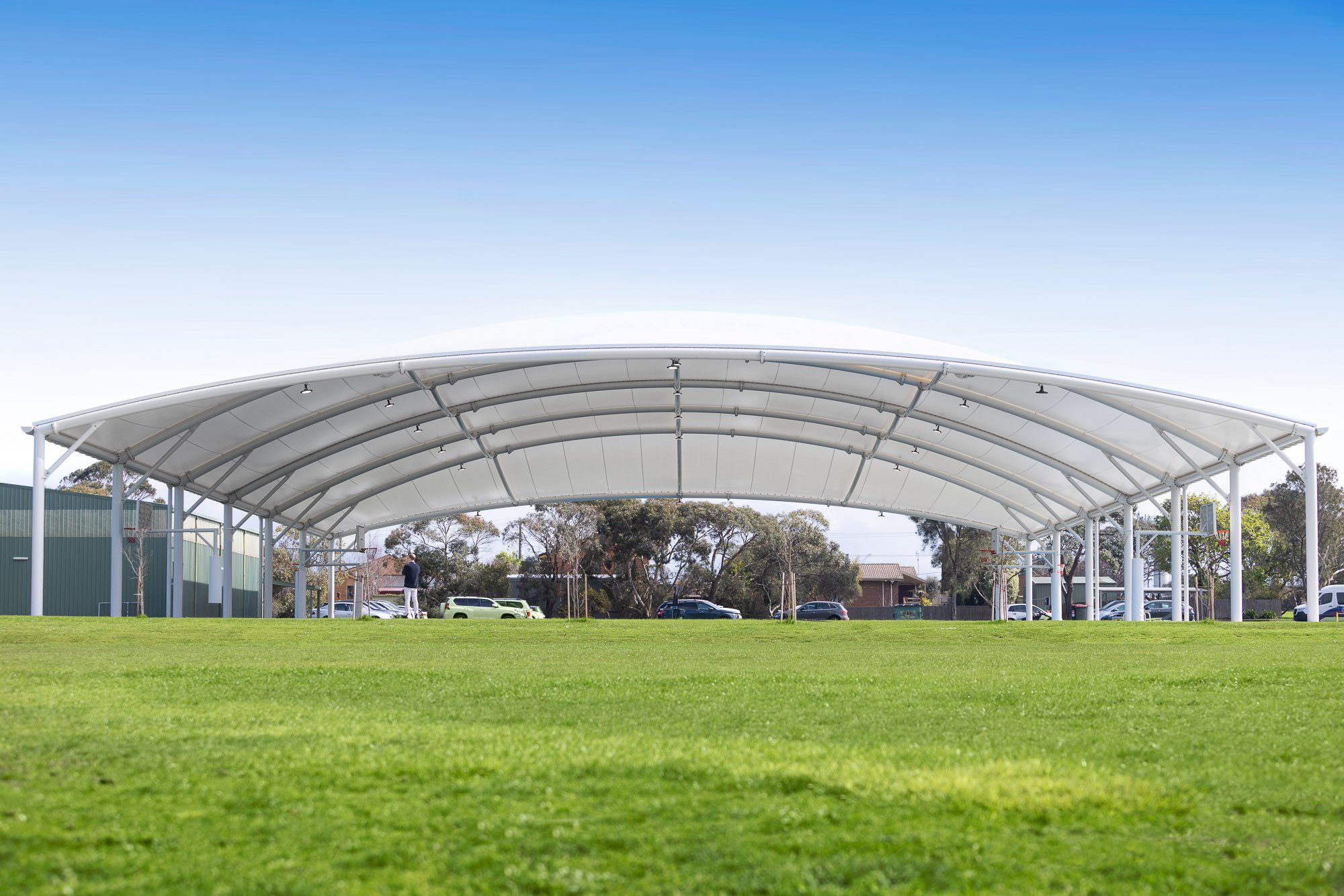
Government education grants are funding programs offered by state and federal authorities to pay for campus infrastructure that regular operating budgets cannot cover.
Funding models vary widely by provider. A local council might offer a smaller grant targeting regional community facilities, while a federal research fund might distribute millions across national universities based on performance metrics.
These programs fall into two main categories:
These grants can be applied to a range of projects, including:
How government education funding is applied can often be defined by the grant’s guidelines. Always check how your grants will support your educational institutions, teachers, and children.
Mostly, two levels of government: state and federal. Beyond that, it depends entirely on the program.
A state government might fund something hyper-local, say, infrastructure for schools in a specific region hit by drought or bushfire. The federal government tends to run broader schemes, ones that apply across the country regardless of which state an institution sits in.
There's no single body handing out "education grants" as a category. Instead, dozens of departments and agencies each manage their own slice of it, which is part of why finding the right grant takes actual research rather than a five-minute search.
Primary schools, high schools, universities, TAFEs, the full spread of educational institutions in Australia can potentially access this funding.
Students are the intended beneficiaries, obviously, since better facilities and resources tend to translate into a better learning experience. But that framing undersells who actually benefits day to day. Teachers need functional staff rooms and decent equipment to do their jobs well. Researchers need lab space and infrastructure that keeps pace with what their field demands.
Even the wider community gets pulled in, since plenty of grants specifically require that funded infrastructure be accessible outside school hours. So while a grant application might list "improving student outcomes" as the headline goal, the reality is closer to a whole ecosystem benefiting at once.
Education grants cover a wide range of physical infrastructure, and the list looks different depending on whether you're talking about a primary school or a university campus. Shade structures, playgrounds, and assembly spaces are common at the school end.
Lecture halls, research facilities, and student accommodation come up more often for universities and TAFEs. Parking, classrooms, staff rooms, canteens, and study halls sit somewhere in the middle, relevant to almost any type of institution.
Most education organisations, regardless of size or sector, can apply for a state or national grant to fund projects like these. Greenline works across this whole range, helping schools, TAFEs, and universities put grant funding toward durable shade structures that hold up under daily use.
What actually gets approved comes down to the individual grant's focus and guidelines rather than a fixed list of eligible items, so it's worth checking a program's specific criteria via an official source.
We've put together a list of Australian government education grants you can apply for to improve your institution's infrastructure, whether that's a school, TAFE, or university.
Grant programs shift regularly, funding pools open and close, eligibility rules get updated, deadlines move, so what's listed here reflects the current state of play rather than a fixed set of options.
You can learn more about what grant resources are available across Australia through our website.
The Clubgrants Category 3 Infrastructure Grants program covers the cost of infrastructure projects across New South Wales, with the 2026/27 round now open.
Whether you're altering an existing structure or building something new on campus grounds, this grant has funding available for it.
Disadvantaged NSW communities are the main focus, including areas that are regional, drought-affected, remote, disaster-affected, culturally and linguistically diverse, or home to Aboriginal and Torres Strait Islander communities.
Community infrastructure is the target of this fund, so any school, TAFE, or university applying needs to ensure the finished project is accessible to the public outside regular hours.
Applications for the 2026/27 round close on 17 August 2026.
Eligible higher education providers can receive funding through Research Block Grants to support students, research projects, researchers, equipment, and infrastructure.
This isn't a program institutions apply for in the traditional sense.
Funding is allocated annually using program-specific formulae, based partly on how successful each provider has been at attracting research income and supporting research degree completions.
This is an ongoing annual allocation rather than a fixed application, so there's no single deadline to work toward.
The Capital Grants Program is available specifically to Catholic and independent schools looking to improve their infrastructure.
It covers any project the school determines will support student development, the delivery of education, or student wellbeing.
Funding is assessed case by case, and schools need to meet Commonwealth recognition requirements to be considered eligible.
Because this program is restricted to the non-government school sector, it won't be relevant for public schools, TAFEs, or universities, but it's worth knowing about if your institution qualifies.
Applications for this grant can be made at any time.
Eligibility criteria vary significantly between grant programs, and it's worth checking the specific requirements of a program before applying to avoid wasting time on a project that won't qualify.
Most government-supported education grants are aimed at organisations that need the funding most, sometimes with particular focus on a vulnerable group or a specific community, such as Aboriginal and Torres Strait Islander schools.
Catholic and independent schools generally can only apply to non-government-oriented grants, while public schools, TAFEs, and universities have access to a broader range of state and federal programs.
There are always exceptions to these general rules, so it pays to check whether your institution is eligible before committing time to an application.
You don't need a grant to benefit from a Greenline shade structure. Our products are available to any educational institution in need of protection from the sun and the weather, grant-funded or not.
Find out more about what your shade project might require with our project estimate tool.
Securing a government education grant is just the first step toward a genuinely useful infrastructure upgrade.
Greenline helps schools, TAFEs, and universities put that funding to good use, with shade structures built to handle daily use across every part of a campus.
If you're not sure where to start, we can help with the research process too, pointing you toward a grant that suits your institution and its specific needs. Applying has never been easier with the right guidance behind you.
Don't wait to get your shade project off the ground. Contact us today to begin the grant-searching process and design the structure your institution actually needs.
Looking for grants specific to schools Check out our other grants guides: