CURVED ROOF STRUCTURES
Curved roof structures are among the most visually distinctive options in commercial shade and shelter design. Defined by an arched steel roof that curves in one direction across the span, these structures combine striking contemporary form with practical, high-performance coverage.
The curved profile can take two forms: a full curved span, where the arc runs continuously across the full width of the structure, or a curved gable, where the roof features a curved ridge section. Both can be designed with or without end walls, depending on the site and the level of weather protection required.
In commercial settings, steel frames with barrel roofs are valued for their ability to cover wide areas with generous clearance, while maintaining a lower overall height than comparable gable or skillion designs.
Its strength lies in its geometry; an arched form distributes loads through compression rather than relying solely on bending, which is how flat or pitched roofs behave. This means the structure can span wider distances with less material, making it one of the most efficient ways to cover a large area.
For practical purposes, this translates to wide, clear spans without the need for internal columns.
One of the less obvious advantages is its overall height. Because the curve gains clearance through the shape of the arc rather than through steep pitch, the structure can sit lower at the edges than a gable or skillion of comparable span.
This matters on sites where building height is a constraint, whether due to planning controls, neighbouring properties, or the visual scale of surrounding buildings.
These structures curve in one direction only, across the span of the structure. This single-direction curve is what gives the roof its arched profile when viewed from the end.
Two main factors are to be considered: a full curved span runs the arc continuously from one side of the structure to the other. This creates a smooth, unbroken profile that reads as a single sweeping gesture. It is a bold form that works well for large-format structures where visual impact and maximum clearance are priorities.
They pair well with a range of weather infills. Cladding, battens, or architectural highlights such as perforated signage panels can be integrated into the sides or ends of the structure.
This adds weather protection, privacy, or branding opportunities without compromising the overall design. The roofing itself is steel or metal sheeting, rolled to follow the curved profile. This is precision work, and the fabrication quality directly affects the finished appearance and weatherproofing of the structure.
Getting this right requires experience with curved steelwork and a clear understanding of tolerances and installation sequencing.
Every shade structure we deliver is custom designed by our team to match the project and its setting. These structures are well suited to sporting facilities, schools, recreation areas, and council environments where wide coverage and visual presence are priorities.
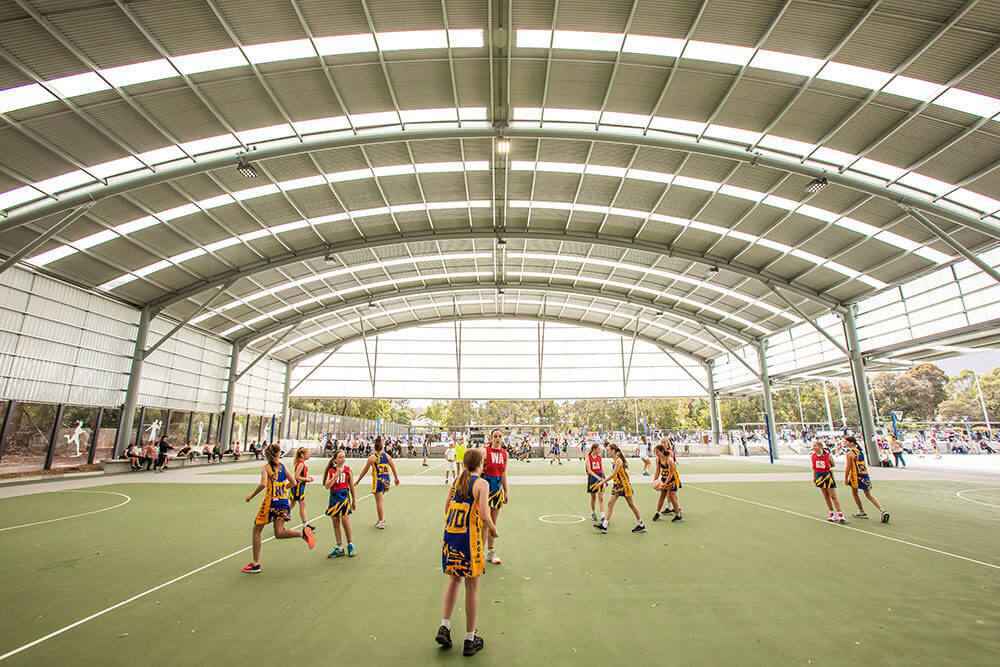
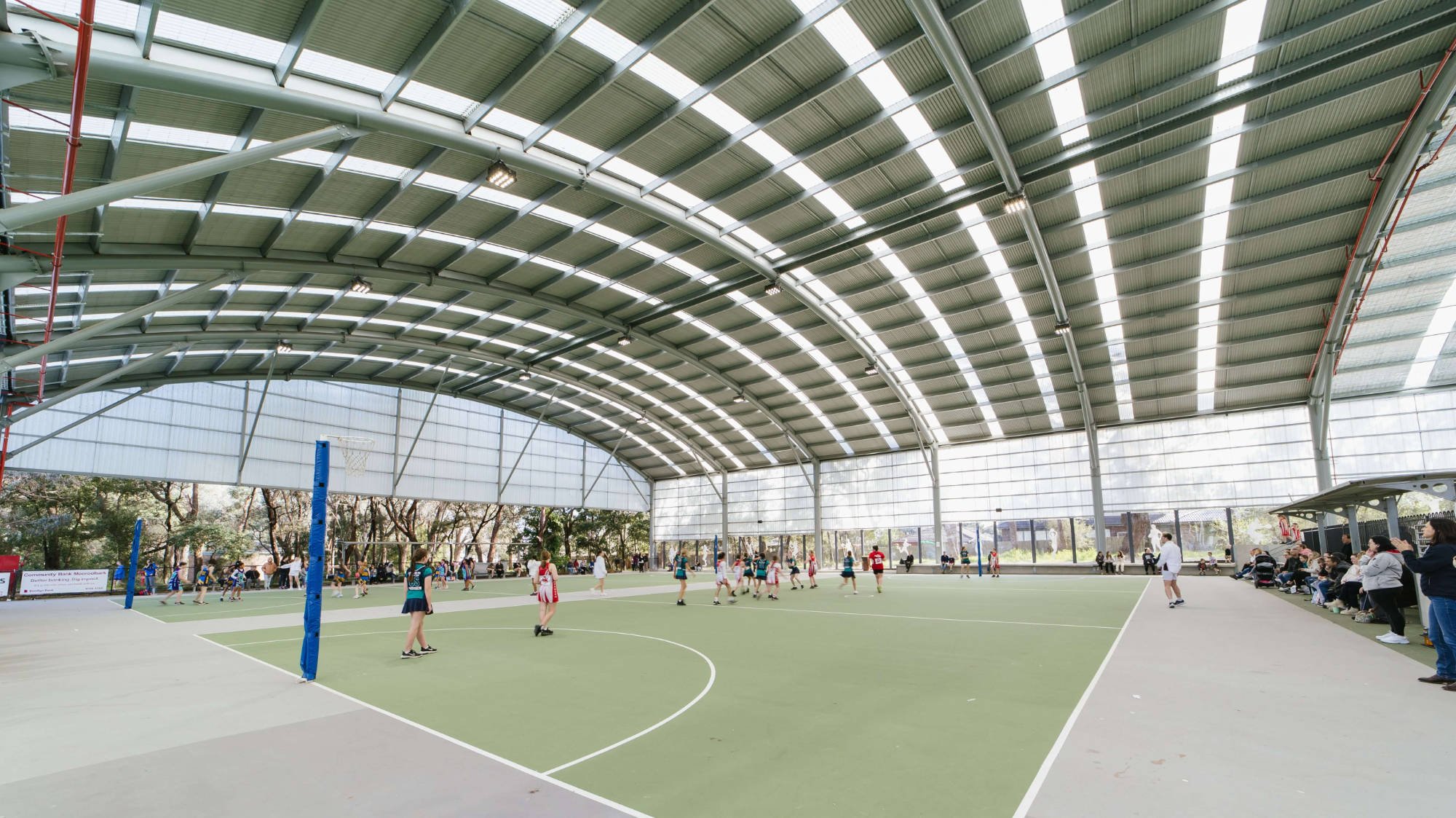
Sporting courts tend to be the most common application. The generous centre height creates a functional playing environment without internal columns or compromised overhead clearance.
Multi-court facilities, in particular, benefit from the efficiency of the curved form, as a single structure can cover a wide area without becoming visually dominant or excessively tall.
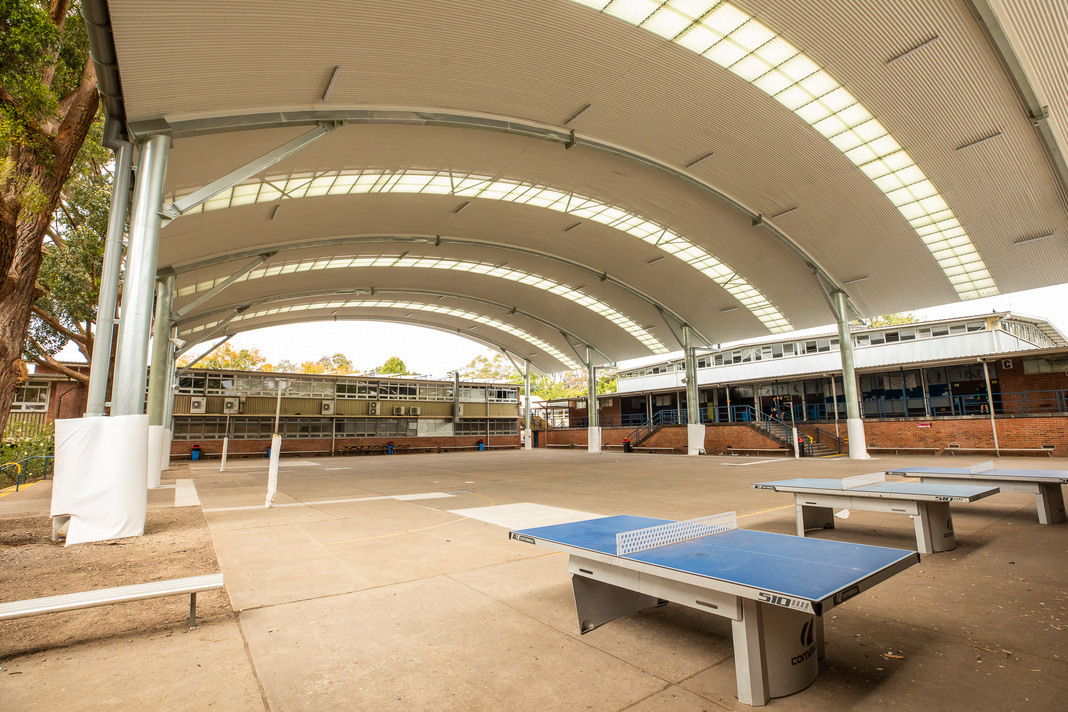
Schools and education facilities are another strong fit. Covered outdoor learning areas, assembly spaces, and play areas all benefit from the wide, open coverage a barrel roof provides.
The contemporary form adds character to a school environment and signals investment in quality outdoor spaces for students and staff. For larger campuses, this structure can serve as a landmark element, helping to anchor the layout of outdoor areas and giving the school a modern, cohesive identity.
For councils and community organisations, these structures can anchor a recreation precinct or public space. Their architectural presence makes them a natural centrepiece, whether they are sheltering a playground, a skate park, a community gathering area, or a multi-use court.
In regional and suburban settings, these structures often become defining features of the spaces they serve, helping to elevate the quality and perception of public amenity.
Several factors shape how well a curved steel roof structure performs over its lifetime, and working through them early makes the rest of the process considerably smoother.
Material selection: Steel is the standard choice for barrel vault structures because it can be precision-rolled to follow the curved profile without compromising structural integrity. Its strength, longevity, and resistance to corrosion when properly finished make it well suited to permanent outdoor installations in Australian conditions.
Cost and coverage: These structures are often highly cost-effective for the area they cover. The barrel vault form spans wide distances without the additional framing that other roof profiles require, which keeps material use efficient and the overall cost competitive relative to the coverage achieved.
Fabrication quality: A curved steel frame demands more from a fabricator than flat or pitched designs. The rolling, welding, and finishing of curved members requires precision at every stage, and the quality of that work has a direct bearing on how the finished structure looks, seals, and holds its profile over time.
Site conditions: Ground conditions, access, and height constraints all influence how a roof structure is designed and installed. Understanding these early allows our team to resolve potential complications during the design phase rather than on site, where changes are more costly and time-consuming.
Planning considerations: The lower eave height of a curved roof can be an advantage for planning approvals, as the overall building height is often less than alternative roof forms covering the same span. On sites near residential boundaries or in areas with strict height controls, this is worth factoring into the design conversation early.
Drainage: The curved profile sheds water efficiently, but the direction and volume of runoff depends on the shape of the curve and the length of the structure. Our team designs the drainage strategy alongside the roof form so stormwater is managed properly and kept well clear of the usable space beneath.
Curved steel roof structures provide dependable, permanent protection from harsh weather.
The barrel vault form sheds rain effectively while shielding users from intense sun and wind, keeping outdoor spaces usable and comfortable throughout the year.
Steel's strength makes it particularly well suited to large-span curved structures.
Our steel is hot-dip galvanised for corrosion resistance, with optional powder coating adding colour and further protection over the life of the structure
Curved steel roof structures offer strong returns over time.
Their durability and low maintenance requirements reduce ongoing costs, and the barrel vault form can span large areas efficiently, keeping projects on budget without sacrificing coverage.
The curved roof form suits a wide range of applications and architectural contexts.
Skylights, acoustic panels, and other features can be integrated where the space calls for them, and the structure can be sized to cover everything from a single court to a full recreational precinct.
Steel is fully recyclable, making it a considered choice for projects with environmental commitments.
A well-built barrel vault structure is designed for decades of use, which means less material consumed over time and a lower long-term footprint for the facility.
We deliver projects on time, within budget, and to the highest quality standards.
$200M
in completed projects since 2016
180,000+
square metres covered since 2020
Curved roof shade structures perform well in environments where wide coverage, generous clearance, and contemporary design come together. Here is where they make the biggest impact.
Sporting facilities: The standout application for curved roofs. The arched profile provides the overhead clearance courts demand, while the clear span keeps the playing area completely unobstructed.
School covered outdoor learning areas: Ideal for COLAs where students need reliable shade and rain protection across a wide area. Schools with limited footprint benefit from the efficiency of the arch, which delivers maximum coverage without excessive height or visual bulk.
Outdoor recreation and community spaces: Well suited for playgrounds, skate parks, community gathering areas, and multi-use recreation precincts. The architectural presence of a curved roof helps define the space and signals quality investment in public amenity.
Multi-court and large-format coverage: The structural efficiency of the arch means wider spans with less material, and the lower edge height keeps the overall structure compact relative to the area it covers.
Greenline partners with schools, councils, sporting complexes, and government bodies across Australia to design and build shade structures engineered for long-term performance.
Every project runs through our Consult. Design. Construct. methodology, which means scope, budget, and timeline are agreed upfront and held to throughout the build.