Schools are not trying to build shade. They are trying to guarantee use of their space, regardless of the weather.
That distinction shapes how you plan, what you prioritise, and whether the finished structure becomes a genuine asset or a quiet disappointment that lasts for decades.
This guide covers the planning principles that determine whether an undercover outdoor area works brilliantly, or falls short of expectations year after year.
How the space will be used
Most planning mistakes start with the same problem. Schools select a structure before defining what the space needs to do.
A Business Manager sees a barrel vault at another campus and asks for something similar. A supplier promotes a particular design. An architect presents an impressive render. The conversation jumps straight to materials, dimensions, and price.
What gets skipped: how does your timetable actually use this space?
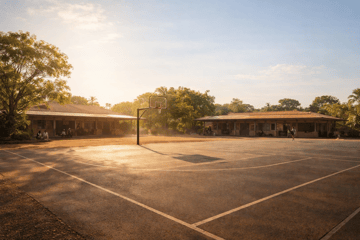
A sports court is rarely just a sports court. It hosts PE one lesson, netball the next, then an assembly straight after. It might host community basketball on weekends and the school fete once a year.
Planning for one use guarantees you will compromise on the others.
Schools that get lasting value work backwards from function. They map daily use versus peak use. They identify which activities need to coexist and which create conflicts. They think about clearance heights for different sports, acoustic requirements for announcements, and how spectators experience the space.
A well-used space is designed from the timetable backwards, not from a product brochure.
What COLAs actually need to do
The term COLA, or Covered Outdoor Learning Area, has become standard across Australian schools. But it describes a function, not a building type.
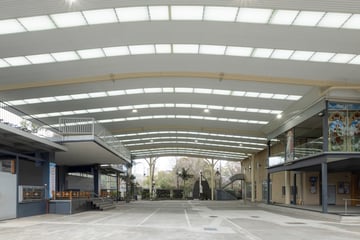
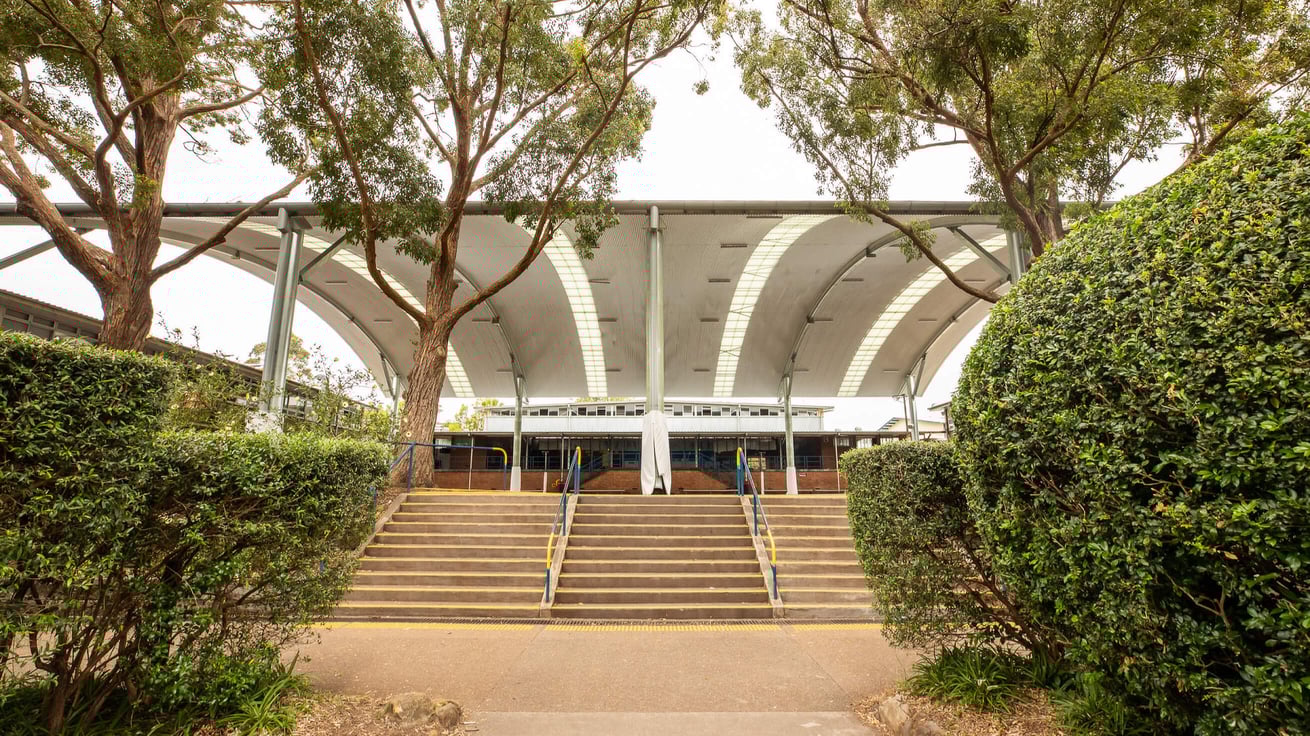
A school COLA might be a tensile membrane, a steel-framed barrel vault, or something else entirely. What defines it is how the space performs, not what it is made from.
Common COLA requirements include multi-sport markings, rapid changeover between activities, assemblies where 300 students can hear a speaker clearly, PE classes where basketballs do not echo off metal walls, and community events where the space feels welcoming rather than industrial.
COLA sizing can start small or cover multiple full-sized courts. They can be rectangular, curved, or custom-shaped to fit awkward sites. The flexibility exists. The question is whether planning captures the flexibility you actually need.
Schools that treat the structural decision as primarily a materials choice often end up with spaces that technically work but feel wrong. The ceiling is too low for volleyball. The acoustics make assemblies painful. The orientation puts the afternoon sun directly in players' eyes.
Why the 'big shed' approach falls short in schools
When budgets tighten, industrial shed-style structures look attractive. Low cost per square metre. Quick to erect. Covers a large area.
But these structures are designed for storing equipment, not educating students.
The problems show up in use. Poor acoustics from exposed beams and hard surfaces make every bouncing ball echo, every announcement muddy. Heat builds up under metal roofing, making summer use uncomfortable. Limited natural light requires artificial lighting even at midday. The visual impact says something about the school's priorities to every visitor who walks past.
It might keep the rain off. But it is not a space people want to be under.
Schools that go down this path often find the space underutilised. Students avoid it when they have other options. Staff schedule around it rather than into it. The lower upfront cost can become a poor investment because the structure never delivers the outcomes it was meant to achieve.
Cost per square metre is the wrong metric. Value comes from how much the space gets used and how well it serves the activities it hosts.
First impressions and school identity
When prospective families tour a school, the facilities speak before staff ever do.
A well-designed outdoor space becomes part of a school's identity. It is where assemblies happen, where sports days are held, and where the community gathers for fetes and markets.
Schools that invest thoughtfully in outdoor infrastructure often find that the space becomes the hub of campus life. It hosts events that previously required hired venues. It creates opportunities for community hire and after-hours use. It changes how the school operates day to day.
Within a school hall or gymnasium, the four walls create hard limits. These spaces get outgrown quickly. A flexible outdoor structure can accommodate growth in ways enclosed buildings cannot.
A well-designed outdoor space does not just solve a problem. It becomes part of what people remember about the school years later.
Budget certainty is a planning discipline, not a final negotiation
Schools do not fear building. They fear budget blowouts and surprises.
That fear is reasonable. Traditional procurement pathways, where an architect designs, an engineer certifies, and a builder constructs, introduce multiple handover points. Each handover creates scope for miscommunication, gaps, and variations.
Risky items get excluded from early quotes. Underground services become expensive surprises. Soil conditions require design changes. The project manager hired to coordinate everyone becomes the person everyone complains to, while costs climb.
Schools that achieve budget certainty address risk early. They work with partners who can provide realistic, all-in budgets before design finalisation, not after. They choose procurement approaches where all disciplines are involved from the outset, working towards the same goals.
Greenline's Consult. Design. Construct. methodology was developed specifically for this. When you agree on a budget through this process, the scope, costs, and timeline are locked in. Risk sits with the delivery partner, not the school. Business Managers can focus on outcomes rather than anxiously waiting for the next variation claim.
Certainty is designed into the process, not negotiated at the end.
Construction on live school sites
A school campus is not a typical construction site.
Students are learning. Staff are teaching. Drop-off and pick-up continue. The playground stays open. Construction happens around all of it.
This requires experience with live sites. Understanding how to stage work safely, secure construction zones without disrupting campus flow, manage deliveries during appropriate hours, and minimise the period when the space is unavailable.
When construction stops on a school site, the real cost is not money. It is the disruption, lost teaching time, logistical chaos, and frustrated staff and parents.
The best outcomes come from partners who have built on school campuses many times. They know how to fabricate components off-site and assemble on-site quickly. They understand that getting in and getting out fast matters more to a school than saving a few dollars on a slower approach.
Good planning protects students, staff, and schedules.
Planning for what the space could become
The immediate need might be a covered sports court. But once that space is weatherproof and flexible, opportunities open up that schools had not even planned for.
Community hire generates revenue. New sports programs become possible. Curriculum offerings expand. Events that previously required external venues can happen on campus.
Enrolment grows. Curriculum requirements change. Community expectations evolve. A structure designed only for today's needs may struggle with tomorrow's demands.
Schools planning undercover areas should think about clearance heights that accommodate a range of sports, not just the ones currently offered. Electrical and AV infrastructure that supports events. Lighting suitable for evening use. Layouts that allow reconfiguration as needs change.
The best projects keep paying dividends for decades because they were planned with growth in mind.
What successful school projects have in common
The most successful undercover outdoor areas in Australian schools are not necessarily the biggest or the cheapest. They are the ones where planning got the fundamentals right.
They started with real use cases, not structure types. They avoided outdated shed solutions that save money upfront but underperform for the life of the asset. They prioritised budget and timetable certainty through procurement approaches that put risk where it belongs, with the delivery partner, not the school. And they created spaces that reflect the school's identity rather than generic industrial cover.
When these principles guide the process, outdoor spaces stop being weather-dependent problems and start becoming core infrastructure.
An undercover space planned properly does not just solve a problem. It changes how the school thinks about its outdoor areas altogether.
Greenline has delivered covered outdoor areas for Australian schools for over 25 years. Our Consult. Design. Construct. methodology provides budget certainty, minimal site disruption, and structures designed around how your space actually needs to work.
If you are ready to talk through a project, get in touch with our team or use the Project Estimate Tool to understand indicative costs.