
At a Glance
This article covers:
- Which part of AS/NZS 1158 applies to schools, councils, and sports clubs
- The difference between Category V and Category P lighting
- What changed when the standard was updated in 2020
- When adding a covered structure creates a new lighting obligation
- How AS/NZS 1158 and AS 2560 work together for sports facilities
If you're planning outdoor lighting for a school, council, or sports club anywhere in Australia or New Zealand, AS/NZS 1158 is the standard your design will be measured against.
It sets the performance and design requirements for lighting in outdoor roads and public spaces, and it applies to any outdoor area where people move, gather, or travel: footpaths, car parks, courts, ovals, and the ground beneath a covered structure all fall under its scope.
The standard matters in two key scenarios:
- When you're planning outdoor infrastructure and need to specify compliant lighting.
- When a covered outdoor structure gets added to an existing space, creating a new lighting compliance obligation, particularly for evening or low-light use.
This article walks through what AS/NZS 1158 covers, which part applies to your project, and what changes when a roof goes over previously open ground.
The structure of the standard
AS/NZS 1158 is split into a series of parts, each covering a distinct application, because a road built for cars, a footpath used by pedestrians, and an underpass have different lighting needs and risks.
Knowing which part applies to your project saves time chasing the wrong specification and makes it easier to get it approved from a council, a building certifier, or an independent lighting auditor. The table below sets out the most relevant parts of the series.
| Part | Scope |
| AS/NZS 1158.0:2005 | Overview, terminology, and introduction to the series |
| AS/NZS 1158.1.1: 2022 | Category V (vehicular traffic) lighting: performance and design requirements |
| AS/NZS 1158.1.2:2010 | Category V lighting: guide to design, installation, operation and maintenance |
| AS/NZS 1158.2:2020 | Computer procedures for calculating light technical parameters for Category V and Category P schemes |
| AS/NZS 1158.3.1:2005 AS/NZS 1158.3.1:2020 |
Category P (pedestrian area) lighting: performance and design requirements |
| AS/NZS 1158.4: 2009 | Pedestrian crossings: performance and design requirements |
| AS/NZS 1158.5:2014 | Tunnels and underpasses: performance and design requirements |
For most schools, councils, and sports clubs, 1158.3.1:2020 (Category P pedestrian area lighting) is the part that matters day to day.
Category V and Category P: what each covers
“Category” here doesn't refer directly to technical ratings like luminosity or colour rendering index. It's a classification based on whose visual requirements a lighting scheme is designed to serve.
- AS/NZS 1158.1.1: Governs Category V lighting, built around the requirements of vehicle drivers.
- AS/NZS 1158.3.1: Governs Category P lighting, built around the requirements of pedestrians.
The metrics, the classification method, and the compliance pathway differ between them. For instance, a scheme designed to Category V requirements won't satisfy Category P obligations by default, and vice versa.
For most schools, councils, and sports clubs, knowing which one applies to a given space, and in some cases both, is the first decision in any lighting brief.
Category V
Category V applies to roads where vehicle drivers' visual requirements dominate: traffic routes, main roads, arterial roads.
Rather than measuring illuminance (how much light lands on a surface), Category V schemes are largely assessed on luminance: how much light reflects toward a driver's eye off the road surface, along with glare control for oncoming traffic.
That's a different measurement approach to Category P, which leans more toward keeping a driver's eyes comfortable and the road ahead visible at speed.
Schools and sports clubs are unlikely to be directly specifying Category V lighting unless they're responsible for access road infrastructure, such as a shared driveway or an entrance road off a public street.
Category P
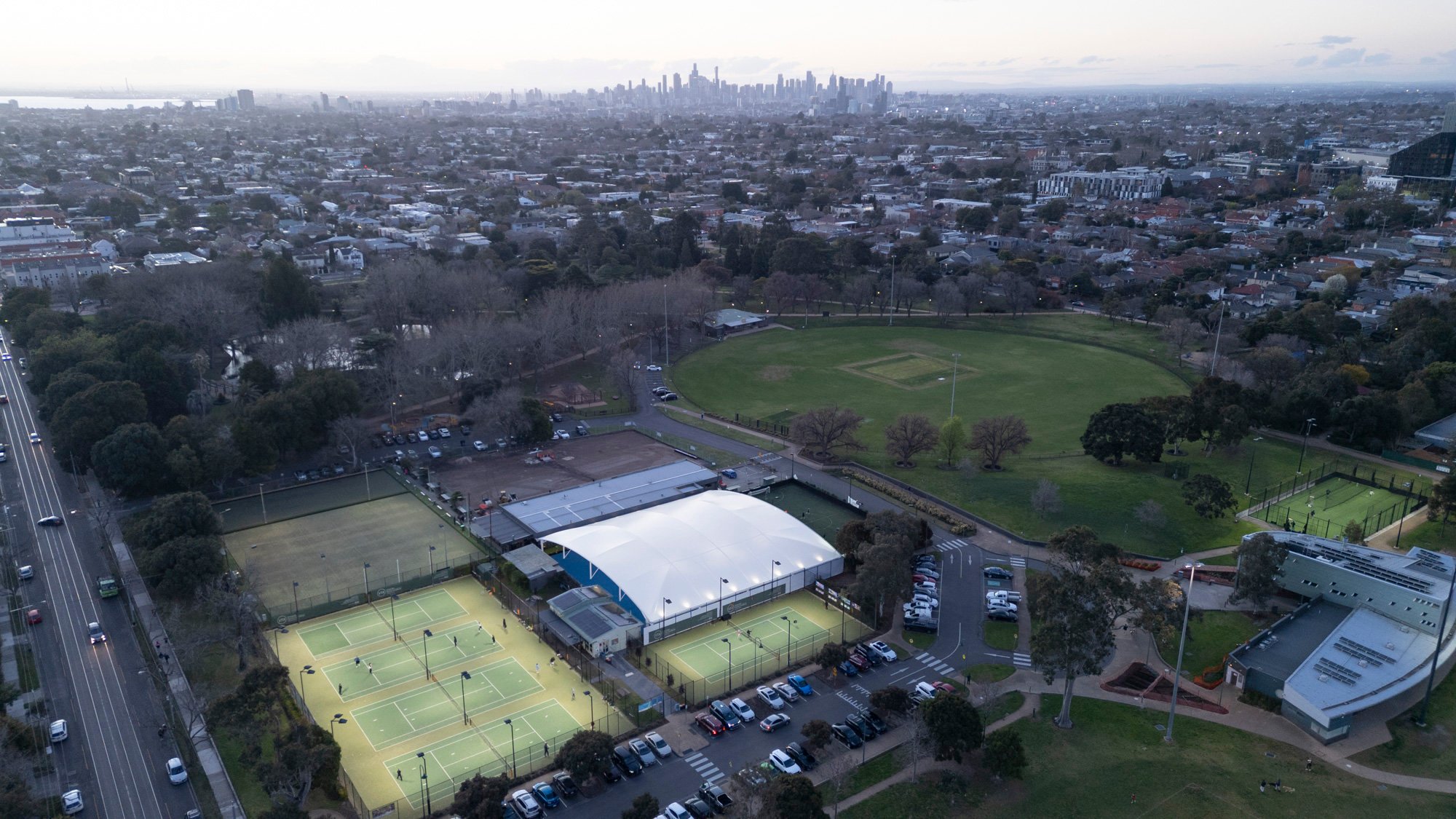
Category P applies to roads and outdoor public spaces where the visual requirements of pedestrians are dominant: footpaths, local roads, outdoor car parks, parks, covered outdoor areas, shopping precincts, and any public gathering space. This is the category that applies to outdoor areas at schools, sports facilities, and council parks.
Within Category P, each space is assigned a lighting subcategory through a selection process set out in the standard, weighing three factors: the volume of pedestrian activity, the assessed risk of crime or reduced personal security, and the amenity standard the space is meant to meet.
Higher activity, higher security risk, and higher amenity expectations push a space toward a more demanding subcategory, with higher illuminance and stricter uniformity requirements.
Low-activity, low-risk settings, such as infrequently used rural pathways, sit at the lower end of the scale. For example, a council park with significant evening pedestrian activity will be classified more demandingly than a seldom-used service path, and the required maintained average illuminance will be higher.
In addition, illuminance and uniformity aren't the only things the standard controls. Its design objectives also cover glare control, limiting upward light waste, and limiting obtrusive light spilling onto adjoining land. It also specifies a requirement that the scheme keep performing at these levels across its maintenance cycle.
This is important for council-managed assets in particular: a design that meets requirements when new but hasn't accounted for lumen depreciation can move out of compliance well before the fixtures are due for replacement.
For a covered structure sitting next to another sports field, a classroom block, or a boundary road, the obtrusive light provision is often the one that gets missed. A scheme can hit its illuminance target under the canopy and still spill enough light past the boundary to create a problem for the site next door.
What the 2020 update changed
AS/NZS 1158.3.1 was updated in February 2020, replacing the 2005 version.
The principal changes introduced more precise subcategories within the P classification, adjusted light technical parameters (illuminance and uniformity requirements) for many classifications, and updated energy performance metrics to reflect the industry's shift toward LED technology.
The 2020 version introduced an energy metric framework that accounts for the efficiency of LED luminaires more accurately than the older standard, which was developed when metal halide and fluorescent sources were dominant (good old days).
Projects specified under the 2005 standard that are now being reviewed, audited, or extended should be assessed against the 2020 version, which is the current applicable standard.
When a covered structure creates a new lighting obligation
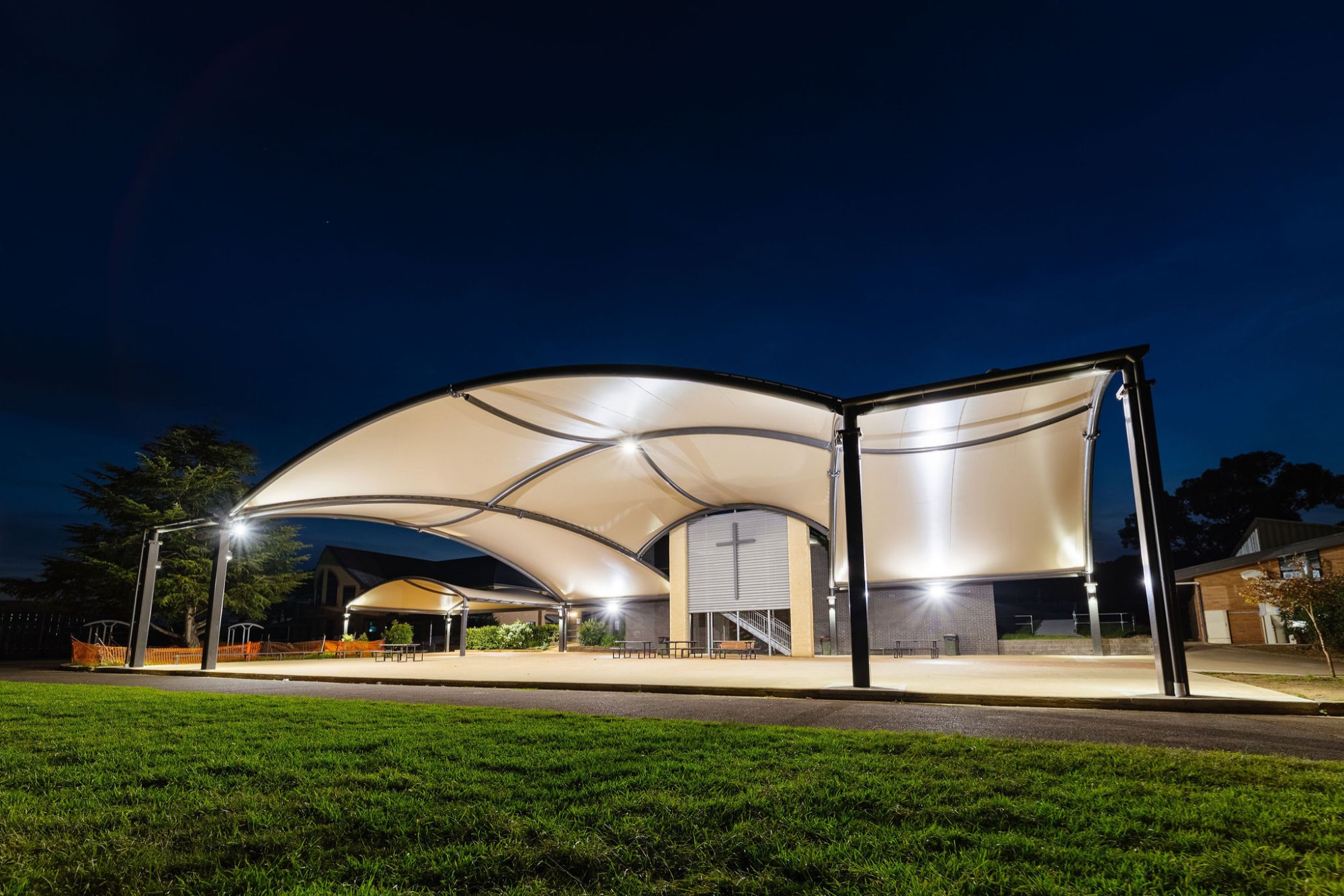
An outdoor area that's uncovered and adequately lit by natural daylight during school or club hours may not require artificial lighting under AS/NZS 1158.3.1 for daytime use. Adding a permanent canopy or covered structure changes that.
The structure reduces natural light in the space beneath it. Translucent membranes transmit a significant proportion of daylight, but even a high-transmission fabric canopy reduces the light available underneath. In many settings, this is a feature rather than a problem as the shading effect is the point.
Even so, the daytime light environment changes, and in some settings (a Covered Outdoor Learning Area used for teaching or assembly during overcast conditions, for example) that change can be significant enough to warrant artificial lighting during day use.
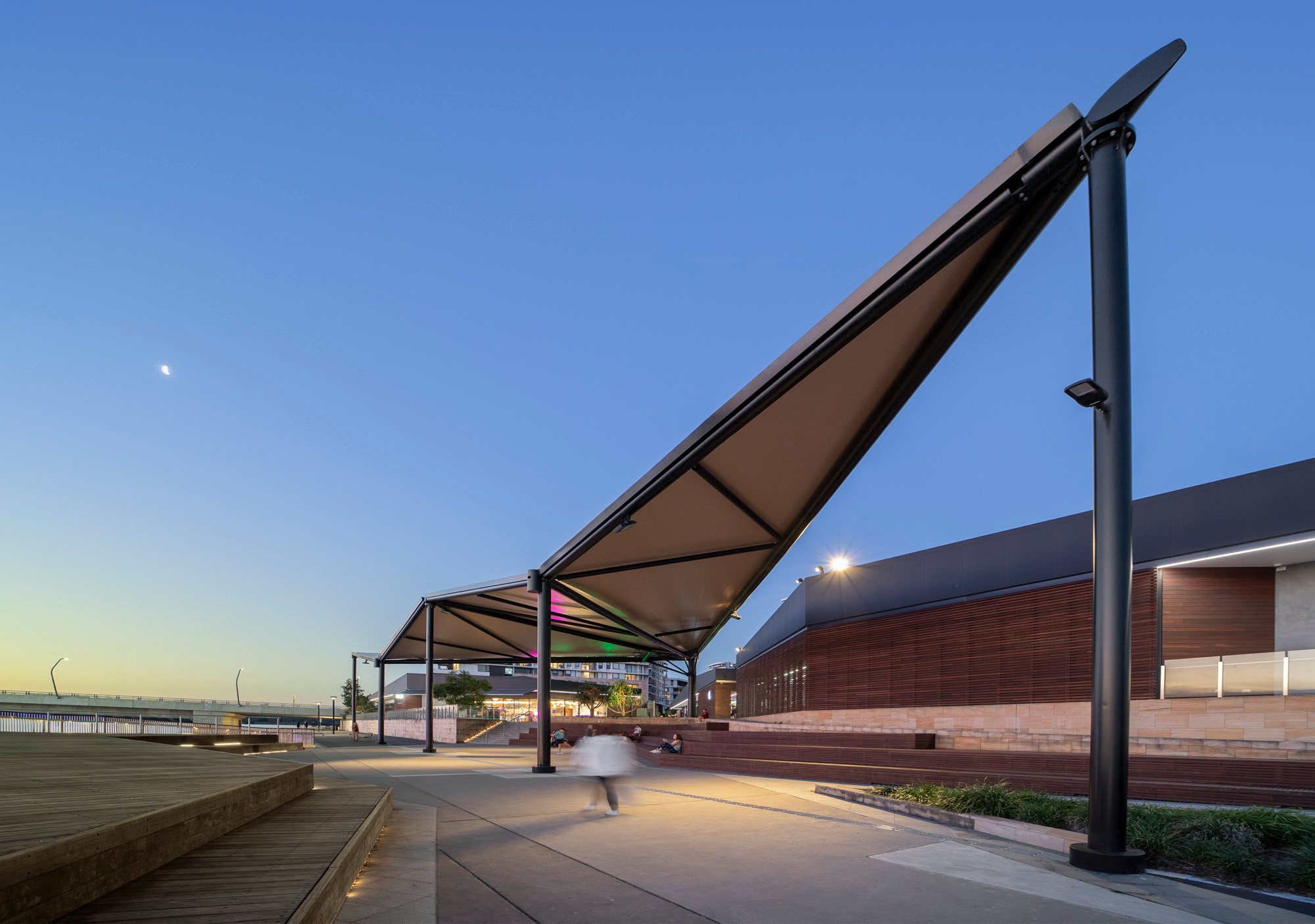
More consequentially: if the space will be used in the evening for training, events, or supervised outdoor programs, artificial lighting under the structure must satisfy 1158.3.1 Category P requirements for the activity and context.
A sports club running evening junior training under a covered court shelter needs to specify lighting that meets the P classification applicable to that space. Similarly, a school running evening community events under a covered outdoor area has this obligation as well.
The covered structure also affects the lighting design itself. Design work under 1158.3.1 comes down to a set of specifications including:
- Luminaire optics
- Lamp type
- Lumen output
- Mounting height
- Fixture spacing
- Setback from the edge of the lit area, and
- Outreach length
A canopy changes several of these at once by fixing the mounting height, limiting where fixtures can physically sit, and, depending on the membrane's reflectance, altering how light bounces around under the roof.
Part of the design task is also identifying, upfront, any limits on glare and spill that could affect a neighbouring field, road, or building, since a scheme that works well in isolation can still create a problem for whatever operation sits next door.
Integrating lighting design into the structure brief, rather than treating it as a separate scope item to be addressed after the structure is built, produces better outcomes and avoids the common problem of retrofitting fixtures into a structure that was never designed to carry them cleanly.
AS 1158 vs AS 2560: why the difference matters for sports clubs
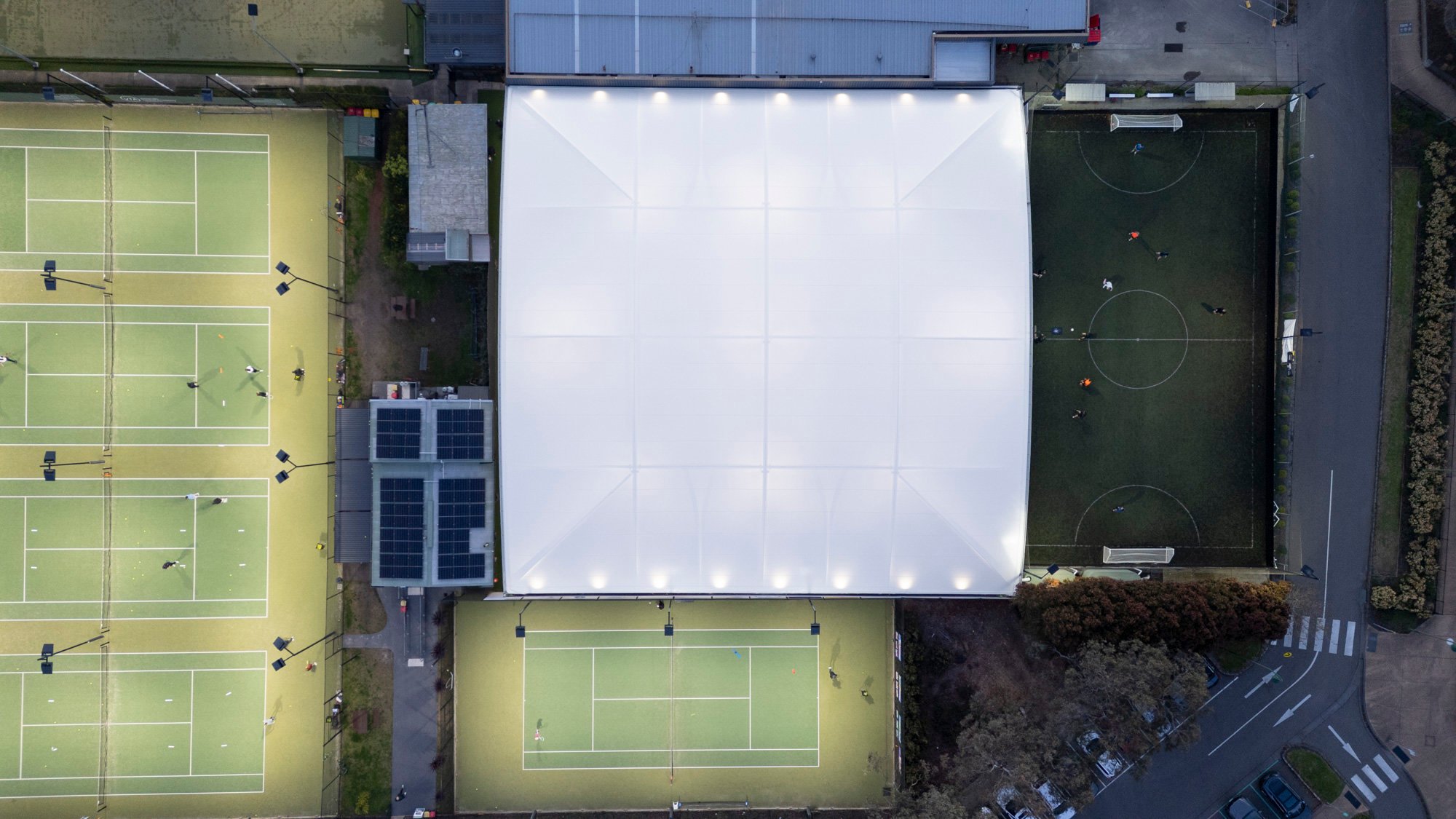
AS/NZS 1158.3.1 covers general pedestrian areas: pathways, gathering spaces, car parks, and public movement areas at sports facilities. It doesn't set the lighting requirements for active sports play areas itself.
Sports-specific lighting (the lighting of courts, fields, ovals, and playing surfaces for active participation or spectating) is governed by AS 2560.
In August 2021, Standards Australia consolidated what used to be eight separate single-sport standards, covering netball and basketball, tennis, football codes, bowling greens, and others, into one document: AS 2560.2:2021.
The consolidation also lifted recommended minimum illuminance levels to reflect LED performance and extended coverage to sports that weren't previously included, such as cricket, equestrian, and squash.
A design brief still referencing the old individual part numbers (2560.2.1, 2560.2.3, 2560.2.4, and so on) is working from a superseded reference.
For a sports club building a covered outdoor structure over a court or playing area, both standards are usually relevant: AS 2560.2 for the illuminance requirements on the playing surface itself, and 1158.3.1 for the access paths, car parks, and spectator areas surrounding it.
If the lighting design addresses only one without considering the other, it may satisfy the specification for play but leave access areas below the required pedestrian standard, or vice versa.
What Greenline considers from the outset
Lighting is a common scope item in permanent outdoor structure projects: COLAs, sports court shelters, bowling green canopies, and council park structures are regularly specified with integrated lighting.
Our process includes lighting in the discovery from the first conversation, because it has practical implications: Covered areas designed for evening community use need fixture mounting points, conduit runs, and membrane penetration details resolved during the design phase, rather than identified as a problem later.
Compliance needs documented proof behind it, and that starts with the calculation output, which is typically done through design software.
The output is what a council, certifier, or auditor will want as evidence that the scheme meets the relevant illuminance, uniformity, and glare requirements, which a fixture spec sheet alone doesn't provide. Getting that calculation done right can only happen in the design stage.
FAQs
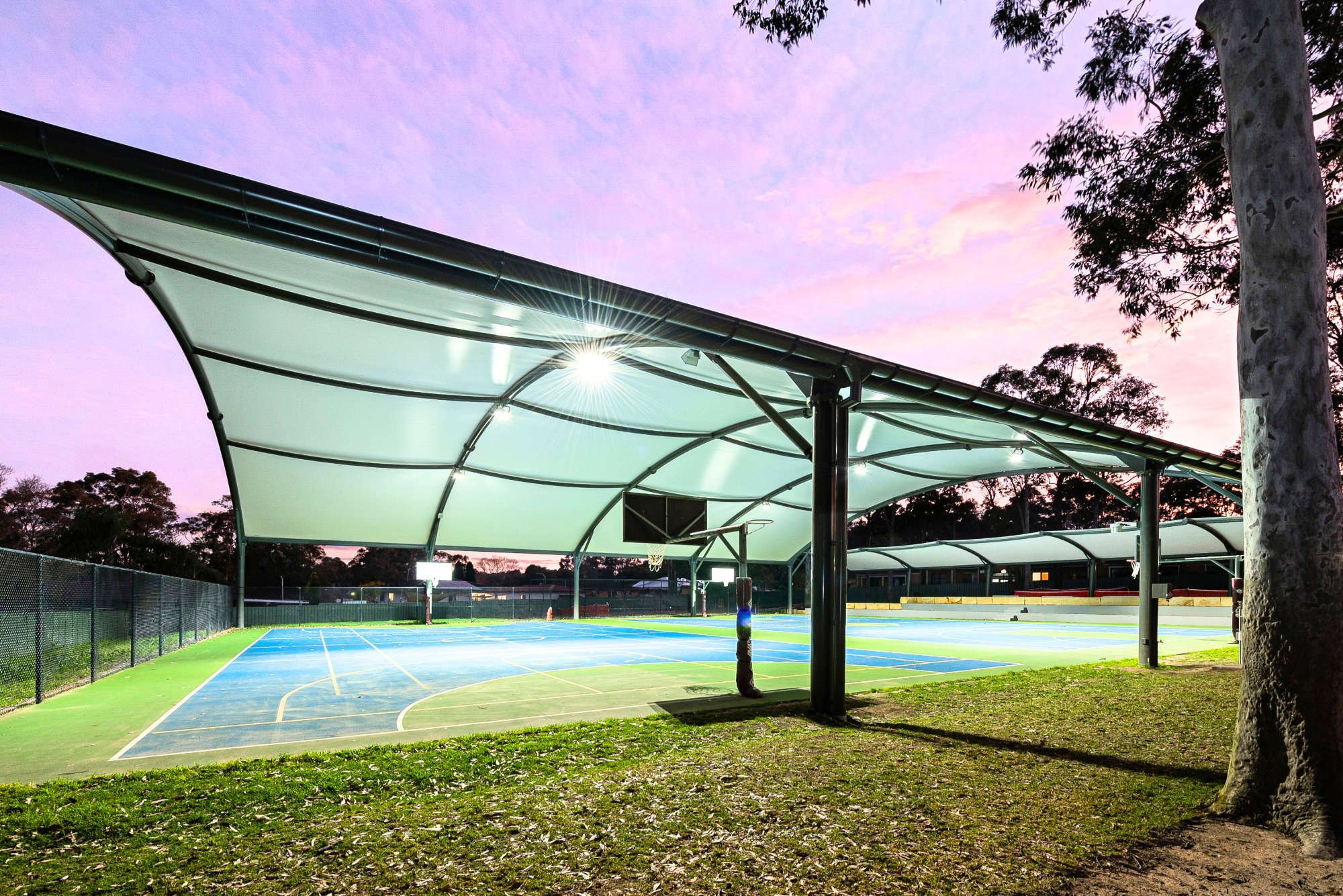
Most scoping conversations for a new covered structure end up circling back to the same handful of questions, whether the project is a fresh COLA build, a court shelter going in next to an existing car park, or a review of lighting someone else designed years ago.
The questions below cover the ones that most often decide which part of AS/NZS 1158 applies, how it interacts with AS 2560 on a sports site, and what changes once a roof goes over ground that used to be open to the sky.
What is AS/NZS 1158 and does it apply to my outdoor structure?
It is the Australian and New Zealand standard for the lighting of roads and public spaces. If your project includes outdoor pedestrian areas, pathways, car parks, or covered public spaces that will be used in low-light or evening conditions, the pedestrian area section, it is likely to apply.
Councils routinely require compliance with AS/NZS 1158.3.1 for any public-facing outdoor space, and schools and sports clubs have similar obligations where public access and evening use are involved.
What is the difference between Category P and Category V lighting?
Category V applies to roads where vehicle driver requirements dominate (traffic routes and arterial roads). Category P applies to spaces where pedestrian requirements dominate (footpaths, outdoor car parks, parks, plazas, and covered outdoor areas).
For most schools, sports clubs, and council facilities, Category P (1158.3.1) is the relevant classification. Category V applies only if the organisation is responsible for vehicle road infrastructure.
Does a covered outdoor structure require lighting under AS/NZS 1158?
Adding a covered structure to an outdoor area does not automatically trigger an AS/NZS 1158 lighting obligation for daytime use, though it does reduce natural light in the space below.
Where the space will be used in evening or low-light conditions, for after-school programs, evening training, events, or community use, 1158.3.1 Category P requirements apply to the pedestrian area beneath and around the structure.
The P classification assigned depends on the level of activity, the security context, and the amenity requirements of the space.
What is the difference between AS/NZS 1158 and AS 2560?
1158 covers pedestrian and road area lighting: pathways, car parks, access areas, and general outdoor public spaces. AS 2560 covers sports-specific lighting: the illuminance requirements on playing surfaces for active sport.
Sports clubs and school facilities typically need to consider both: AS 2560 for court or field lighting, and 1158.3.1 for the surrounding access areas, spectator zones, and pathways. A complete lighting design for a covered sports or community facility addresses both standards together.
Where to go from here
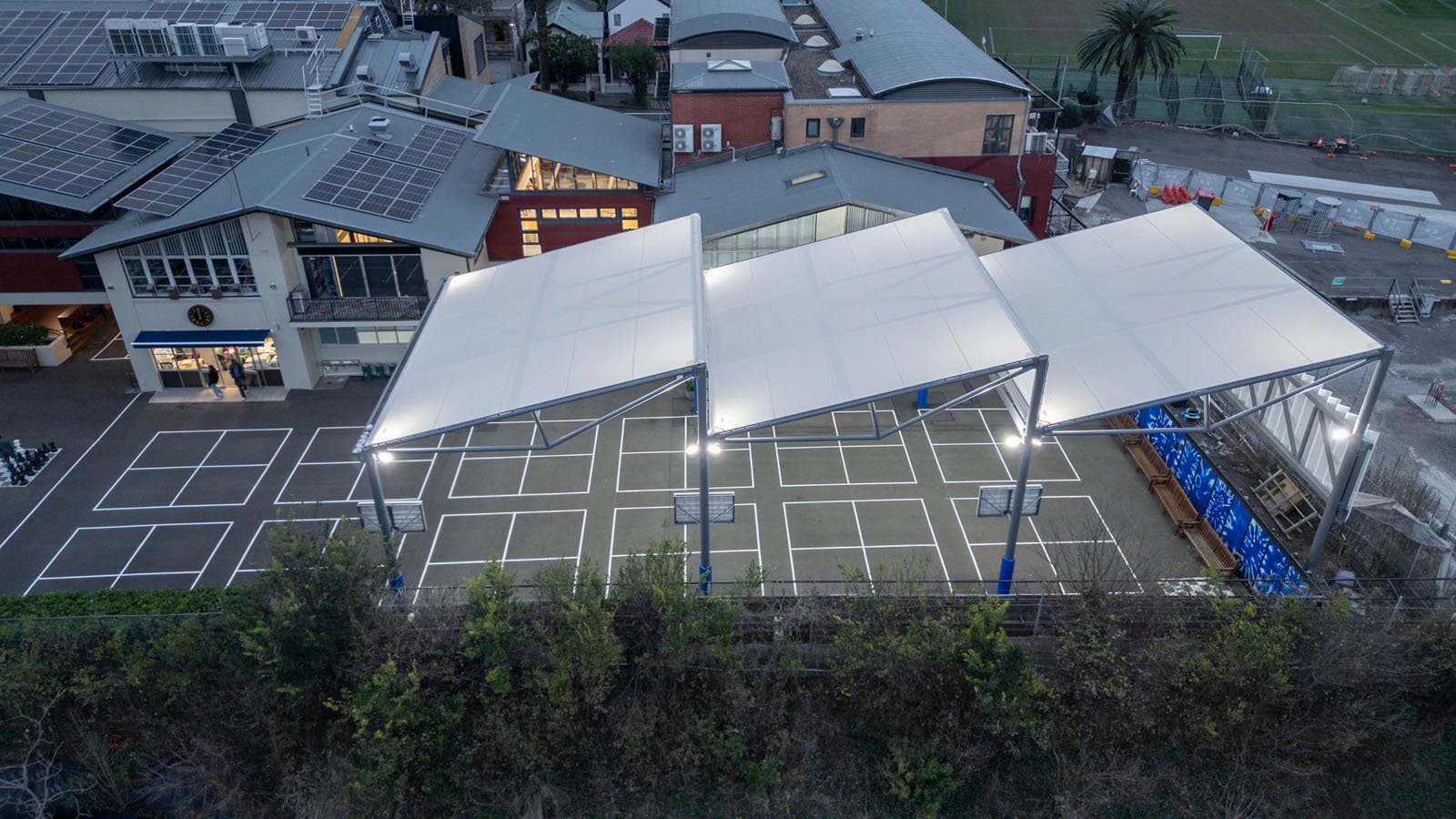
Standards get amended, consolidated, and renumbered, and a design brief built on outdated references can still pass a casual review before failing a real audit.
If you're scoping a covered structure, confirm which edition of each standard governs your project before specifications get locked in, and treat lighting as part of that scoping conversation rather than a line item for later.
A short conversation early in planning tends to be far cheaper than reworking a structure or retrofitting fixtures once it's built. Schedule a consultation with our team for more clarity on illuminating your outdoor space.