

At a glance
- Powder coating is a thermosetting polymer finish applied to structural steel to provide colour, UV resistance, and corrosion protection.
- The protective performance of a powder coat comes from the primer: a zinc-rich epoxy primer does the corrosion protection work, while the topcoat provides UV stability, colour, and surface protection.
- The right system is determined by the site's atmospheric corrosivity. Treating powder coating as just a colour choice is a common mistake.
Quotes for permanent outdoor structures might list something like "powder coat finish: monument grey". The colour is clearly specified. What’s not specified is:
- The primer system
- number of coats
- total film thickness, and
- corrosivity classification (this informs specs 1, 2, and 3)
Ignoring these specifications is how most people end up with a finish that looks right on installation and begins to fail within a few years in the environment it was always going to face.
Any contractor worth their salt will educate you on these specifications before taking your money, but not everyone does business that way. We strongly recommend getting to know the basics of coating metals and corrosivity if you’re in the market for outdoor structures.
That’s what we’ll discuss in this article.
What powder coating is and how it's applied
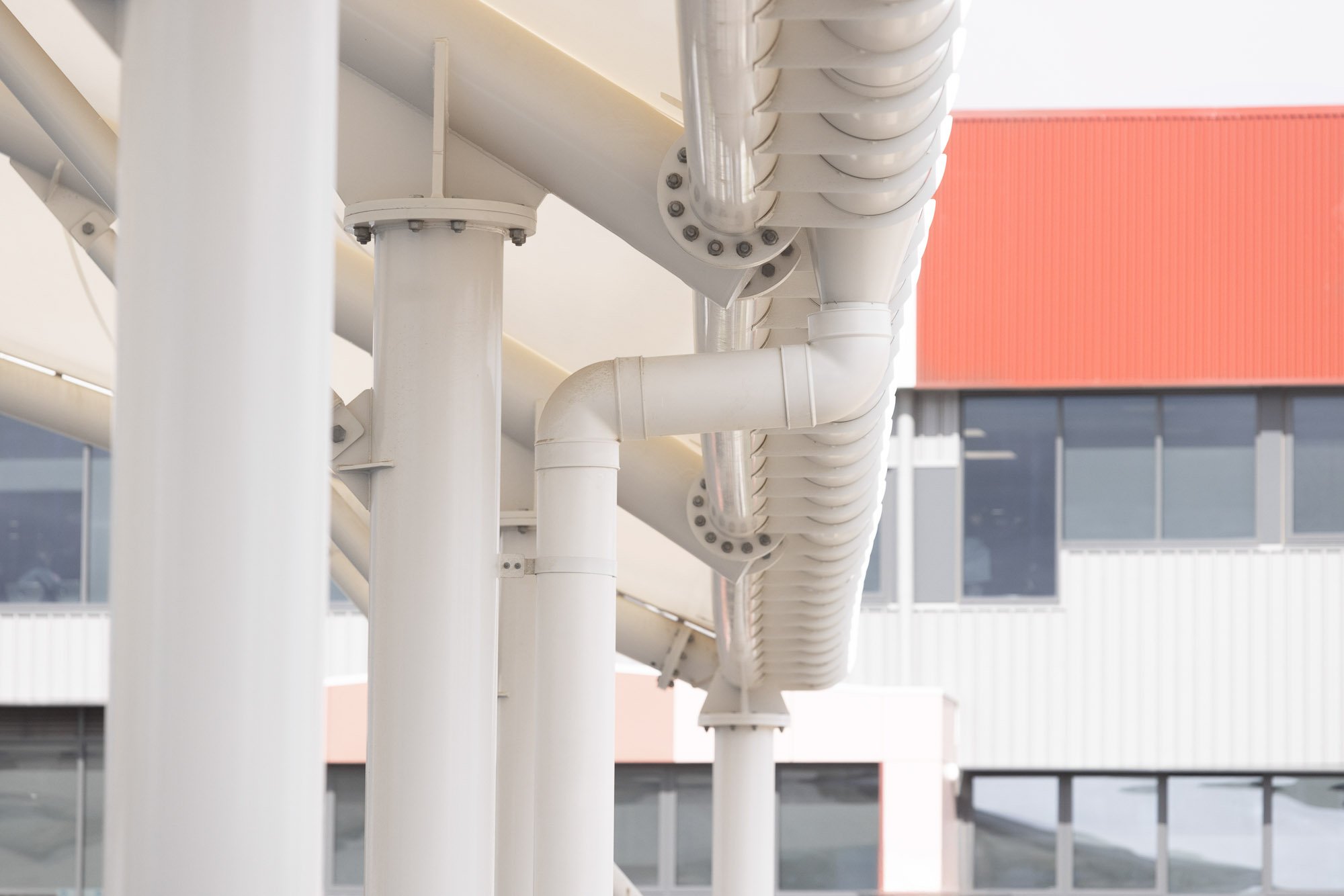
Powder coating is a dry finishing process: A thermosetting polymer powder, typically polyester, or polyurethane for higher-performance applications, is electrostatically charged and sprayed onto the prepared steel surface.
The powder adheres to the grounded steel without any carrier fluid. The coated component is then placed in a curing oven at temperatures typically between 160°c and 200°c, where the powder melts, flows out, and chemically cross-links to form a continuous, hard polymer film.
This results in a finish that is significantly harder and more impact-resistant than conventional liquid paint. It has no solvent off-gassing during cure, no brush or roller marks, and a uniform film thickness across surfaces and edges that liquid paint struggles to achieve consistently.
For outdoor structural steel, those properties translate directly to a finish that resists scratching, chipping, and the physical wear that occurs over a long service life in a public or educational setting.
The colour and gloss range available in powder coat is wide, from flat matte through to high gloss, across the full Dulux and Interpon colour ranges and beyond.
For most schools, councils, and sports clubs, colour selection happens in the context of site requirements, heritage considerations, or institutional colour standards. Any specifications beyond colour choice is part of the decision that determines performance.
Does powder coated steel rust?
Powder coating applied to bare steel as a single decorative topcoat provides a physical barrier against moisture and oxygen, but if that barrier is breached through scratching, impact, or edge corrosion, the underlying steel has no secondary protection.
In outdoor environments with UV exposure, temperature fluctuations, and moisture, a single decorative coat over bare steel is not an adequate specification for permanent infrastructure. The protective performance of a powder coat system on structural steel comes from the primer.
A zinc-rich epoxy primer, applied as the first coat directly to the prepared steel surface, does more than prepare for the topcoat. The zinc particles in the primer provide cathodic protection: they sacrifice electrochemically to protect the steel at areas where the coating may be compromised.
The topcoat, a UV-stable polyester, provides colour, UV resistance, and the physical surface protection that extends the life of the system beneath. This is why "powder coat" as a specification describes only the finish and not the system.
A single decorative topcoat over bare steel and a properly specified two-coat system with a zinc-rich epoxy primer both go by the same name, but they perform very differently over a twenty-year outdoor service life.
Hot-dip galvanising is an alternative protective system for structural elements facing conditions that exceed what a powder coat system is designed for: typically extreme corrosivity environments or direct water exposure.
It’s worth noting that applying powder coat over hot-dip galvanised steel is not a standard practice, as the galvanising process can trap gases in the steel surface that create adhesion and finish problems when powder coat is applied on top.
Relevant Australian standards
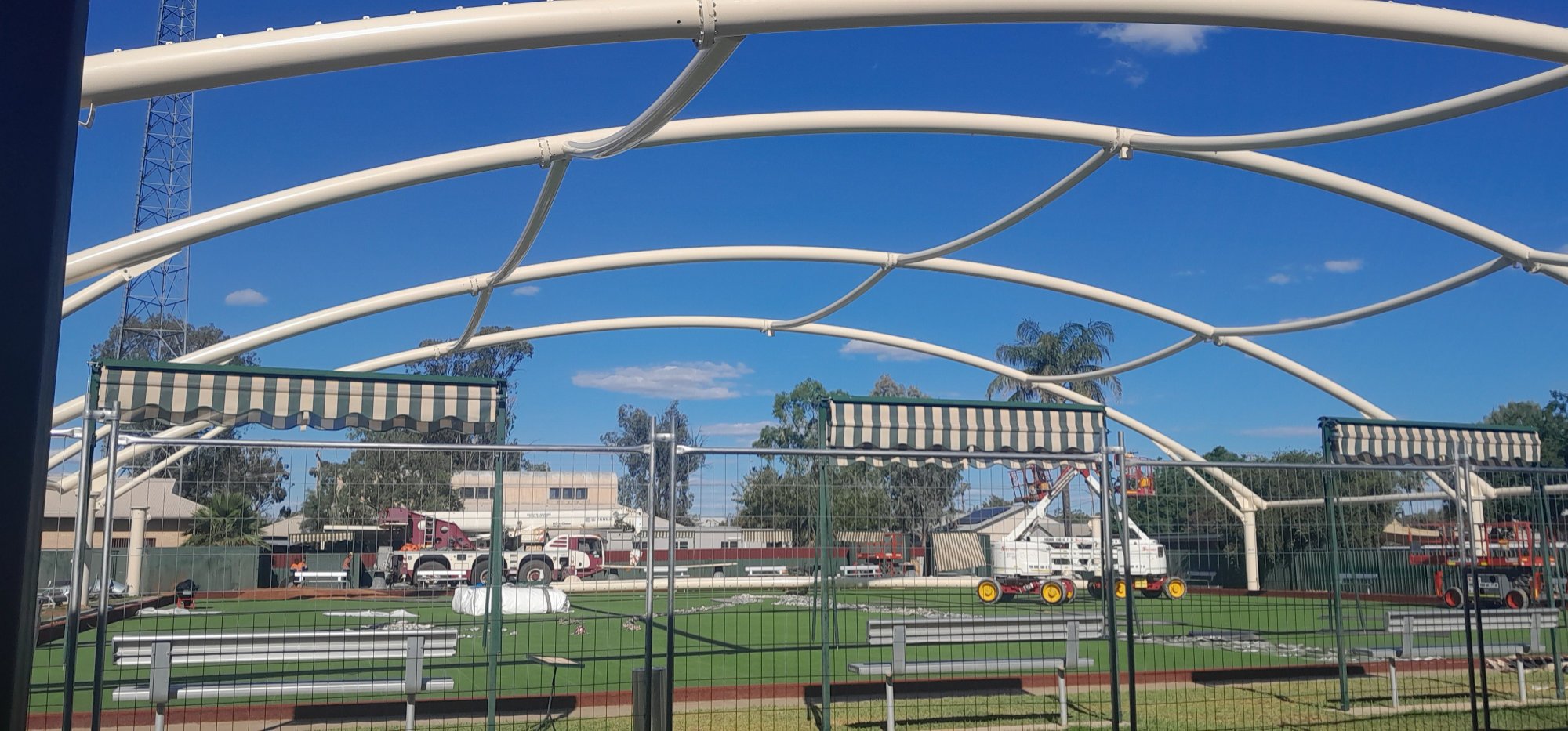
AS 4506 is the Australian standard for thermoset powder coatings on metal substrates: the standard that governs powder coat systems applied to structural steel. It specifies the test procedures and performance requirements for:
- Adhesion
- Colour consistency
- Gloss
- Impact resistance
- Resistance to weathering, corrosion, and chemical attack
Powder coat specifications that reference AS 4506 indicate the coating system must meet defined, verifiable performance criteria.
A separate standard, AS 3715, covers thermoset powder coatings for architectural applications specifically on aluminium and aluminium alloys. It is not the relevant standard for steel structures. If a specification for a steel outdoor structure cites AS 3715, it is potentially citing the wrong standard: something worth noting when reviewing quotes.
AS/NZS 2312.2, the guide to the protection of structural steel against atmospheric corrosion by the use of protective coatings, provides design and durability guidance for powder coat and other protective coating systems across different Australian environments. It incorporates the atmospheric corrosivity zone framework that informs system selection for a given site.
Understanding how corrosivity zones determine specification
Australia's atmospheric corrosivity zones, defined in AS 4312, classify environments from C1 (mild interior) through C5 (severe: heavy industrial or coastal marine), with CX representing the most extreme conditions.
The classification for a given site is determined by humidity, temperature, the presence of industrial or marine airborne contaminants, and proximity to the coastline. Most permanent outdoor structures at schools, sports clubs, and council facilities fall into C2 or C3.
The corrosivity zone directly determines the appropriate powder coat system. In a C2 inland environment, a two-coat system: a zinc-rich epoxy primer followed by a UV-stable polyester topcoat, provides appropriate protection for the structure's design life.
From C3 upwards, a three-coat system with an additional intermediate coat may be warranted depending on site-specific factors, increasing total film thickness and providing a more substantial protective barrier. At C4 and beyond, the three-coat specification becomes the expected approach; in the most extreme conditions, hot-dip galvanising may be specified instead of powder coat.
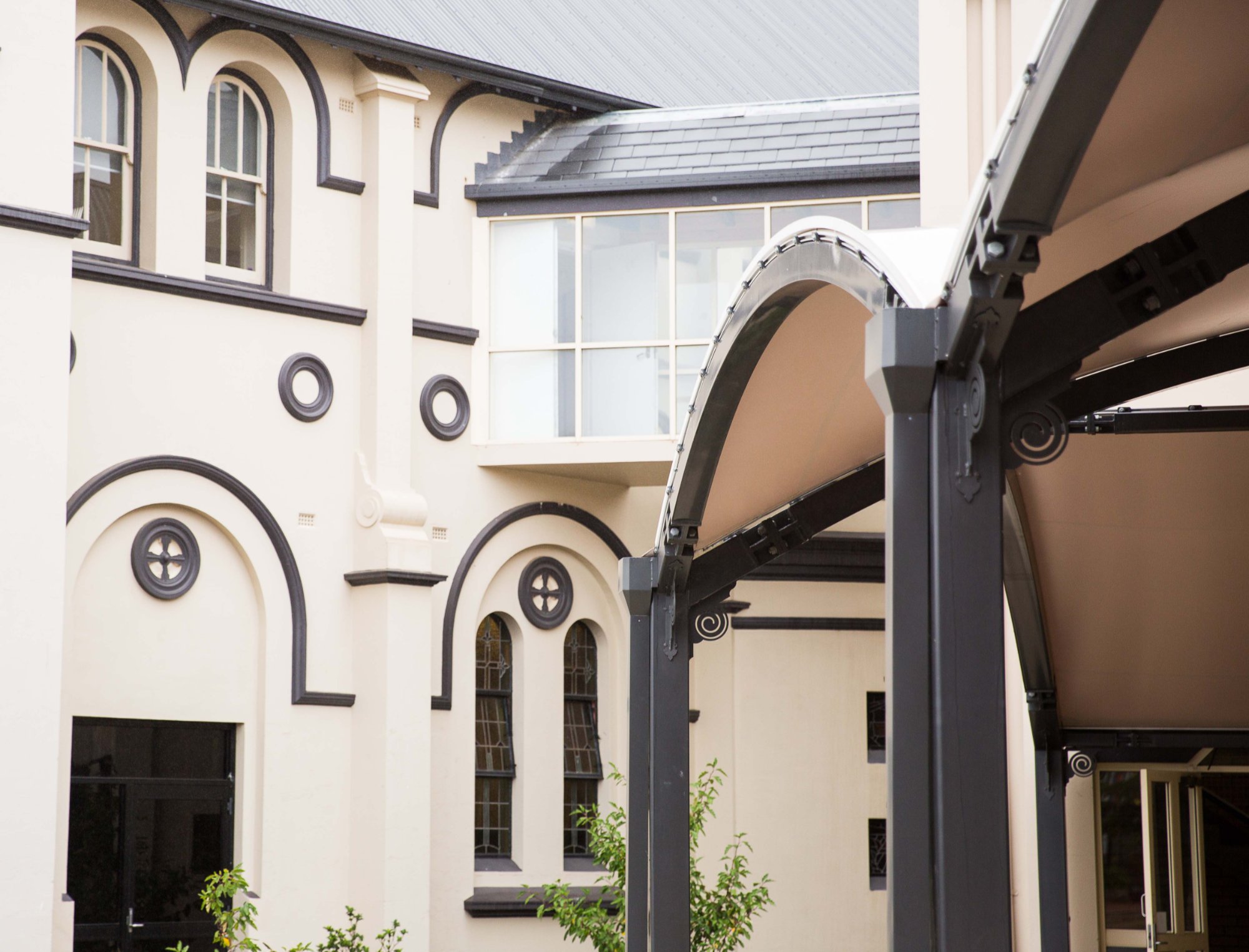
Coating systems are typically specified by the powder coat manufacturer to the project's corrosivity zone. The powder coater, not just the colour reference, is part of the specification. Powder coat failures on outdoor structures most commonly trace to:
- Inadequate surface preparation or blasting before application
- Leaving the coating without a clean key to bond to
- Insufficient curing time or temperature in the oven
- An underbuild on total dry film thickness
- Sharp corners, holes, or cut edges on fabricated components that are not properly rounded before coating, causing the film to pull thin at edges and crack
- Damage from transport or installation that is not repaired before handover
A finish that looks right on delivery and fails early has typically encountered one of these. It’s not necessarily a problem with the powder coat product itself. The choice between two-coat and three-coat systems is a technical decision informed not by the budget, but by the site's corrosivity classification and the structure's design life.
Three-coat systems also provide a finer surface build and more consistent finish on complex steel geometries, which has aesthetic as well as protective value on permanent public infrastructure.
What a complete powder coat specification includes
When reviewing a quote or a specification for an outdoor structure, the powder coat section should state more than a colour reference. A complete specification includes:
- The primer type and its suitability for the steel substrate and environment
- Number of coats in the system
- Minimum dry film thickness for each coat and for the total system, the standard the powder coat must be tested to (AS 4506 for steel)
- The corrosivity classification the system is designed for
If a quote specifies only a colour and a brand, it is worth asking for the system specification behind it. The answer will confirm whether the supplier has matched the coating system to the site environment or defaulted to a standard system irrespective of location.
Frequently asked questions
Navigating steel coating specifications can be complex, but getting the details right is essential for long-term performance. Powder coating offers superior durability, colour variety, and surface protection, provided the right system is matched to your site’s environmental corrosivity.
To help you make informed decisions for your permanent outdoor structures, we’ve listed some common questions along with answers on the subject below.
What is powder coating and how is it different from paint?
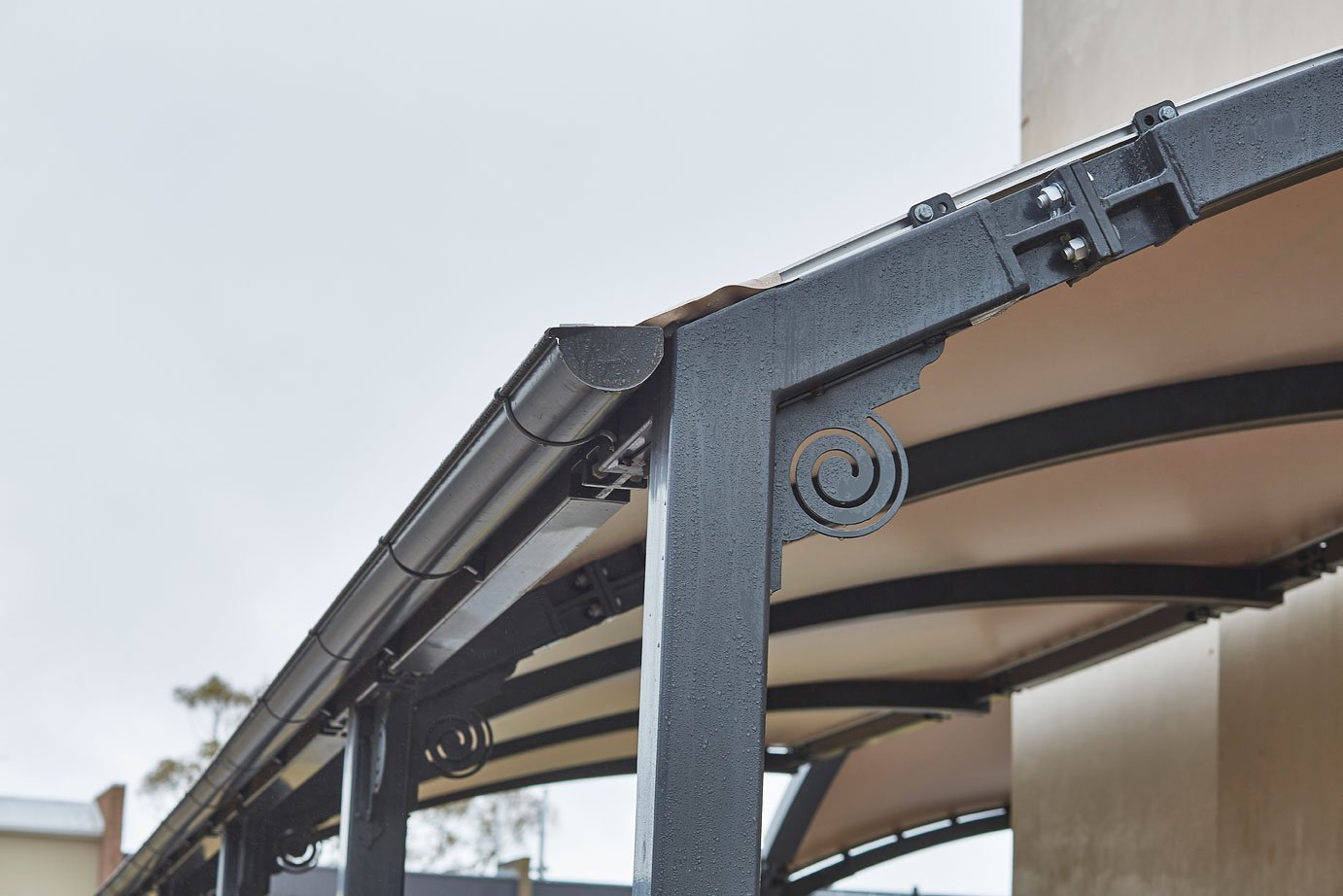
Powder coating is a dry polymer finishing process. A thermosetting powder is electrostatically applied to the steel surface and then oven-cured to form a continuous, hard polymer film.
Unlike liquid paint, it contains no solvent, produces a uniform film thickness across edges and complex geometries, and is significantly more impact-resistant and durable as a surface finish. For outdoor structural steel in Australia, powder coating is the standard finish choice for permanent infrastructure.
Does powder coating replace the need for galvanising on outdoor steel?
For most permanent outdoor structural steel applications in Australia, a properly specified powder coat system, applied over a zinc-rich epoxy primer, provides the corrosion protection the structure needs without hot-dip galvanising underneath.
The primer is the key element: a zinc-rich primer provides cathodic protection, sacrificing to protect the steel at areas where the coating may be compromised.
Hot-dip galvanising is used where conditions are severe enough to exceed what a powder coat system is designed for; typically extreme corrosivity environments or direct water exposure.
The two are not routinely combined; applying powder coat over hot-dip galvanised steel can cause adhesion and finish problems due to gases trapped in the galvanised surface.
What is the difference between a two-coat and three-coat powder coat system?
Both systems begin with a zinc-rich epoxy primer applied directly to the steel surface, followed by a UV-stable polyester topcoat.
A three-coat system includes an additional intermediate coat between the primer and topcoat, producing a greater total film thickness and a more substantial protective barrier. A two-coat system is typically appropriate for C2 inland environments.
From C3 upwards, a three-coat system may be warranted depending on site-specific factors; at C4 and beyond it becomes the expected specification. The choice is driven by the site's atmospheric corrosivity classification, not by preference alone.
What standard governs powder coating on structural steel in Australia?
AS 4506 specifies the test procedures and performance requirements for thermoset powder coatings applied to metal substrates, including structural steel. It covers adhesion, gloss, colour consistency, impact resistance, and weathering performance.
AS 3715 is a separate standard that applies specifically to powder coating on aluminium and aluminium alloys; it is not the relevant standard for steel structures.
AS/NZS 2312.2 provides design and durability guidance for protective coating systems on structural steel across different Australian atmospheric environments.
How we can help
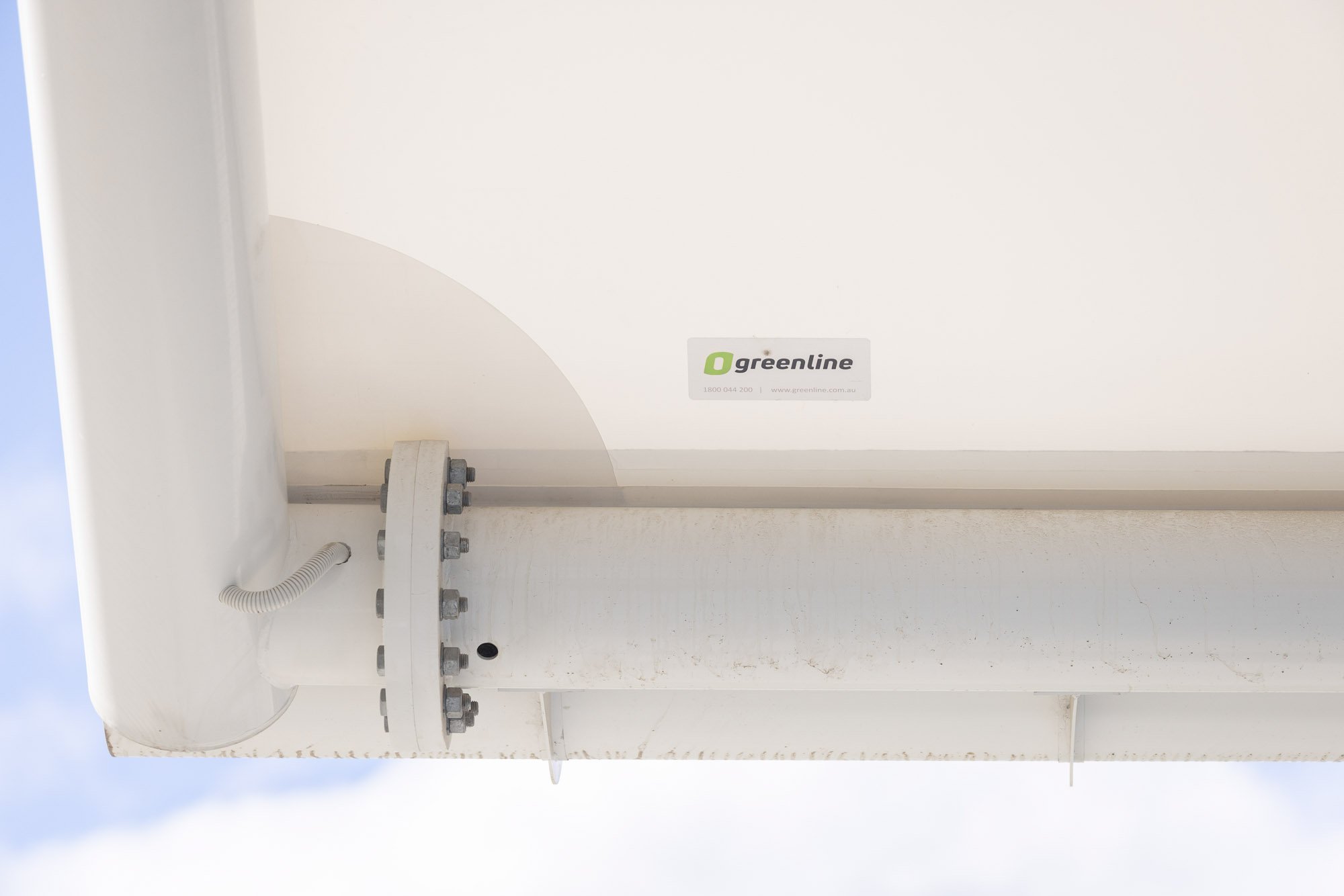
Powder coating is Greenline's standard structural steel finish.
Applied over a zinc-rich epoxy primer directly to the structural steel substrate, the powder coat system provides both the corrosion protection and the colour for permanent outdoor structures across the school, council, and sports club environments Greenline works in.
It is the appropriate system for the vast majority of Australian outdoor conditions, from inland C2 environments through to more demanding coastal ratings.
Hot-dip galvanising may be used on projects where site conditions warrant it; typically where corrosivity exposure reaches the most extreme end of the scale, or where structural elements will be in direct contact with water. It is not the standard baseline.
The system specification is determined during design based on the site's corrosivity classification and the structure's design life.
For example, a coastal primary school and a regional sports club in an inland environment will receive different specifications against the same colour palette, because the environmental demands on the coating are different.
That decision is made during our Consult, Design, Construct process rather than resolved at the end of it. To understand how materials and finish specifications apply to a specific project, an initial conversation with an expert is the right starting point.