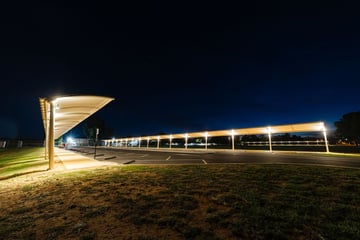

At a glance
Zinc plating and hot-dip galvanising are both zinc-based corrosion protection processes, but the coating thickness, bonding mechanism, and outdoor lifespan differ dramatically.
For permanent outdoor structures in Australia, zinc plating is designed for indoor or short-term use. It is not the correct specification for exposed structural steel. The word "zinc" can appear in both processes, so knowing the difference matters when reading a quote or a materials specification.
Two quotes arrive for the same shade structure. One specifies "zinc-coated steel." The other specifies "hot-dip galvanised steel to AS/NZS 4680." The first is cheaper. The question is whether the cheaper option is genuinely equivalent, and what the real consequence is over a twenty-year lifespan if it is not.
The answer starts with understanding that zinc plating and galvanising are not variations on the same process. They are fundamentally different treatments that happen to use the same metal. This guide illustrates the difference between the two.
Zinc plating explained
Zinc plating, also called electroplating or electrogalvanising, deposits a thin layer of zinc onto steel using electrical current. The steel part is submerged in a zinc-salt solution and a charge drives zinc ions onto the surface. The resulting coating is typically 5 to 25 microns thick, uniform in appearance, and bright silver when new.
It is a perfectly appropriate treatment for the right applications. Zinc plating is widely used for indoor hardware, automotive components, consumer electronics, and fasteners intended for controlled environments. The thin coating provides adequate protection where moisture and ultraviolet exposure are minimal and service life is measured in years rather than decades.
For outdoor structural steel (columns, rafters, brackets, and fixings exposed to rain, humidity, ultraviolet radiation, and potentially salt air) zinc plating is not the right specification. The coating is simply too thin to last.
What hot-dip galvanising means
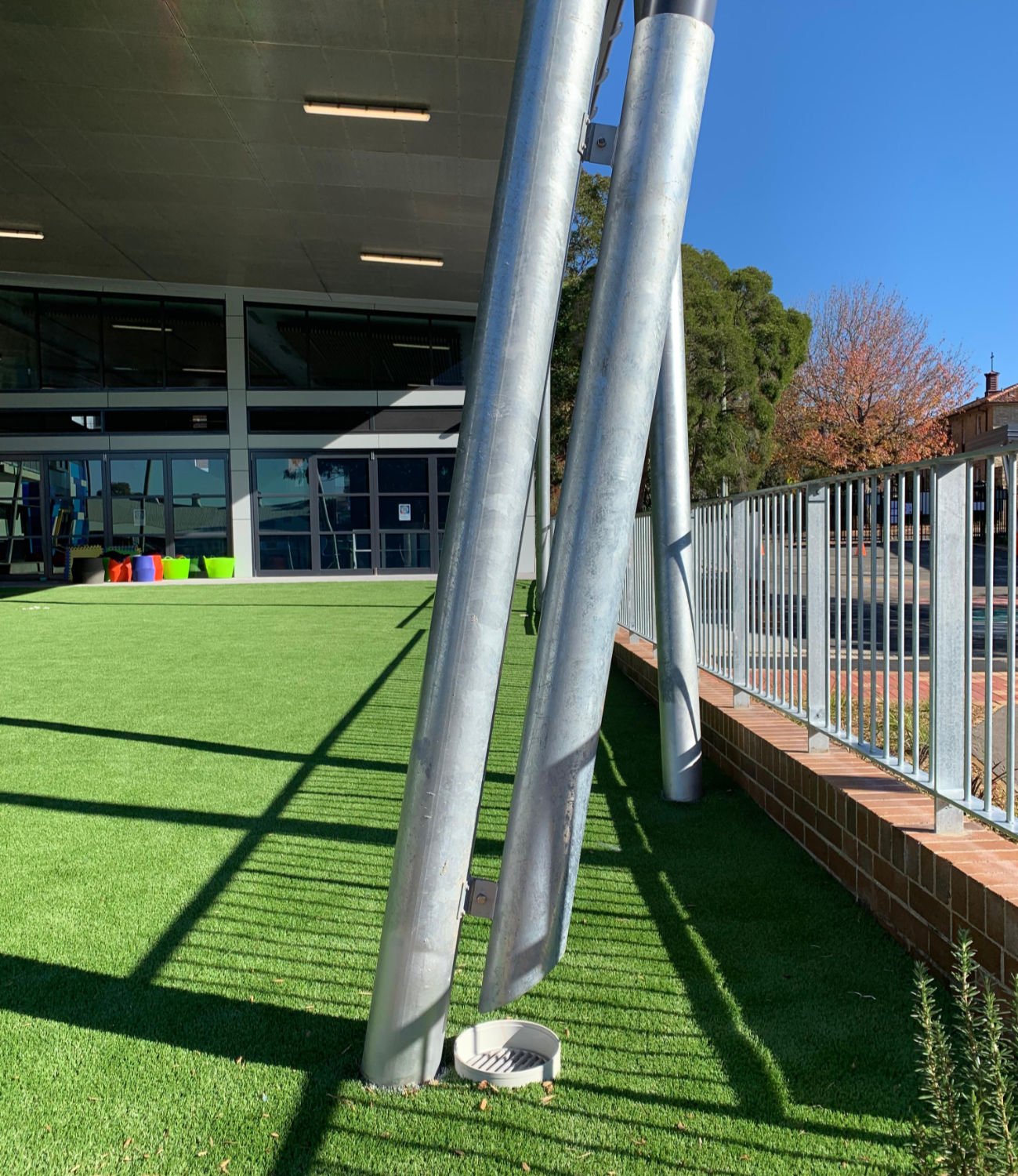
It involves immersing fabricated steel in a bath of molten zinc at approximately 450 degrees Celsius.
The zinc reacts with the steel surface to form a series of zinc-iron alloy layers, topped by an outer layer of pure zinc. The result is not a surface coating in the conventional sense, but rather it is a metallurgical bond that becomes part of the steel itself.
The coating thickness produced by this process is governed in Australia by AS/NZS 4680: the Australian and New Zealand standard for galvanised coatings on fabricated ferrous articles.
For structural steel thicker than 6 mm, the standard requires a minimum average coating of 85 microns. This applies to columns, rafters, and structural sections in outdoor shade and shelter structures.
That is a meaningful difference. At minimum specification, hot-dip galvanising delivers three to four times the coating mass of a typical zinc-plated surface, and considerably more depending on steel thickness and the galvanising plant's process.
Galvanised steel also has a self-repair mechanism that zinc plating lacks. When the zinc surface is scratched or cut, the exposed area reacts with atmospheric oxygen and moisture to form zinc carbonate, which is a stable, adherent compound that seals the damaged zone and slows further corrosion.
This doesn’t happen with zinc plating or other electroplated coatings. Once the plating is breached, the underlying steel is exposed and vulnerable to oxidation.
A separate but related characteristic is the weathering behaviour of hot-dip galvanised steel over time. When newly installed, the coating is bright and silver. Exposure to the atmosphere causes a natural patina to form. A matte grey zinc carbonate layer that typically develops within six months to two years and represents the coating in its most stable, protective state.
Is zinc-plated or galvanised better for outdoor use?
The difference in coating thickness translates directly into service life. In a benign inland environment, a galvanised AS/NZS 4680-compliant structure can be expected to provide decades of protection before any maintenance is needed.
In a coastal or industrial environment, where salt spray and humidity accelerate zinc consumption, the thicker coating becomes the critical variable separating a structure that will perform for its intended lifespan from one that will begin deteriorating within a few years.
Zinc-plated components in outdoor structural applications corrode at a rate that reflects the coating's thinness. The protective layer is consumed by atmospheric exposure, and once it is gone, the underlying steel is exposed.
In coastal conditions, this process accelerates significantly. The failure mode is gradual, and often invisible until rust staining, structural loosening, or visible corrosion on fixings makes it apparent.
By that point, the cost of rectification, recoating, replacing fasteners, or in some cases replacing structural members, typically far exceeds the initial saving from the cheaper specification.
Why Australian conditions sharpen the distinction
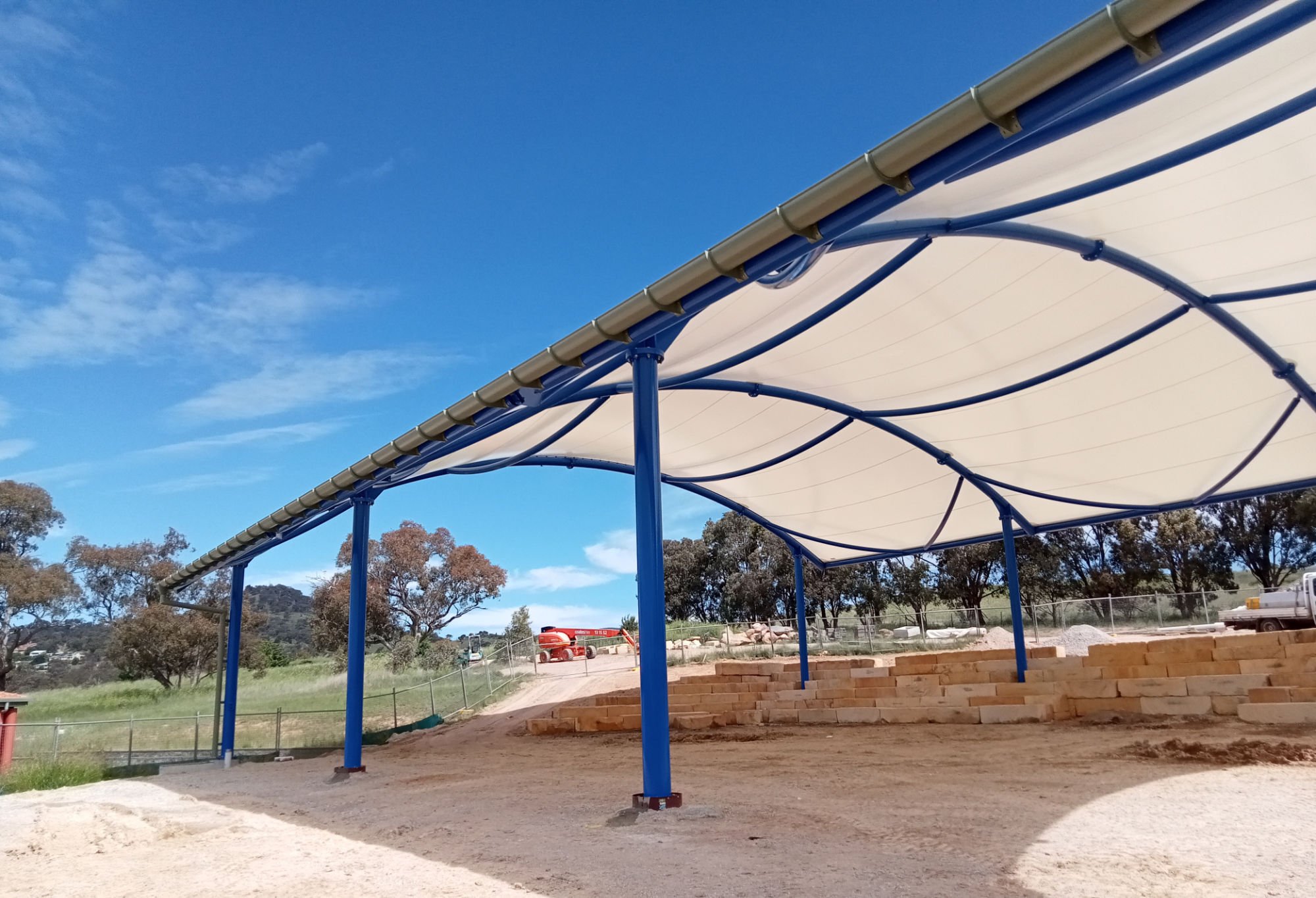
Australia's coastal fringe covers a large proportion of the country's population centres, and many of the schools, councils, and sports clubs that commission permanent outdoor structures. Salt-laden air, high ultraviolet radiation, and humidity combine to accelerate zinc consumption at rates significantly higher than those found in temperate inland environments.
The Galvanizers Association of Australia and the Commonwealth Scientific and Industrial Organisation (CSIRO) have both contributed to mapping Australian atmospheric corrosivity classifications, which inform specification decisions for structural steel.
AS/NZS 2312.2: the design and durability guide for protective coatings on structural steel, provides durability comparisons for different coating systems across those environments. In the most aggressive coastal and marine categories, a hot-dip galvanised coating to AS/NZS 4680 is the starting point as opposed to an upgrade.
What AS/NZS 4680 means on a specification sheet
When AS/NZS 4680 appears on a drawing or a quote, it tells you the galvanising process must meet the Australian and New Zealand standard for fabricated ferrous articles. It defines minimum coating thicknesses, the test methods used to verify them, and the quality requirements for the finished coating.
Its presence on a specification means the steel has been treated through a process subject to defined, verifiable requirements, and not simply described with a term that could apply to any number of zinc coating processes of varying thickness and quality.
If a specification or quote uses "zinc-coated" or "zinc-treated" without referencing a standard, it is worth asking what process was used and what coating thickness was achieved.
Frequently asked questions
Navigating steel specifications can be confusing, especially when terms like "zinc-plated" and "galvanised" are used interchangeably.
Choosing the wrong coating for outdoor structures can lead to premature corrosion, unexpected maintenance costs, and compromised structural integrity. To help you make informed decisions for your project, we’ve answered some common questions on the subject below.
Can you powder-coat over hot-dip galvanised steel?
In principle, yes. The combination is known as a duplex system. In practice, hot-dip galvanising can trap gases in the steel surface that cause adhesion problems and a poor finish outcome when powder coat is applied on top.
For this reason it is not a standard approach for structural steel. Where powder coating is the specified finish, it is applied to the steel directly over a zinc-rich epoxy primer. Where site conditions are severe enough to warrant hot-dip galvanising, the galvanised finish typically operates as the protective system in its own right rather than as a base for powder coat.
How long does hot-dip galvanised steel last in Australian outdoor conditions?
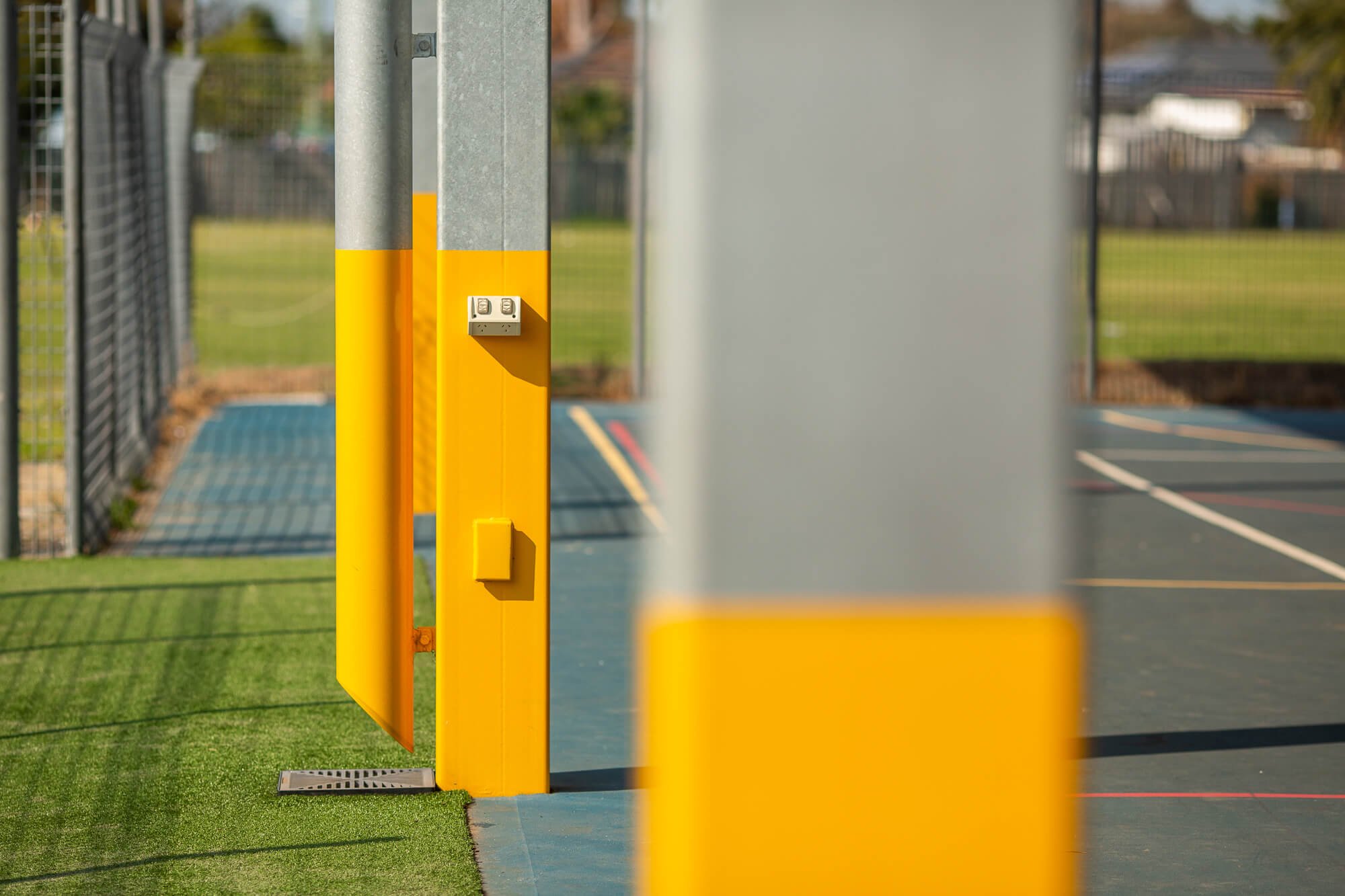
Service life depends on the coating thickness achieved and the corrosivity of the specific environment. In moderate conditions, hot-dip galvanised structural steel to AS/NZS 4680 can provide several decades of protection before first maintenance is required.
In coastal and marine environments, the zinc is consumed more quickly. The Galvanizers Association of Australia publishes a durability estimator tool that generates site-specific estimates based on location and corrosivity classification.
Is zinc plated steel rust proof?
No, zinc-plated steel is not rust-proof. While the electroplated zinc coating provides temporary barrier and galvanic protection against oxidation, the layer is extremely thin, typically only 5 to 25 microns.
Once exposed to rain, UV radiation, atmospheric moisture, or salt air, this thin barrier degrades rapidly. When the coating is breached or consumed, the underlying steel rusts. It is designed strictly for indoor or short-term applications.
What’s the difference between zinc and galvanised?
Both use zinc for corrosion protection, but the process, coating thickness, and outdoor durability differ substantially. Zinc plating deposits a thin zinc layer, typically 5 to 25 microns, using electrical current, and is suited to indoor or short-term applications.
Hot-dip galvanising immerses steel in molten zinc to produce a metallurgically bonded coating of at least 85 microns for structural sections, specified under AS/NZS 4680. The two are not interchangeable for permanent outdoor structural use.
Zinc plated vs galvanised: What Greenline specifies
For the structural steel used on Greenline projects, the standard protective finish is powder coating, applied over a zinc-rich epoxy primer directly to the steel substrate.
The primer provides corrosion protection; the topcoat provides UV stability, colour, and surface protection. Together they form a system that performs across the range of Australian outdoor environments for the structure's design life.
Hot-dip galvanising may be used on Greenline projects in specific circumstances, where site conditions are severe enough to demand it, or where structural elements will be in direct contact with water. It is not the standard baseline specification for most school, council, or sports club projects.
That means a quote specifying "powder coat" is not necessarily under-specifying the structure. It depends entirely on what system sits behind that description: the primer type, the number of coats, the total film thickness, and the corrosivity zone the system is specified for.
A complete powder coat specification states all of these. A quote that lists only a colour and a brand is worth asking about. If you need more information or have a project you’d like to discuss, please reach out to our team of experts. We're happy to help.