If you're looking for a simple answer, there isn't one.
Not because the question is difficult, but because it depends on quite a lot of things. Two spaces can be exactly the same size and end up with completely different costs.
The cost question usually comes before schools have thought through how they want to use the space. You're not pricing a structure. You're pricing how certain you want to be about using it.
A shade-only structure that works fine in dry weather might cost $150–$250 per square metre. Add waterproofing so you can use it year-round, and you're looking at $450–$750 per square metre. Need a clear span for sport? That's another step change again.
This article will explain why pricing varies, what drives the numbers, how to avoid budget blowouts, and how to get real certainty before you go to the board.
What schools mean by outdoor classroom
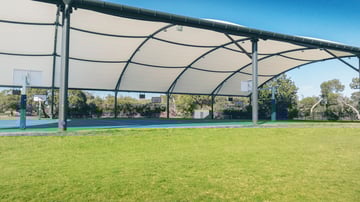
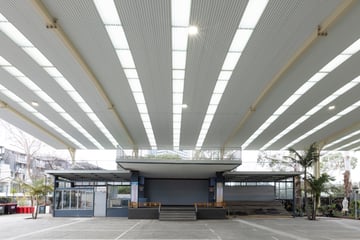
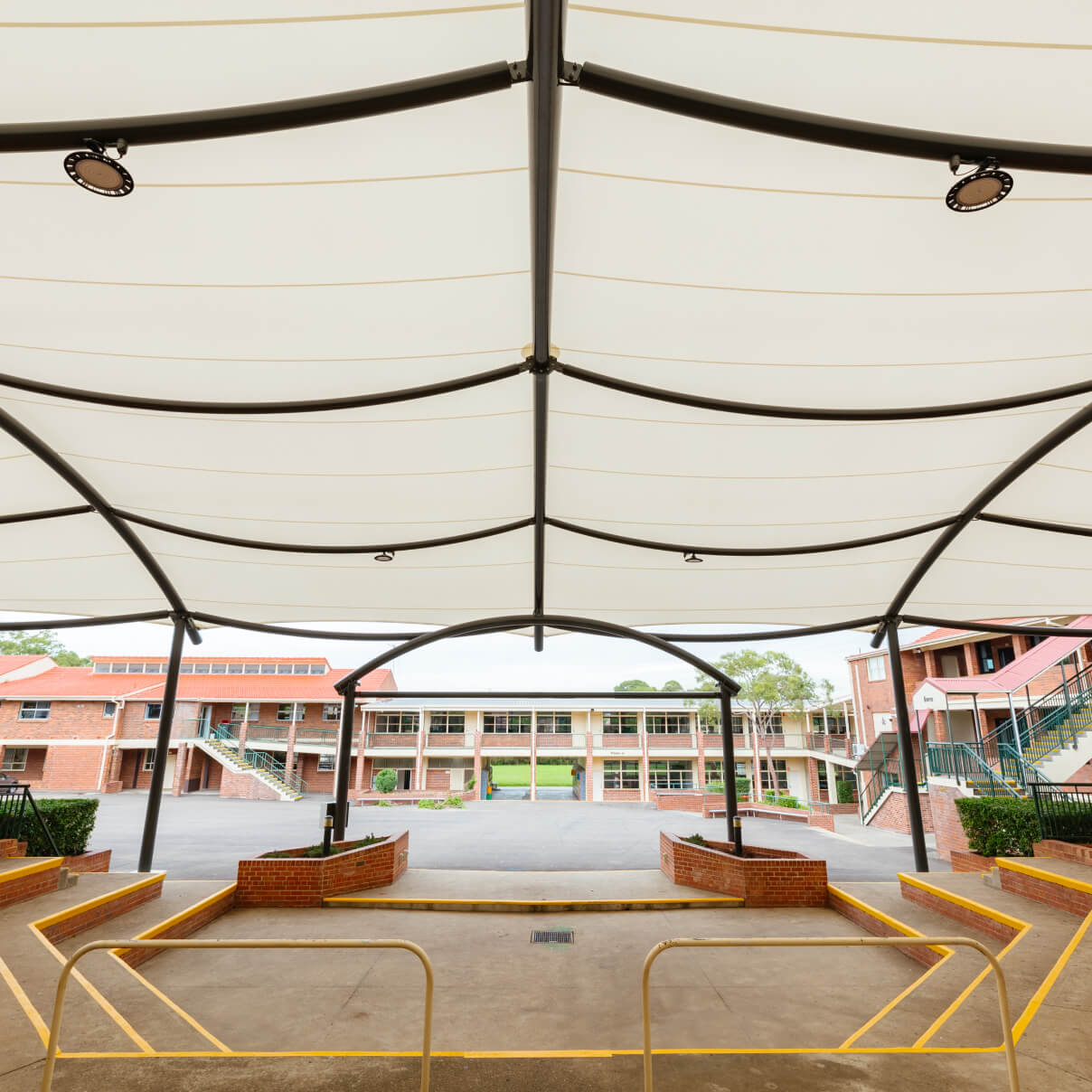
When schools say outdoor classroom, they usually mean a multi-purpose court. COLA (Covered Outdoor Learning Area) is a catch-all phrase that works the same way. Sport, assemblies, learning; schools use these spaces for everything.
The problem isn't the terminology. It's that two schools can both say "outdoor classroom" and be talking about completely different projects. One might need shade for a small learning group. Another might need a waterproof clear-span structure for year-round PE. Same words. Different budgets.
So, before we can talk about cost, we need to talk about what you're actually building and how you'll use it. That's what determines the number.
The real cost drivers: size, span, and weather protection
Size and span
As soon as you need a clear span, everything changes.
Once you start removing columns for sport, the engineering steps up quickly. A 20-metre span with columns every six metres is one thing. A 20-metre clear span is another budget entirely.
Typical range:
- Small covered area (under 200m²): $80,000–$150,000
- Mid-size multi-purpose space (200–400m²): $250,000–$500,000
- Large clear-span sports court (400m²+): $500,000–$1,200,000+
Weather protection
Shade-only works if you're happy cancelling when it rains.
Waterproofing is what gives schools timetable certainty. That's where the value is. If you need the space to be usable regardless of the weather, you're not just buying a roof. You're buying reliability.
Typical range:
- Shade structure (permeable roof): $150–$250/m²
- Waterproof covered area: $450–$750/m²
Design decisions that move the budget
A lot of designs look great on paper but don't work once kids are actually under them.
Over-design is a real problem. It's expensive, and it often underperforms. Design has to start with how the space is used, not how it looks in a render.
That includes decisions like:
- Roof height (affects wind loading and engineering)
- Finish and materials (steel, timber, membrane)
- Acoustic treatment (critical for assemblies and learning)
- Lighting and other integrations (often left off initial quotes)
These aren't cosmetic choices. They affect the budget and how the space performs long-term.
Be aware of hidden costs
Footings are where projects usually blow out.
A lot of quotes aren't all-in. Footings get left out or priced as variations. Most of the "unexpected costs" aren't unexpected. They're just unplanned.
Other common add-ons that surface later:
- Site works and access
- Services (power, lighting, drainage)
- Approvals and certifications
- Project management and coordination
If the quote doesn't include these, the final number won't match the estimate. We include everything in our Build-ready budget with a no variation guarantee.
Why procurement and process matter more than structure
Every handoff changes the scope.
Traditional procurement goes: architect, engineer, builder. By the time it's built, it's not what anyone originally budgeted for. No one really owns the budget once it's been passed around.
Each step adds margin, reduces accountability, and introduces risk. The original brief gets diluted. The cost gets inflated. And when something goes wrong, it's unclear who's responsible.
At Greenline, we work differently. Our Consult. Design. Construct. methodology keeps one team accountable from concept through to completion. The scope stays clear. The budget stays honest. And when construction is involved early, there are fewer surprises.
What schools actually want: budget certainty
Schools don't want the cheapest option. They want to know it won't change.
They want to know the number they take to the board is the number it will be built for. Certainty matters more than savings.
Progressive budgeting works because you define the brief, lock in the scope, and price it properly before construction starts.
Why usability changes everything: cost vs investment
If they can't use it when it rains, it's not really an asset.
Once it's covered, suddenly everyone wants to use it. That's when it stops being a cost and starts being something the whole school relies on.
A waterproof multi-purpose space changes how the school operates:
- Timetabled PE regardless of weather
- Assembly space that's always available
- Events that don't get cancelled
- Outdoor learning areas that work year-round
The return isn't just financial. It's operational. You're not buying a structure. You're buying timetable certainty.
The right way to get a real number
You can't price what you haven't defined.
At Greenline, we don't quote first and ask questions later. We work with you to define the brief, understand how the space needs to work, and price it properly from the start.
If you need a number for the board
Before you're ready for a full brief, you still need a ballpark figure. Something realistic to put in front of the board, include in a grant application, or use to start budget conversations.
That's where our Project estimate tool helps. It gives you three cost tiers based on what you're actually building:
- Low range: Typical shade sails. You should be able to buy that from anyone for that sort of cost range.
- Mid-range: Waterproof structures designed for year-round use.
- High range: Permanent built structures with full enclosure or really complex architectural designs.
These aren't arbitrary brackets. They reflect real differences in what you're building and how you'll use it.
Get a budget that reflects reality
If you're planning an outdoor classroom, COLA, multi-purpose court, covered learning area, or anything in between, the first step is clarity.
The schools that get this right don't wait until they've already chosen an architect or locked in a design. They involve construction early, when the brief is still flexible and the budget can be built properly. That's when you prevent problems, not just manage them.
We'll talk through how you want to use the space, what matters most, and what the actual cost will be. With no surprises later.
Get started with our project estimate tool