A covered outdoor learning area is a significant investment. You want it programmed into the timetable, used for assemblies, PE, exams, events; and not just for when it rains. The difference between a space that gets used daily and one that goes underutilised usually comes down to what was considered during the planning stage. Things like acoustics, natural light, airflow, and column placement all affect how a space functions in practice, and they're easy to overlook.
Greenline has been operating since 1997 and has delivered 600+ projects since 2020, covering 168,500+ square metres across Australia, including hundreds of covered outdoor learning areas for schools nationally. This article will help explain some of the main factors that should be considered before you commit capital.
Why outdoor learning areas underperform
Most schools follow a predictable path. They know they need to cover a court or create a flexible outdoor space. They go to an architect, who designs a metal shed. That design comes back over budget. The school either abandons the project or strips it back until what's left is a roof that covers ground but doesn't support how the space needs to work.
Three planning gaps create most of these problems, and they compound each other.
The brief is almost always too vague. "We want to cover the court" isn't a brief. A brief describes what happens in the space: PE, assemblies, exam supervision, performances, community markets, yarning circles, or outdoor teaching. It also describes all the conditions the space needs to handle. Without that detail, the design can't respond to the real requirements, and the budget can't be accurate.
And budget certainty almost always arrives too late. Schools make decisions based on rough numbers, present concepts to their community, then discover the engineered cost is significantly higher than the estimate. Months of planning are gone and the numbers don't add up.
Start with what happens in the space
The schools that get outdoor classrooms right start from a different position. Instead of asking "what structure do we need?", they ask "what will happen in this space every week, and what conditions does it need to handle?"
A space designed for PE and sport needs clear spans so courts aren't interrupted by columns. A space that will host assemblies and performances needs acoustic control. A space used for exam supervision needs weather protection reliable enough that you won't be relocating 200 students at short notice. A space the school hires out for community markets or external events needs amenity access and after-hours lighting. Each of these pulls the design in a different direction, and if you haven't mapped them out before picking a structure type, you're designing blind.
Map out what happens on a normal school day, then on a wet one. Identify who uses the space: primary students, secondary students, whole-school groups, external hirers. Pin down the actual problem you're solving — lost teaching time, cancelled sport, lack of flexible gathering space, poor first impressions during school tours.
If you can't describe a typical week in the space, you're not ready to design it.
The weather problem nobody plans for
Australian weather can be extreme, with intense UV, heavy rain, high winds, and heat that builds through the morning. An outdoor classroom has to perform under all those conditions. If teachers don't trust it, the timetable stays unchanged.
Rain is the obvious one. If your structure only provides shade and not waterproof coverage, you've ruled out a significant portion of the school year in most Australian cities. Shade-only structures are fine for playgrounds, but they don't give you the reliability a timetabled learning space requires.
Heat is just as much of an issue, and less obvious. Shade helps, but without proper ventilation and thoughtful material selection, you end up with a space that's unbearable by mid-morning. Teachers stop booking it by October. Students lose focus, sessions get cut short, usage drops off through the warmer months and never fully recovers.
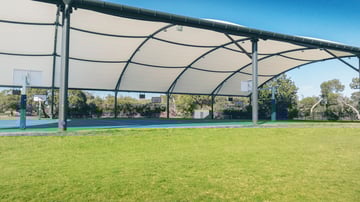
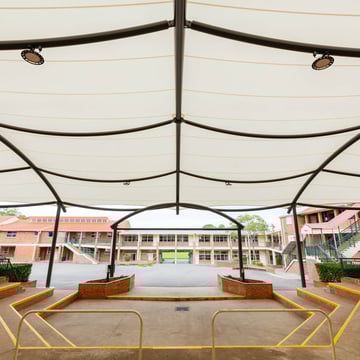
Natural light is where the difference between structure types is more noticeable. Where coming out of sunlight into some structures feels dark, with a fabric structure, there's barely any transition. PVC membrane transmits natural light across the full roof area, creating bright, open spaces that still block UV. As Greenline’s Duncan puts it: "It literally feels like you're not even undercover half the time. You've got the protection without actually feeling hemmed in or closed in."
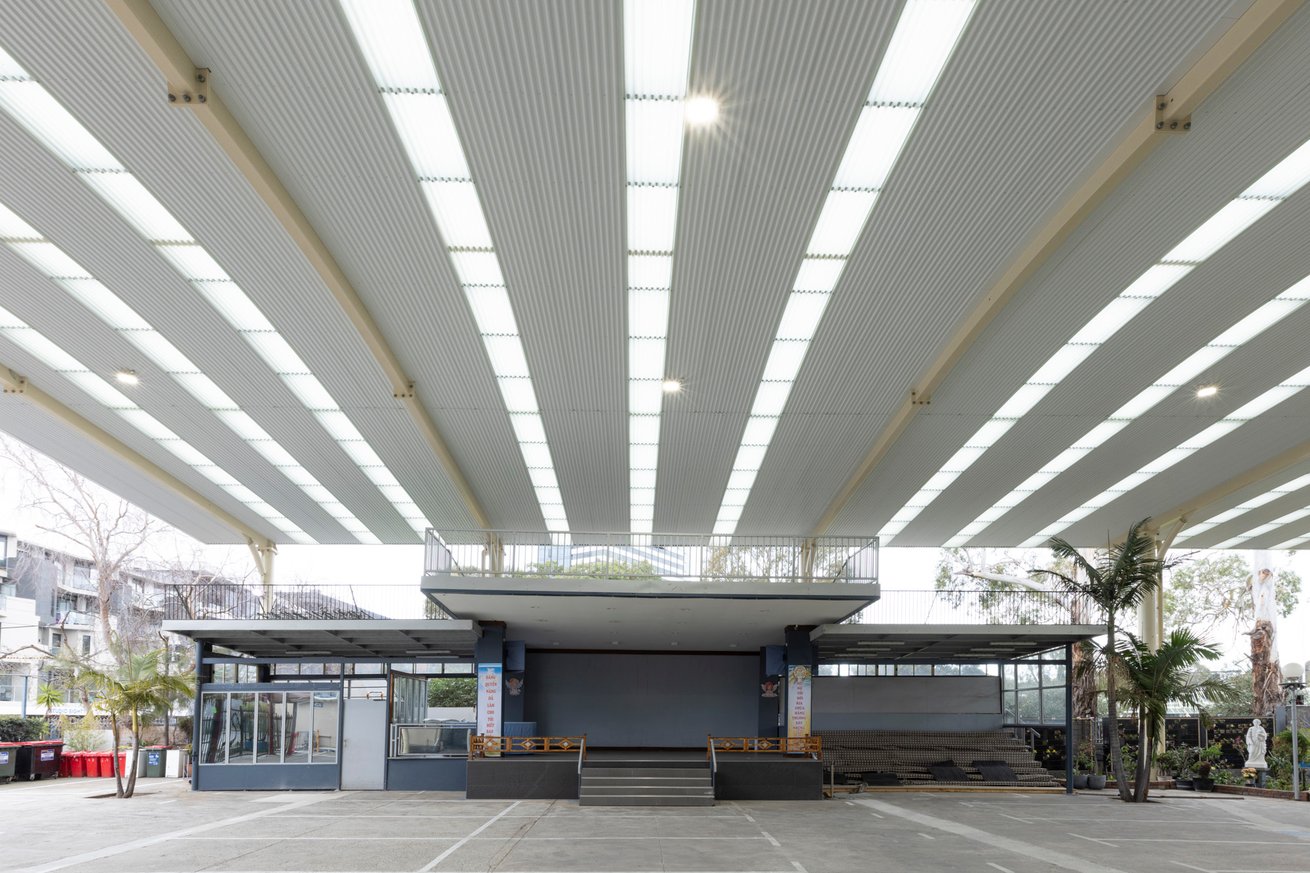
Then there's acoustics. Steel roofs without proper acoustic treatment can have an echo, forcing teachers to raise their voices to be heard; which is unpleasant. These kinds of issues can easily get overlooked until the structure is built, and by then it's expensive to fix.
Fabric vs steel: what the decision actually comes down to
Once you're clear on what the space needs to do, the structure decision becomes simpler. For school covered outdoor learning areas, the choice is between a fabric membrane roof, a steel roof, or in some cases a hybrid of both. Worth noting: a COLA is a description of how the space is used, not a structure type. Either roof system can deliver it.
Fabric and tensile membrane structures provide waterproof, UV-protected coverage with natural light transmission across the full roof area. They perform well thermally and acoustically. Installation is faster because the membrane is fabricated offsite and tensioned on site in around three days regardless of the span — you add more crew, not more time.
For large-span sports courts and multi-purpose learning areas where a bright, open feel matters, fabric is the better choice when you compare equivalent outcomes. PVC sits in the middle of the metal cost range, but for an equivalent result (bird-proofing, natural light, good aesthetics), it's on par with steel. The number of providers nationally with this capability narrows to three to five, which matters if your procurement process values specialist expertise.
Large-span steel structures offer permanence and a wide cost range, from basic functional roofs through to architecturally finished designs with soffit lining and integrated services. Steel is the right choice when absolute longevity is the priority and the school is prepared to invest in acoustic treatment, ventilation, and ongoing lighting costs. Steel roofs require electrical lighting during the day, even on overcast days. Every sheet is fixed individually, so installation takes longer than fabric — more time on a live site.
What matters more than the roof material is how the structure is configured. Clear spans allow flexible layouts without columns interrupting court markings or sightlines. Column placement needs to support teaching and supervision, not just structural efficiency — teachers need to see students and move groups safely. And the lifecycle cost matters more than the upfront price. The cheapest option rarely performs best when you're measuring over 30 or 50 years.
Greenline is an architectural fabric structure specialist, but we build in steel as well. The recommendation depends on the project.
Multi-use by design
The best outdoor classrooms do more than one job. Schools change — enrolments shift, teaching approaches develop, community expectations grow — and a single-purpose space becomes a constraint quickly.
Well-designed COLAs regularly support PE, whole-school assemblies, exam supervision, performances, community markets, and external hire. Sometimes all in the same week. That comes from thinking about flexibility during design: retractable dividers, power and AV infrastructure, lighting for after-hours use, amenity access for external hirers, and court layouts that accommodate multiple sports.
Some schools plan to build in stages, thinking they'll save money by spreading the investment. In Greenline's experience, staging costs more. Foundations get redone, rooflines get extended, site costs multiply. If you know you'll need more space within five years, design for it now and build once.
Budget certainty before you commit capital
None of that flexibility means anything if the budget blows out in design. And in schools, budgets blow out more often than they should. Capital projects are high-stakes — budgets are scrutinised, timelines are tight, and mistakes are visible. Business Managers know this pressure. They've got a budget they have to fit and a timetable they have to protect.
Greenline uses progressive budgeting through the Consult. Design. Construct. methodology. At the start of a project, you receive a realistic cost range based on your requirements and site conditions. Not a guess — a range grounded in what similar projects have actually cost. As decisions are made on roof type, span, finishes, and site-specific factors, the range narrows. By the end of design, you have a locked-in, build-ready figure. If unforeseen issues arise from something Greenline missed during planning, they're addressed at our cost.
This works because design decisions are budget decisions, and Greenline controls both. When the designer, engineer, and builder are the same organisation, there are no handover gaps where scope falls through and costs blow out. One point of accountability from first conversation through to handover.
You can test the numbers early with the project estimate tool. If they work, we'll talk specifics.
Construction on a live school site
Schools don't shut down for construction. Students are learning, staff are supervising, parents are dropping off and picking up. An outdoor classroom project has to work around all of that.
We manage live school sites regularly and understand the rhythm of a school day: where students move between classes, when assemblies happen, how delivery vehicles access the site. We set up secure fenced compounds, schedule high-risk work outside school hours, and time major deliveries for when students aren't around. Noisy or disruptive work goes into holidays or after-hours windows wherever possible.
Offsite fabrication is a big part of how this works. Steel and membrane components are manufactured in controlled workshops across Australia, not on your school grounds. Structures arrive on site ready to assemble, which shortens build time and reduces the period your facilities are affected. When Greenline's crew is on site, they stay until they're done.
One project manager, one point of contact, from design through to handover. No chasing multiple contractors for updates. Fewer headaches. Greenline has delivered covered outdoor learning areas for 600+ schools across Australia, and that experience on live school sites is the difference between a project that runs smoothly and one that disrupts the term.
After handover: the actual test
The real measure of an outdoor classroom’s success is what happens in the months after construction finishes. A successful project puts the space into the timetable and keeps it there. PE runs year-round regardless of weather. Assemblies go ahead as planned. The school stops hiring buses to external venues because their own facilities are reliable. Teachers plan around the space because they trust it.
At Blackburn High School, Greenline delivered the entire facility as a single turnkey project. What started as a grass field became a completely covered multi-use space with courts, structure, and surrounds. The school now uses it for sport, assemblies, and community events. That kind of result comes from getting the planning right before anyone picks up a tool.
Where to start
If you're planning an outdoor learning area, the earlier Greenline is involved, the fewer problems you'll solve during construction. Early engagement means the budget is grounded in reality from the start, the design reflects how the space will actually be used, and the build is planned around your school's operations — without needing to micromanage every detail.
If you want to understand what's feasible for your site and budget, start a project conversation and we'll give you a straight answer.