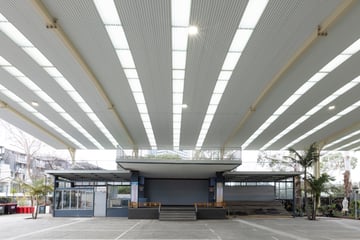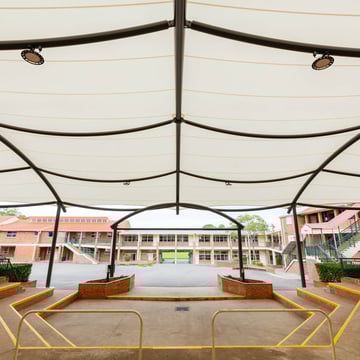
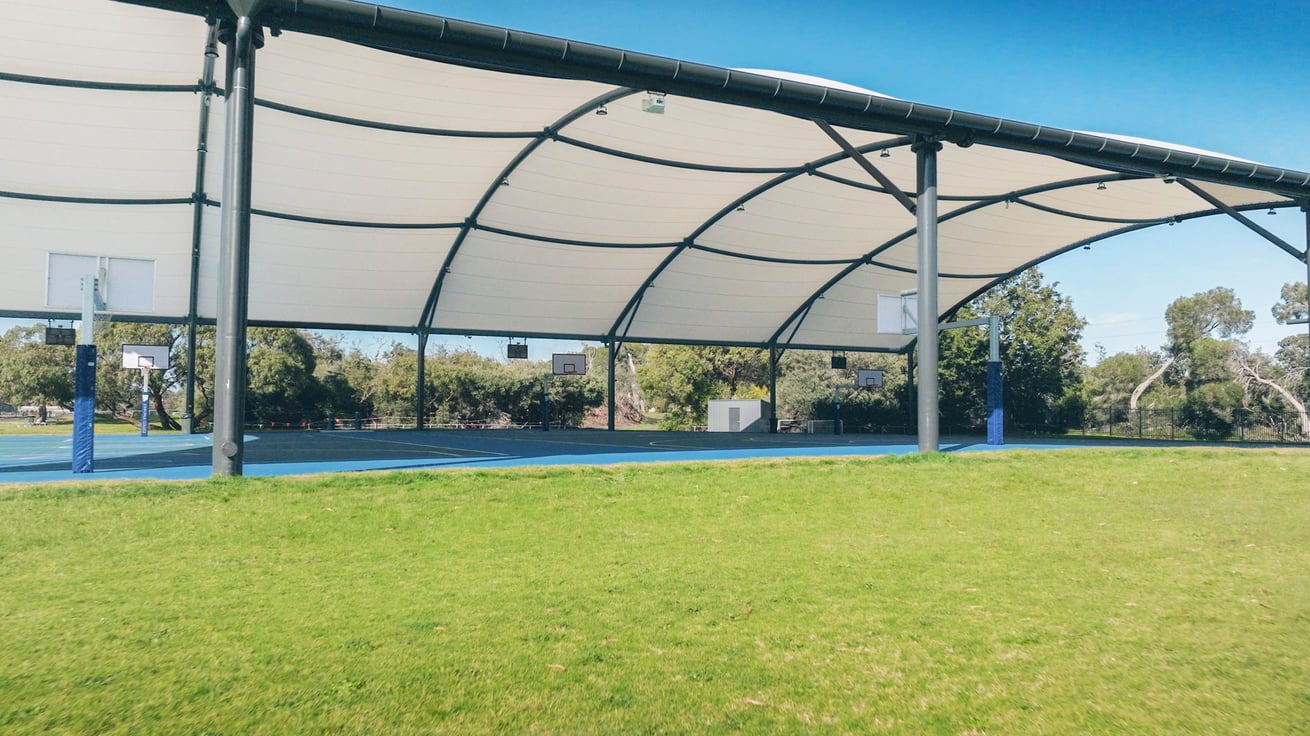
When planning for outdoor classrooms for schools, the golden question is “what type of structure?” The answer depends almost entirely on how the space will actually be used. A school that needs shade over a lunch area is solving a different problem from one that needs to timetable PE (Physical Education), exams, and assemblies year-round; including through winter rain.
Schools typically choose from three main options: shade cloth, metal roofs, or PVC fabric structures. At Greenline, we build both metal and fabric structures across Australia. Since 2020 alone, we've worked with more than 600 schools nationally, covering more than 168,500 square metres. In this article, we’ll make straightforward comparisons between all three options, including the one we build most often. That way, you can better decide what might be the best fit for your school.
The use case often determines the best option
Before comparing materials or prices, define what the space actually needs to do. Schools that invest time in this step early tend to get a much better result for their budget.
The difference between "we need shade over the playground" and "we need to timetable outdoor classes year-round" isn't a matter of degrees or (solely) compliance. One needs sun and UV protection over a fixed area, while the other needs a weatherproof, multi-purpose space with clearance heights for multiple sports, and then some. A typical school sports court carries basketball, netball, and volleyball markings on the same surface, and each sport has different height and runback requirements.
Work through the basics before looking at a single quote:
- Does the space need to be weatherproof, or just sun-safe?
- Will it be timetabled or used ad hoc at lunch and recess?
- Does it need to support multiple activities?
- What's the span, and does it need to be clear of internal columns?
- Does it need structural integrations such as power, lighting, or AV (audio-visual equipment)?
These answers can usually eliminate at least one option immediately. A space that needs to be weatherproof rules out shade cloth. A space that only needs sun protection over a smaller playground probably doesn't always justify a steel roof structure. Getting this right means you're comparing options that actually fit the job, not comparing three different solutions to three different problems on price alone.
Shade sail structures
"Shade cloth" is HDPE (high-density polyethylene) fabric tensioned over steel posts. It blocks most UV radiation but is not waterproof. For playground shade and lunch areas where weather protection isn't required, it's the lowest cost entry point, and it does the job well. It's worth noting too that shade sails do not fully block sun rays (and UV), so sun safety recommendations still apply.
However, if your school is in rainy or storm-prone areas, you won't be able to use the space in the rain. And, the fabric may need replacing after a few years, due to wear and tear.
Metal structures
Steel-framed structures with Colorbond or insulated metal roofing are waterproof, durable, and widely available. For a straightforward job with a standard rectangular footprint, metal is a solid choice.
A couple of things are worth thinking about when you're specifying metal for outdoor learning.
Metal roofs may create a darker space underneath; even with skylights covering 5–10% of the roof area, you could need electrical lighting during daytime use. That's a running cost for the life of the structure, and it means the space depends on powered infrastructure to function during school hours. Metal roofs, though, can easily accommodate solar panels.
Then there's acoustics. Rain on a metal roof can create significant noise, and we hear this regularly from schools planning their next project. If you're building covered space specifically to timetable outdoor classes through rain, it's worth factoring acoustic treatment into the design and budget from the start so the space works the way you need it to.
If you need anything other than a rectangle, metal can accommodate curves and angles, though non-standard junctions add fabrication complexity and cost. It's worth understanding how that affects the budget early in the design process.
Fabric Structures
PVC fabric structures use an engineered membrane tensioned over a steel frame. They are waterproof, translucent, and designed as permanent buildings to building code standards. Not shade cloth, not temporary. The steel structure has a 50-year design life, while the membrane itself lasts 30+ years before replacement may be considered.
The natural light is one of the first things people notice about shade structures. It literally feels like you're not even undercover half the time. This means there’s usually no need for electrical lighting needed during the day, even when it's overcast. For a space that is timetabled across the school day, that means lower running costs and a space that feels open and usable rather than enclosed.
Rain acoustics are where the difference between PVC and metal is most noticeable. Teachers can continue classes without raising their voices or pausing for downpours to pass. If you're building this space so PE runs in the rain, acoustics is an important spec to consider.
The membrane is installed fairly quickly once the frame is built, regardless of the structure's size. Combined with offsite fabrication of steel components, total on-campus construction time is notably shorter than conventional builds. Offsite fabrication matters most on live school campuses, where you're trying to keep disruption to students and staff as low as possible. Fewer weeks of construction on a live campus means fewer headaches for staff managing student safety, access, and noise.
Curves, sweeping forms, and non-rectangular shapes are standard in fabric architecture, not premium add-ons. The structure can be designed around how the space is actually used, rather than forcing activities into a rectangular footprint because the roof material demands it.
Possible Tradeoffs:
Upfront cost. PVC sits in the middle of the metal cost range for equivalent outcomes. It's more expensive than basic Colorbond, but comparable to architecturally treated metal once you factor in insulation, lighting infrastructure, and acoustic treatment. It is more expensive than shade cloth, but it's solving a different problem entirely.
Open sides. PVC structures are open-sided as a standard. They can be designed with partial or full enclosure, but the default is an open structure. If you need a fully enclosed space, that needs to be specified early in the design process.
Understanding the material. PVC membrane is sometimes confused with shade cloth, which can create uncertainty about whether it's a permanent solution. It is. PVC fabric structures are engineered to building code standards, with structural certification and design lives that match or exceed conventional construction. The structure is a permanent building with a different aesthetic to traditional roofing.
Membrane replacement. After 30+ years, the membrane may need replacing, although regular maintenance and cleaning helps extend its lifespan further. The steel structure stays. This is a planned lifecycle event, not an unexpected maintenance burden. It effectively gives you a refreshed structure at a fraction of the new-build cost.
Fewer providers. When you specify PVC, the field of qualified providers in Australia narrows dramatically, especially when looking for companies nationally. The tender process might also look different from metal, where any shed builder can compete. This is worth knowing during procurement planning.
Matching the right option to the site
Sun protection over a small area where weather doesn't matter: it’s probably shade cloth. It's the right tool for a simple shade problem. That's what you would often see over public playground areas.
Weatherproof coverage where you're comfortable with a traditional build approach: metal works well. Budget for acoustic treatment and electrical lighting from the start so the space performs the way you need it to across the full school day. A proper metal build is also slightly more expensive than a membrane.
Large-span, multi-purpose space that needs to support year-round timetabled use with minimal construction disruption: PVC fabric tends to be the stronger fit, especially where natural light, rain acoustics, and installation speed on a live campus matter.
Then there's the job that doesn't fit neatly. A school might start the conversation looking at a metal COLA because that's the familiar option. But when you work through the requirements, the picture often shifts: 1,200 square metres clear-span for PE and assemblies, exams under it in November, and a live campus with no staging area. Metal can do it. But fabric may be worth considering alongside it, particularly where you want to keep construction time short, reduce the need for supplementary lighting, and maintain comfortable acoustics during rain. Or simply want to add an architectural "wow factor" to the space.
Once the requirements are on the table, the right structure type usually becomes obvious.
Most of the budget challenges we see don't come from choosing the wrong material. They come from comparing prices across all three options before anyone defined what the space actually needed to do.
Getting started
We build both metal and fabric structures. We have a preference. When choosing shade structures for outdoor classrooms in schools and universities that need year-round timetabled use, fabric tends to be the better option. But we'd rather you choose the right structure for your site than specify something that doesn't match how the space will be used. If your project genuinely suits metal, we'll say so.
Start with the numbers. Our Project Estimate Tool gives you a ballpark figure based on your site and what the space needs to do.
Our Consult. Design. Construct. methodology means one point of accountability from the first conversation through to handover. Engineering, architecture, and construction are all in the room from day one, so the budget is developed alongside the design through progressive budgeting, not estimated after it. That single integrated process means there are no gaps between design intent and what gets built. We've been independently ISO certified for 15+ years, and we favour early engagement which reduces risk, on both sides, because costs and specifications are locked in before construction starts.
If you want to talk through a project, get in touch.
What we don't build: Traditional brick-and-mortar buildings, permanent enclosed classrooms, or standard commercial sheds. Our specialisation is covered outdoor spaces for education, sports, or community; fabric structures, and the complementary items around them, including courts, fencing, lighting, and surrounds, delivered as a single turnkey project.