
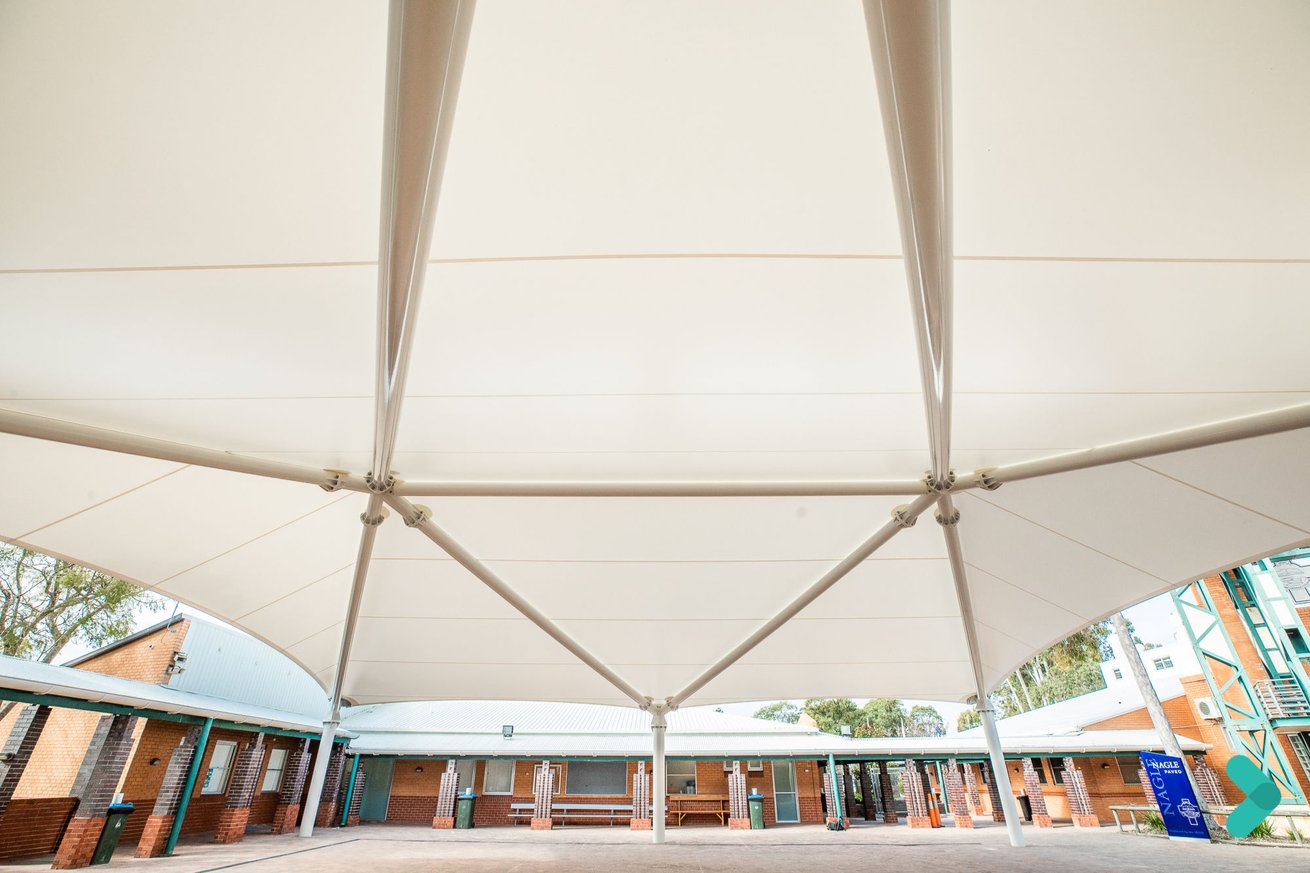
As architects increasingly look beyond heavy, compressive construction, tensile membrane structures are emerging as a practical way to deliver high-performance spaces that balance structural efficiency, design flexibility, and cost control.
Before adopting this approach, it is essential to understand how tension-based structures behave, where they perform well, and what technical, regulatory, and lifecycle considerations shape their success.
This article breaks down the fundamentals of this construction method in clear terms.
It explains how these systems work, where they are most effective, and what decision-makers should understand before moving from curiosity to serious evaluation.
Tensile structures: an overview
For decades, most buildings have been shaped by heavy, compressive systems, concrete, steel, and masonry designed to resist gravity through mass.
Tensile architecture takes a different approach, using lightweight systems that achieve stability through tension rather than compression, enabling larger spans, fewer columns, and more efficient use of materials. At its core, this approach includes membranes, cable networks, and gridshells that work together to distribute forces across a structure.
Instead of relying on bulky structural elements, these systems are engineered around carefully calculated stress patterns, making them both structurally efficient and visually expressive.
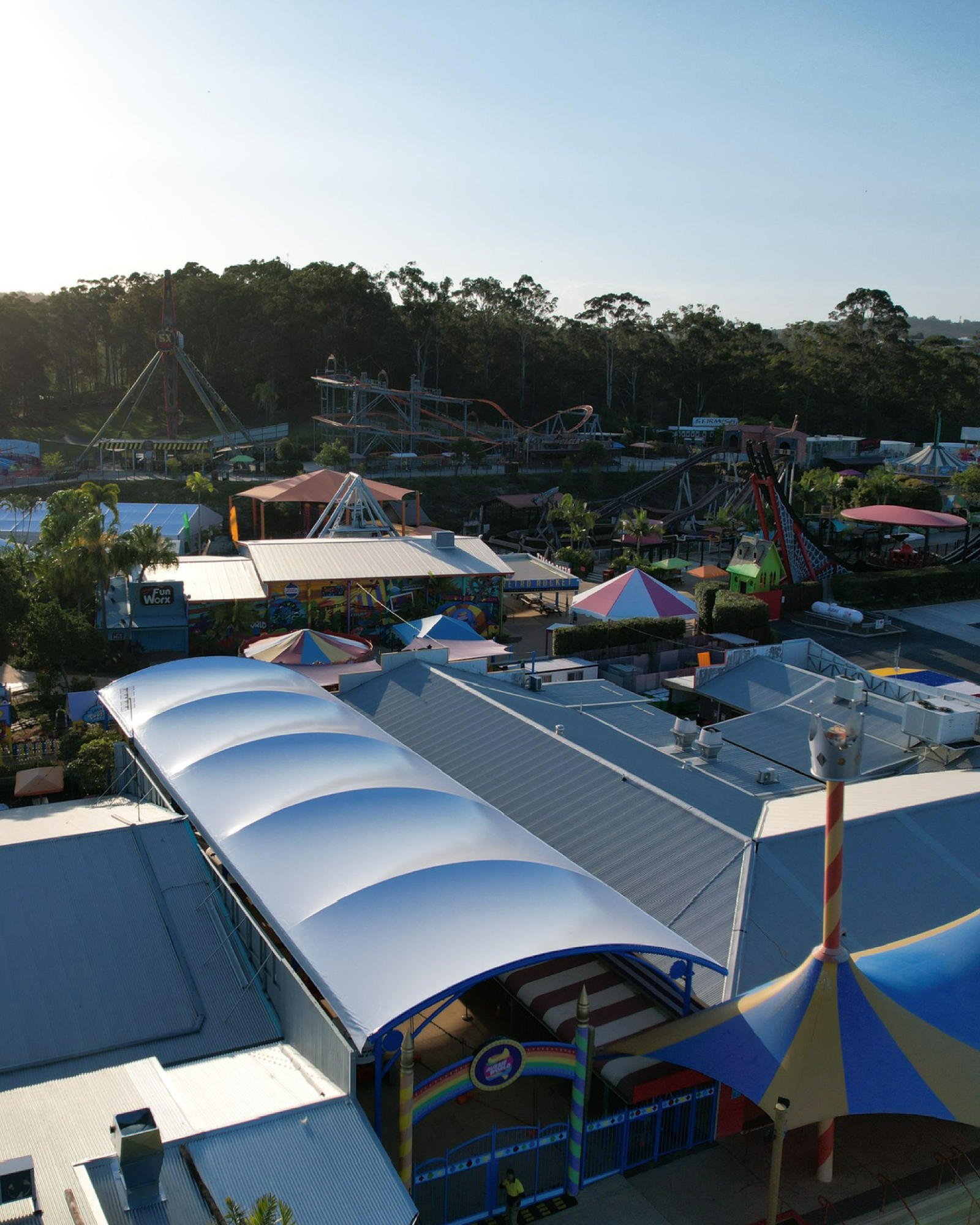
They are not a replacement for conventional methods, but a complementary option that can solve specific spatial, functional, and economic challenges more effectively than heavy construction alone. Their credibility is backed by landmark projects such as Denver International Airport, the Munich Olympic Stadium, and London's O2 Arena.
These structures have operated successfully for decades, with some performing reliably for more than 50 years, demonstrating that this design methodology is not experimental, but a mature and proven structural approach.
Brief history
The idea of using fabric as a structural element is far older than modern architecture. As early as 2000BC, nomadic shelters, ship sails, and circus canopies were already demonstrating a fundamental principle of tensile design: shape and stability through tension rather than mass.
These early applications were rudimentary, but they revealed how lightweight materials could span space efficiently, respond to environmental forces, and adapt to changing conditions. Modern tensile architecture entered the design mainstream in the mid-20th century, largely through the work of German architect and engineer Frei Otto.
His research into minimal-material structures led to groundbreaking projects for pavilions and stadiums, where membranes and cable systems were used to achieve spans that would have been difficult or uneconomical with conventional construction.
Otto's work was experimental, but it worked and demonstrated that tension systems could combine engineering logic with fluid, organic forms and a visual lightness that contrasted sharply with heavy post-war building typologies.
Over time, these ideas evolved into robust, repeatable systems. Advances in material science, structural engineering, and computational design have transformed this method into a legitimate design and construction approach.
Today, architects and engineers can model complex load paths, optimise form, and predict long-term performance with a high degree of accuracy.
Tensile architecture design basics
At first glance, tension structures can appear deceptively simple, but their performance depends on precise engineering and carefully balanced forces. The success of a membrane design is less about visual form and more about how well its geometry, materials, and loads are resolved from the outset.
The concepts described below outline the conditions that allow a membrane to hold its shape, shed water reliably, and resist the gradual changes that can compromise its integrity over the life of the structure. These apply to all types of tensioned fabric structures.
Tension > compression
As stated earlier, membrane structures operate on a fundamentally different logic than conventional buildings. Instead of resisting loads through mass and compression, they remain stable by keeping the membrane continuously in tension between defined support points.
Think of it like stretching a drum skin. When the surface is pulled tight, it becomes rigid and capable of handling external forces. In the same way, a well-designed membrane holds its form through tension, supported by cables, masts, or steel framing that anchor the edges. Consequently, wind, rain, and imposed loads are absorbed as changes in tension rather than compressive stress.
This makes these systems extremely efficient, but also highly dependent on maintaining that tension. Any reduction, whether from material creep, connection movement, or uneven loading, alters how forces are resolved across the surface.
When tension is compromised, the membrane does not simply deflect like a rigid roof. It begins to change shape, creating the conditions under which instability and water accumulation can develop.
Form-finding
In membrane construction, shape is not an aesthetic overlay applied after the fact. It is the structural solution itself. The final geometry results through a process of form-finding, where the membrane is allowed to settle into a state of equilibrium under its own tension and boundary constraints.
Whether developed through physical models or computational analysis, this process identifies surfaces that distribute stress evenly and avoid localised slack or overstress.
These equilibrium forms are inherently efficient, but also sensitive. Small deviations introduced during design development, detailing, or construction can disrupt the balance the form relies on, with consequences that often only become visible once the structure is exposed to weather and time.
Double curvature
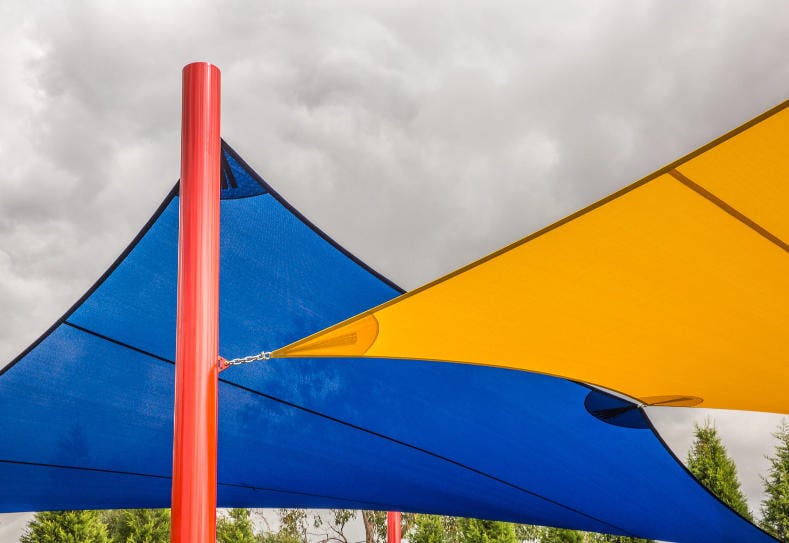
Double curvature is not a stylistic preference in membrane design. It is a geometric requirement that allows the membrane to develop stiffness, control movement, and shed water predictably. By curving in opposing directions, often described as an anticlastic or saddle-like form, the surface gains stability that flat or near-flat membranes simply cannot provide.
Flat but steeply sloped fabric with local drainage points can manage water in limited or temporary conditions, but they do not replace the structural role of curvature in long-term membrane behaviour. Without it, the membrane lacks the geometric resistance needed to control deformation under load.
This becomes critical when wind and rain act together, as water catchments can shift and grow dynamically, coupling with membrane movement in ways that amplify deflection rather than relieve it. In this context, double curvature is what allows fabric roofs to remain stable under variable weather, rather than progressively reshaping themselves in response to it.
Pre-stressing
Pre-stressing establishes the working condition of a membrane before it is exposed to environmental loads. This initial tension defines how the surface will respond to wind, rain, and long-term material behaviour, effectively setting the baseline for structural stability.
If the prestress is too low, the membrane lacks the stiffness required to control deflection, making it vulnerable to flutter and water accumulation. If it is too high, stresses are pushed into the fabric, edge cables, and anchors unnecessarily, accelerating fatigue and increasing demands on the supporting structure.
The challenge is not simply achieving tension on day one, but selecting and applying a prestress level that accounts for creep, relaxation, and inevitable changes over time without compromising performance.
Load paths
In a membrane structure, the membrane itself is only one part of a continuous structural system. Loads imposed by wind, rain, and occupancy do not dissipate within the fabric. They are transferred through the membrane into edge details, cables or plates, and then carried down through supporting elements into the foundations.
If any link in this chain is underdesigned, poorly detailed, or allowed to move unpredictably, the load path is interrupted. The result is not a local issue but a system-wide imbalance that can alter membrane geometry and tension distribution.
Because tension structures are highly sensitive to changes at their boundaries, even small connection movements or detailing inconsistencies can manifest as visible deformation, increased stress concentrations, or unexpected water accumulation.
Designing each connection as part of a single, coherent load path is therefore fundamental to both structural stability and long-term performance.
Specialised materials
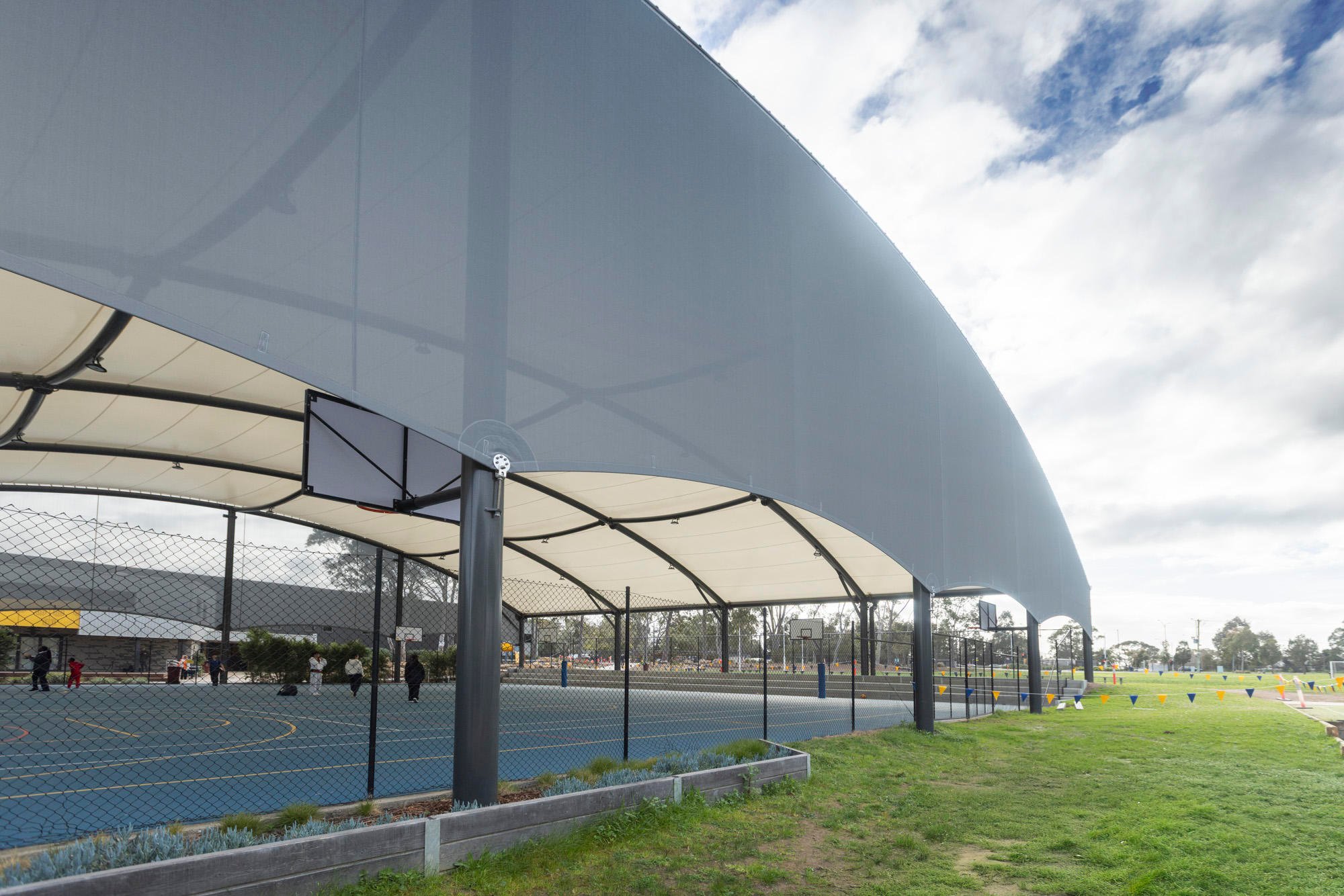
The membrane material is a structural component, not a finish, and its behaviour directly influences how the system performs over time. Different fabrics respond differently to sustained load, temperature variation, and environmental exposure, particularly in terms of creep and biaxial stretch.
These characteristics affect how well prestress is retained, how the surface deforms under water or wind loading, and how drainage geometry evolves with age. Coating durability, UV resistance, and fire performance further shape where and how a material can be used, but longevity in this context is tied as much to mechanical behaviour as to surface protection.
Selecting an inappropriate fabric can undermine even a well-resolved form, as long-term stretch or coating degradation alters tension balance and increases susceptibility to instability.
Material selection therefore sits at the core of membrane design, setting limits on performance, maintenance, and the structure's ability to resist issues over its service life. Common membrane materials include:
-
Polyvinyl Chloride or PVC-coated polyester for commercial shade and sports
-
Polytetrafluoroethylene or PTFE-coated fiberglass for long-life structural roofs
-
Ethylene Tetrafluoroethylene or ETFE film for lightweight transparent enclosures
Each behaves differently in terms of stretch, UV resistance and longevity.
Flex by design
Movement is an inherent and necessary characteristic of membrane structures, not a defect to be eliminated. As loads change, the membrane, cables, and supporting elements respond through controlled deformation, allowing the system to remain in equilibrium.
Successful detailing anticipates this behaviour by permitting rotation, sliding, and adjustment at connections rather than restraining them. When flexible components are forced into rigid conditions, stresses concentrate at fixings and edges, accelerating wear and increasing the risk of failure.
The aim is not to prevent movement, but to manage it so that changes in shape remain predictable and do not interfere with tension levels or the membrane's ability to shed water effectively.
When to consider tensile architecture (and when not to)
Tension-based construction works best when projects demand large, open spans, lightweight construction, and flexibility that traditional building methods struggle to deliver efficiently.
It is particularly effective for covering recreation areas, covered walkways, courts, and community spaces, where protection from weather is needed without the visual or structural weight of a conventional roof.
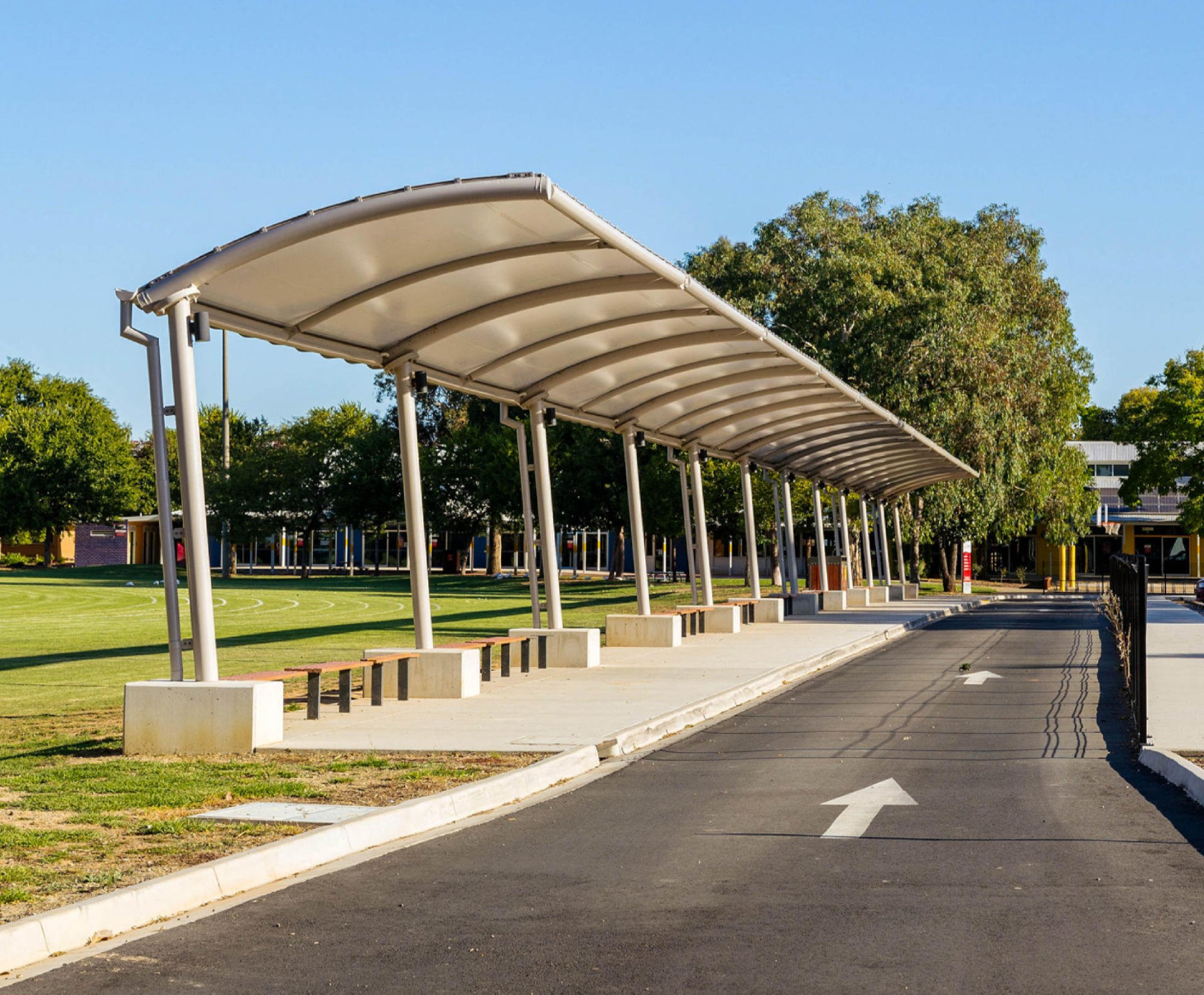
It also suits sites where minimal ground disturbance, speed of installation, or adaptability are key priorities.
For many projects, these systems occupy a practical middle ground between temporary shade solutions and fully enclosed buildings. They provide permanence without heaviness, structural efficiency without excessive cost, and design freedom that integrates naturally with surrounding buildings.
That said, this approach is not always the right choice. It can be unsuitable for applications where:
-
Multistorey capacity is required
-
Heavy equipment needs to be suspended
-
Airtightness is critical
-
Strict acoustic separation is needed
-
Regulatory and fire performance requirements demand conventional construction methods
These are just a few examples. Operational factors also matter. Projects with limited maintenance capacity or intricate integrations with existing structures may find traditional systems more appropriate.
Why more designers are turning to tensile architecture
As project briefs become more complex, designers are under pressure to deliver spaces that are efficient, adaptable, and visually distinctive without escalating structural weight or cost.
Tension-based construction offers a different way of thinking about form and performance, one that prioritises efficiency, openness, and responsiveness to context. It allows designers to solve spatial problems while expanding design expression, rather than constraining it.
Design flexibility
One of the defining strengths of this approach is its ability to adapt to context rather than compete with it.
Membranes can be shaped to respond to surrounding buildings, site constraints, and sightlines, while the supporting steelwork can be customised in colour, geometry, and detailing to align with the broader design language of a project.
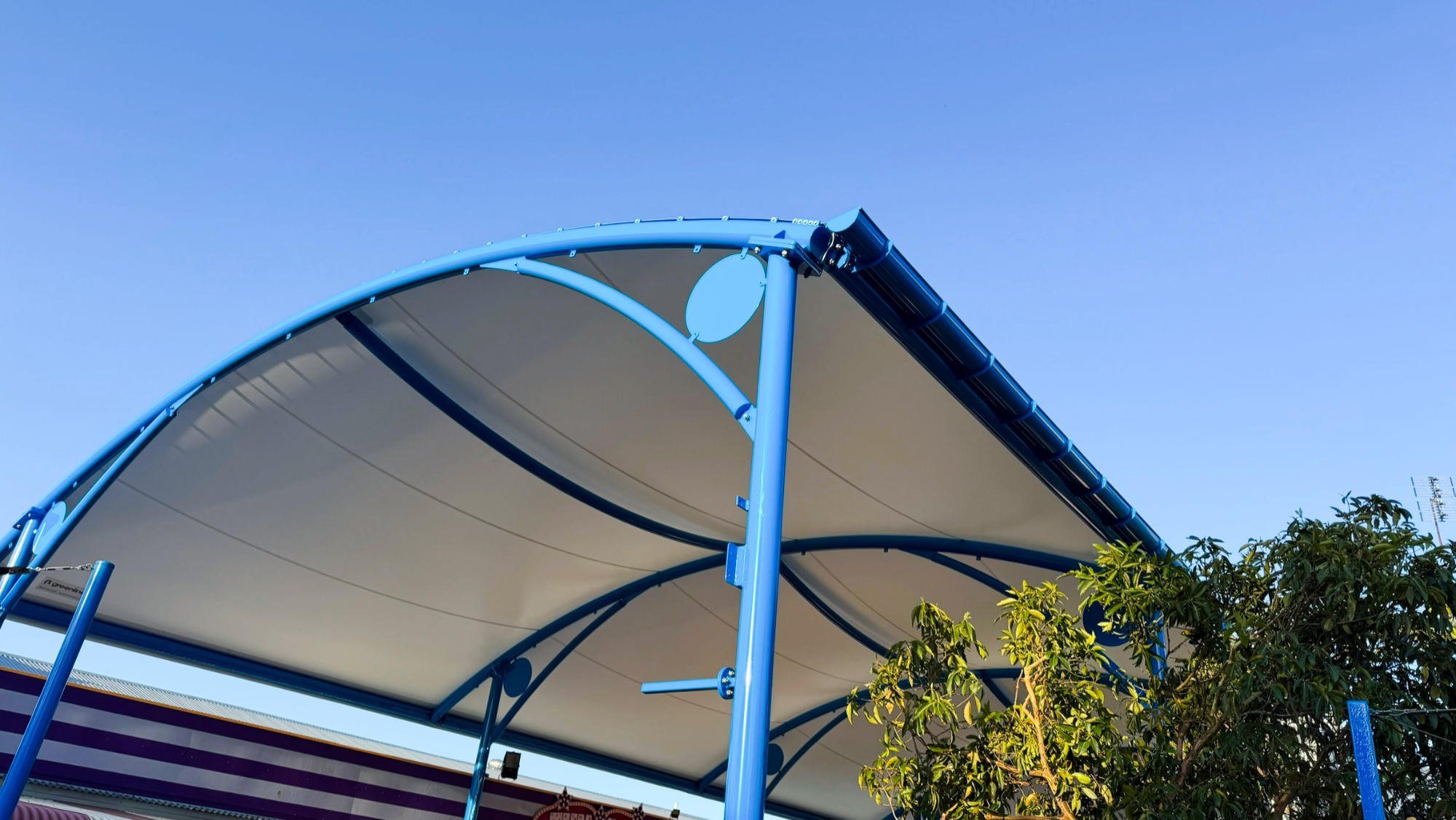
We see this in practice across education and civic projects we have delivered. As one school facilities manager described after a canopy installation, the structure "looked like it had always belonged there." That's what good membrane design achieves. It feels natural and purpose-built.
At Carey Baptist Grammar School, a white PVC canopy we designed and installed transformed outdoor courts into a year-round gathering space without dominating the campus or disrupting its design identity.
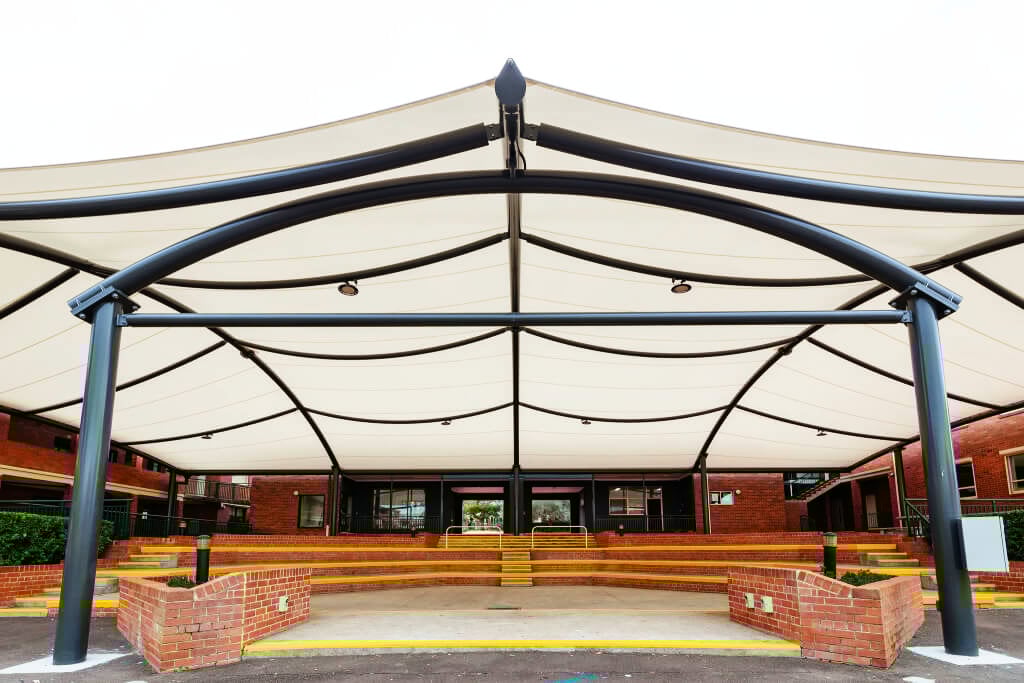
Similarly, at the amphitheatre at Rhodes Foreshore, we delivered a fabric roof that protects the community space while reinforcing, rather than diluting, the character of the site.
Weather resilience
Tension structures are designed with environmental forces built into their logic from the start. Wind behaviour, rainfall patterns, snow loads, and seismic conditions are analysed during the design phase and directly influence the form, anchoring approach, and structural detailing.
This reduces the likelihood of issues such as water ponding, excessive movement, or uneven load distribution, while supporting consistent performance across varied and demanding conditions over the life of the structure.
Material longevity
Advances in membrane technology have significantly extended the lifespan and reliability of these structures. Modern materials such as PTFE and PVC-coated fabrics are engineered to resist UV degradation, pollution, moisture, and mechanical fatigue, with many systems designed for service lives exceeding 30 years when properly specified and maintained.
Surface coatings help limit dirt adhesion and biological growth, reducing maintenance requirements and preserving visual quality, while material testing and certification provide predictable performance over long-term exposure to environmental stress.
Daylighting and thermal behaviour
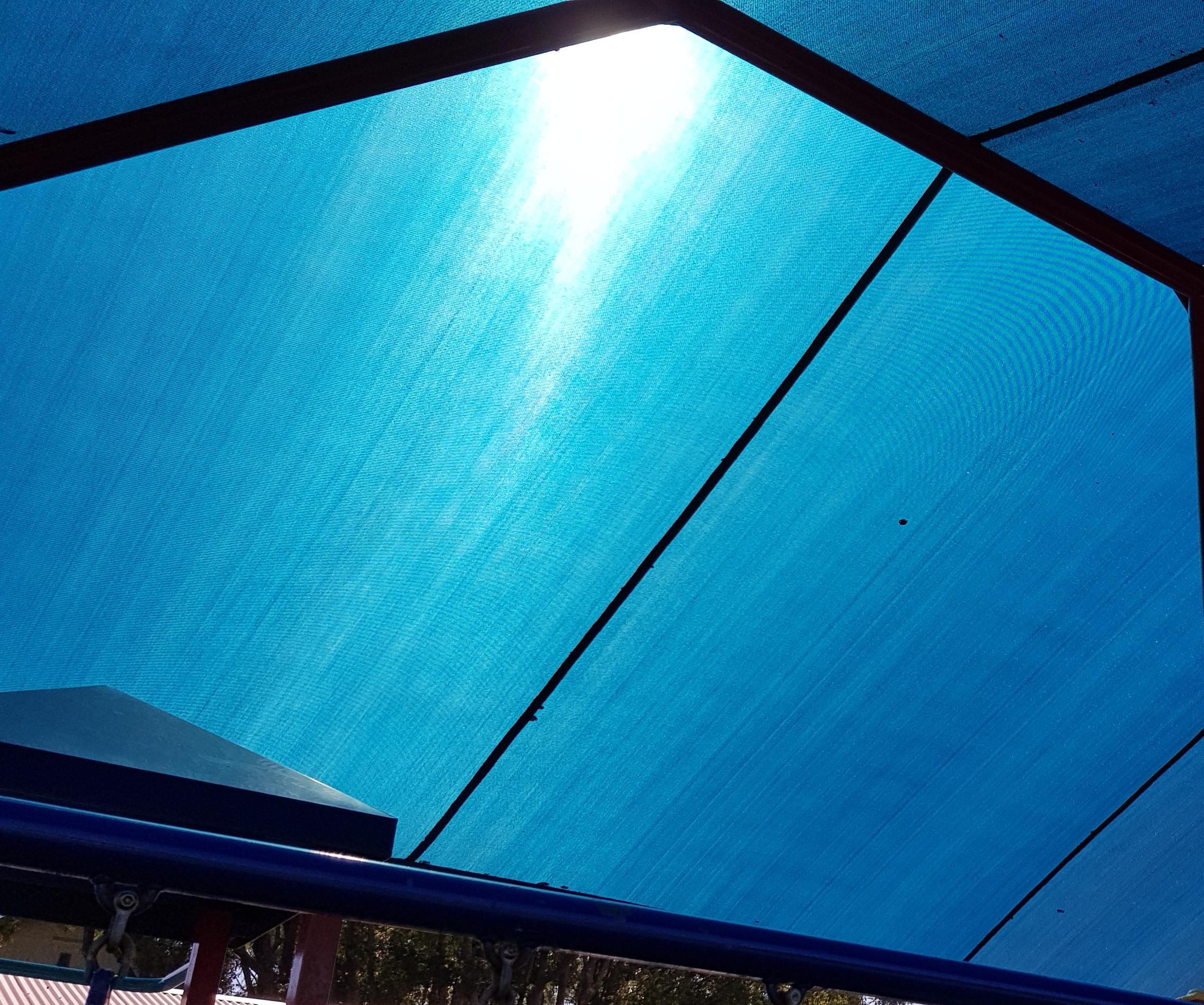
Tension-based construction reshapes how light and heat move through a space. Translucent membranes diffuse daylight rather than blocking it, reducing glare while maintaining brightness and visual openness.
This improves usability without relying heavily on artificial lighting. At the same time, multi-layer foils and specialised coatings are used to control solar heat gain and insulation performance, allowing designers to balance comfort, energy efficiency, and environmental exposure within lightweight structural systems.
Aesthetics and creature comforts
Because membranes are both structure and surface, designers can shape atmosphere as much as form, using light, shadow, and scale to influence how people experience the space. Beyond appearance, these systems can be designed with acoustic treatments and integrations like AV (audio-visual) equipment and scoreboards.
Absorptive linings, perforated layers, and strategic detailing help manage reverberation in large open areas, while HVAC (heating, ventilation, and air conditioning), drainage, and lighting can be incorporated without compromising structural clarity or visual coherence.
Advantages for stakeholders
For stakeholders, tension-based construction changes the equation around time, cost, and disruption. It offers a way to deliver large-scale coverage and usable space without the structural weight and prolonged construction cycles associated with conventional building methods.
The benefits are not limited to design teams; they extend to asset owners, operators, and end users who experience the impact of faster delivery, lower complexity, and long-term operational efficiency.
Cost-efficiency at scale
Reducing the dead weight of a building, which lowers foundation requirements and material costs for long spans. Covering big areas is expensive. Traditional roofs require heavy trusses and large footings, which quickly add cost and time. In comparison, the membrane is relatively lightweight and can hold its shape across larger spans.
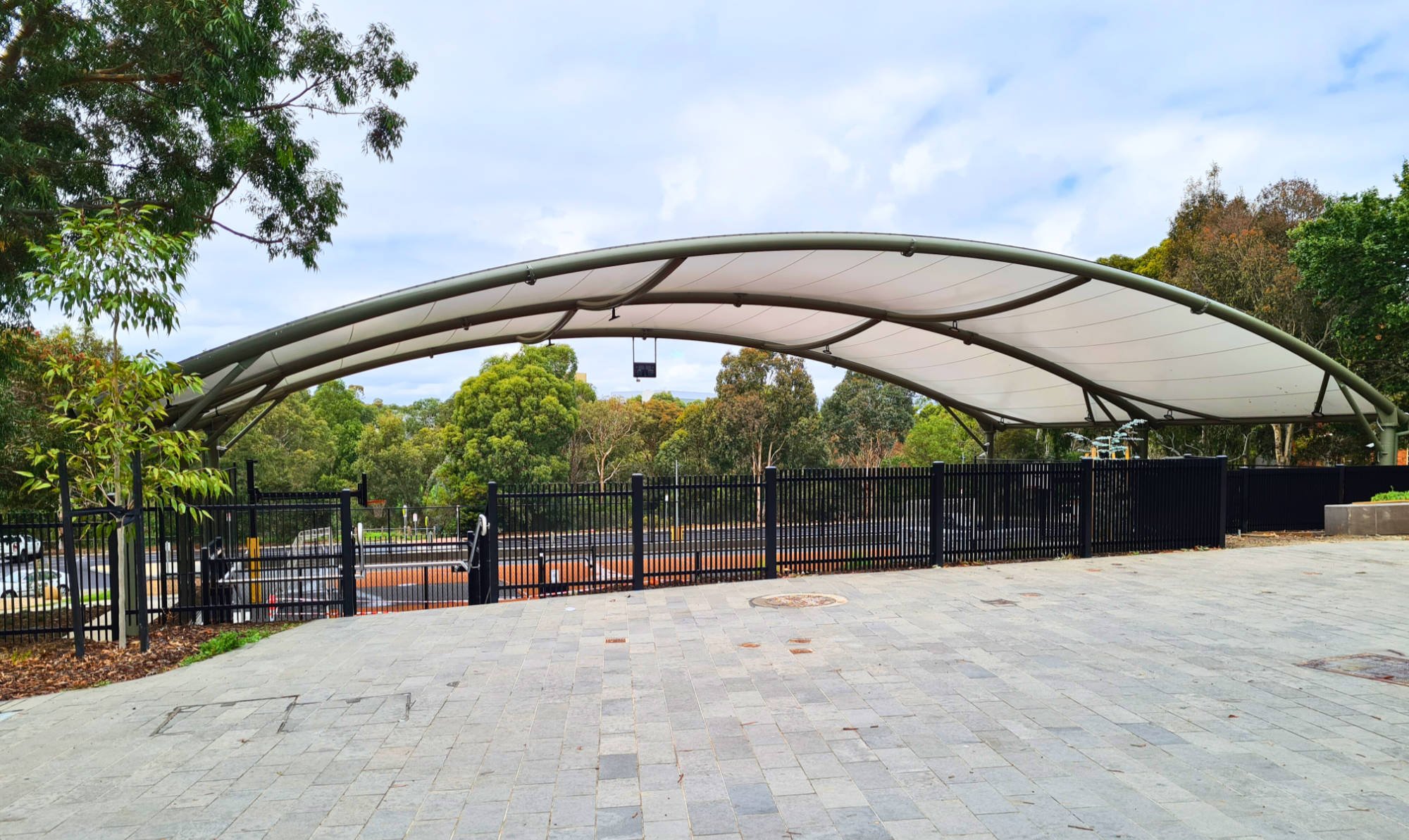
For example, traditional roofs commonly have purlins: long supporting elements to hold the roof sheeting in place and stiffen the structure. Membranes do not require purlins, rather the roof itself is adequately strong to support its weight.
That material reduction alone makes a difference, but the speed of installation often creates the biggest saving. Fabric membranes are prefabricated and lifted into place, and supporting steel beams can also be prefabricated reducing on-site work from months down to a few weeks.
That means less disruption for active environments, such as schools, sports precincts, airports, and shopping centres, allowing normal operations to continue with minimal disruption. Maintenance costs are also low.
High-quality membranes resist corrosion and UV degradation, and they don't need repainting or cladding replacement over time.
Speed of implementation
Membrane construction often shortens project timelines because much of the structure is designed and fabricated off-site rather than built incrementally on location. Membranes, cables, and steel components are engineered in parallel, allowing design development, fabrication, and site preparation to progress simultaneously instead of sequentially.
Modular elements are manufactured with high precision and delivered ready for installation, which can reduce overall construction time by 30 to 50 percent compared to conventional roof systems. This approach limits on-site complexity, shortens disruption periods, and provides greater certainty around scheduling for projects in active environments.
Sustainability and ESG (environmental, social, governance) goals
Tension-based construction aligns with sustainability objectives by reducing material intensity and embodied carbon compared to traditional construction systems.
Lightweight membranes and efficient structural systems require fewer raw materials and smaller foundations, which lowers the environmental footprint from the outset. Many modern membrane materials are recyclable and designed for long service life, supporting circular design principles.
Their natural translucency also reduces reliance on artificial lighting during daylight hours, contributing to lower operational energy use and improved environmental performance across the lifecycle of a structure.
Engineering and compliance
One of the most common concerns about tension-based construction is risk: how a lightweight structure can be trusted to perform like a conventional building. In practice, these systems are often analysed more rigorously than traditional roofs because their behaviour is less intuitive and more dependent on geometry, materials, and connections.
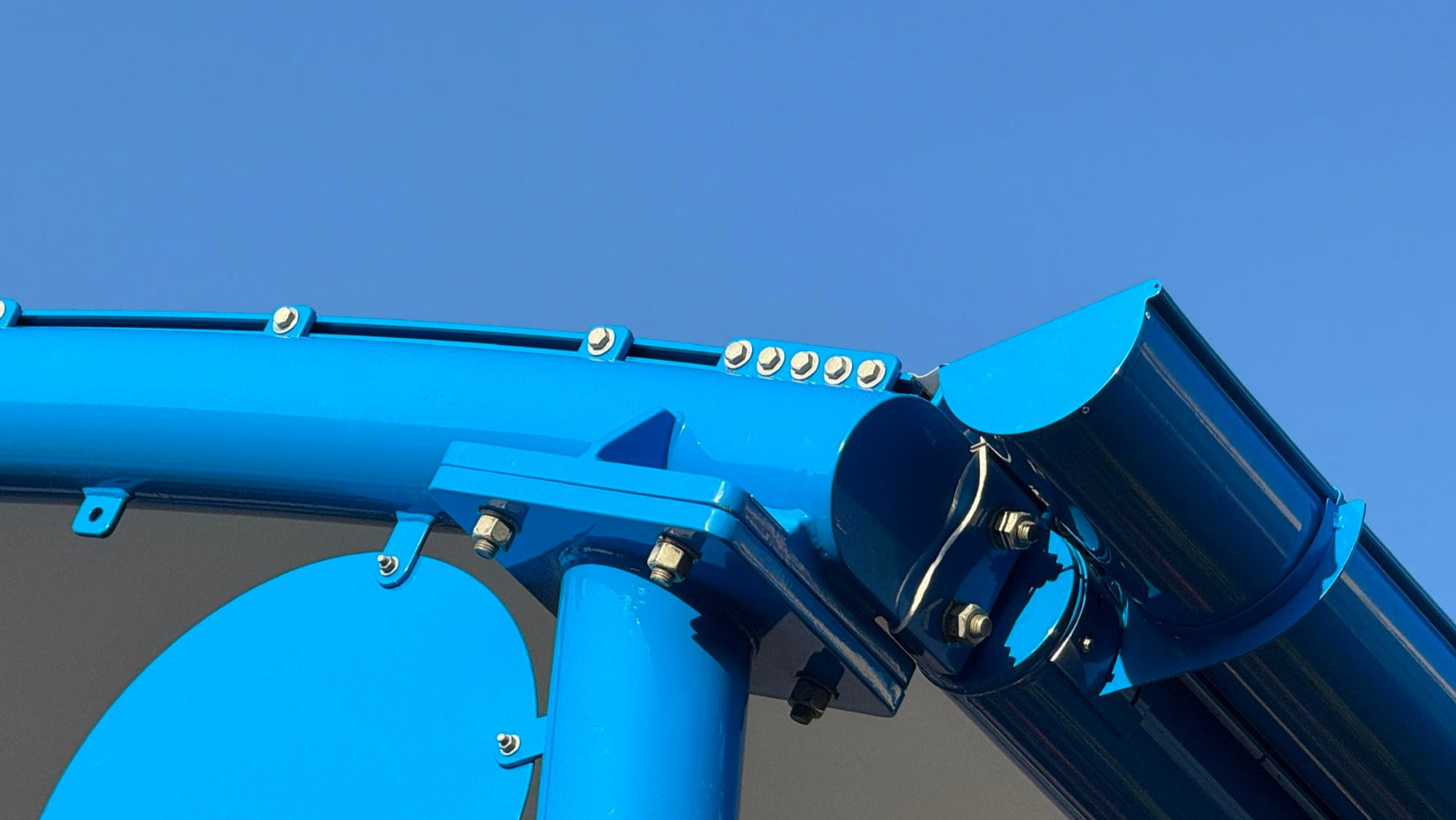
Engineers use non-linear structural analysis and detailed FEA (Finite Element Analysis) to model how membranes behave under real-world conditions, including wind, snow, and seismic loads. This allows teams to test complex load scenarios and potential failure points long before construction begins.
Designs are then assessed against Australian standards such as the AS/NZS 1170 series and aligned with NCC (National Construction Code) and ABCB (Australian Building Codes Board) guidance to ensure structural safety and regulatory compliance.
Material performance is verified through recognised Australian testing frameworks, including fire and flammability standards like AS1530. Additional technical guidance for fabric structures helps clarify approval pathways and performance expectations, reducing uncertainty for certifiers and stakeholders.
Together, these processes address the perception that tension structures are experimental or high-risk.
Detailed analysis, certified materials, and transparent documentation provide a clear, defensible basis for safety and compliance, giving engineers, asset owners, and regulators confidence in the final structure.
The Greenline advantage
Tensile architecture rewards early, informed decisions. Engaging a specialist at the concept stage helps avoid over-engineering, cost blowouts, and design compromises that are difficult to reverse later.
We work alongside architects and asset owners from the outset to shape feasible concepts, align design intent with engineering reality, and control risk before it becomes cost. That early involvement is often the difference between a structure that merely works and one that performs as intended for decades.
If you are exploring a tensile solution or assessing whether it suits a project, we are happy to discuss ideas, constraints, and options with you.